
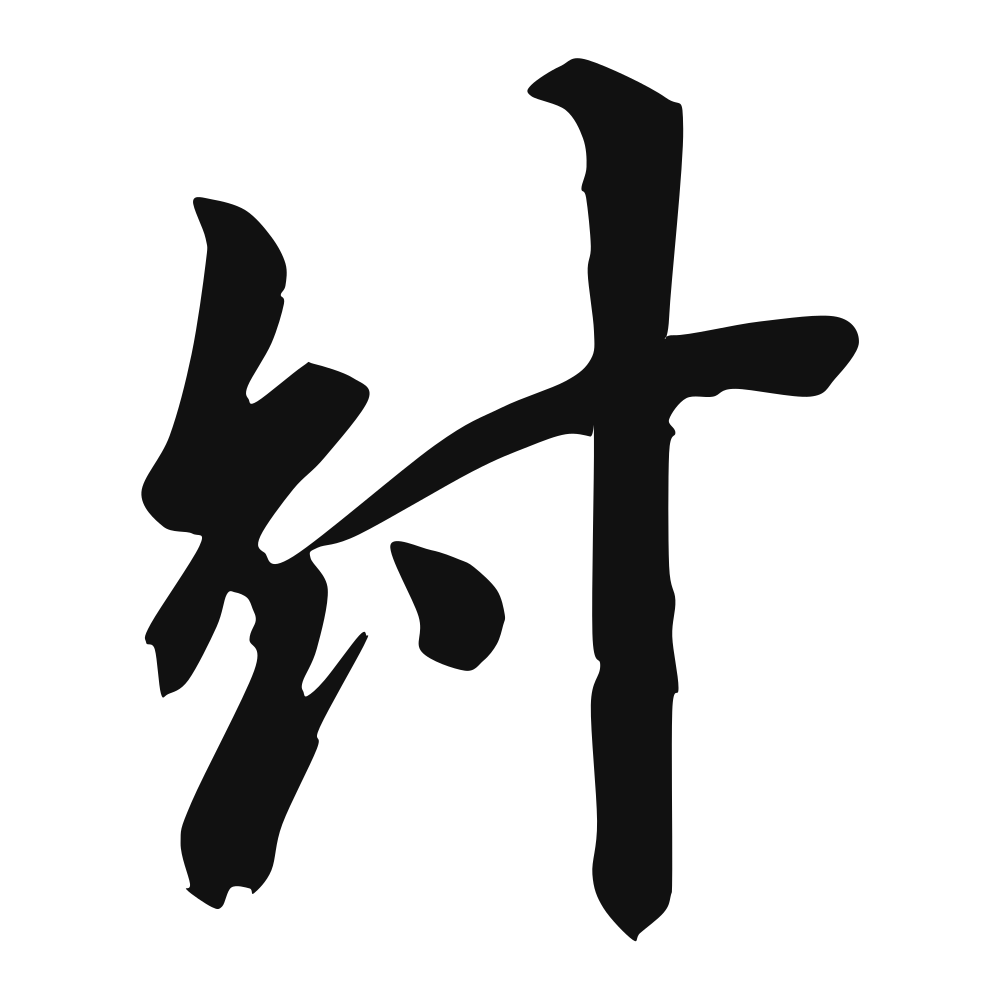
纣
Zhou, pejorative name given posthumously to the last king of the Shang dynasty, King Zhou of Shang 商紂王|商纣王[Shang1 Zhou4 Wang2] (the name refers to a crupper 紂|纣[zhou4], the piece of horse tack most likely to be soiled by the horse); crupper (harness strap running over a horse's hindquarters and under its tail)
Closest English meanings
saddle girth·King Zhou
The Calligrapher — Ōuyáng Xún 欧阳询
Tang regular-script master whose 'Ouyang style' is a basic learning model.
Tang calligrapher (557–641), master of regular script/running script — Tang codifier of regular script; crisp, architectural strokes you could measure with a ruler. Tang dynasty
Cultural Story
纣 is, at root, the humble strap that hitched a horse's rump to the cart. History fixed the character otherwise: 纣王, Di Xin, last king of Shang, whose name became the byword of the tyrant — wine pools, meat forests, a dynasty lost at Muye. Whether the villainy was exaggerated, scholars still debate; the histories made him power's permanent warning.
Common words & phrases
- 纣王 King Zhou · last Shang king
- 马纣 saddle girth
Read the story behind the character
纣王 is the villain everyone knows: TV adaptations of 封神演义, video games and the recent Fengshen blockbusters keep recasting him beside Daji, the fox spirit. History threads still argue whether the last Shang king was truly monstrous or merely written that way by the Zhou victors — either way, the name is shorthand now.
Why this character belongs on skin
Every language keeps the name of one ruined king, and Chinese keeps this one. Zhou was the last tyrant of the Shang dynasty — brilliant, cruel, drowned in wine and the beauty of Daji, his lakes of liquor and forests of meat the stuff of three thousand years of warning. He is the mirror image of every virtue: power without restraint, wit without mercy. Mencius used him as the proof that the Mandate of Heaven can be forfeited; the people's silence, the sage said, is the sound of a throne cracking. Why wear such a character? Because darkness named is darkness tamed. The Christian tradition would call it writing your demons outside yourself — exorcism by inscription. This is a tattoo for someone who has stood at the edge of their own excess and walked back. It is not a celebration. It is a scar worn deliberately, a reminder of the fire you were handed and chose not to feed.
Own this character
Purchase delivers the original SVG of this glyph, brushed by Ōuyáng Xún 欧阳询, ready to place on skin, paper, or screen.