
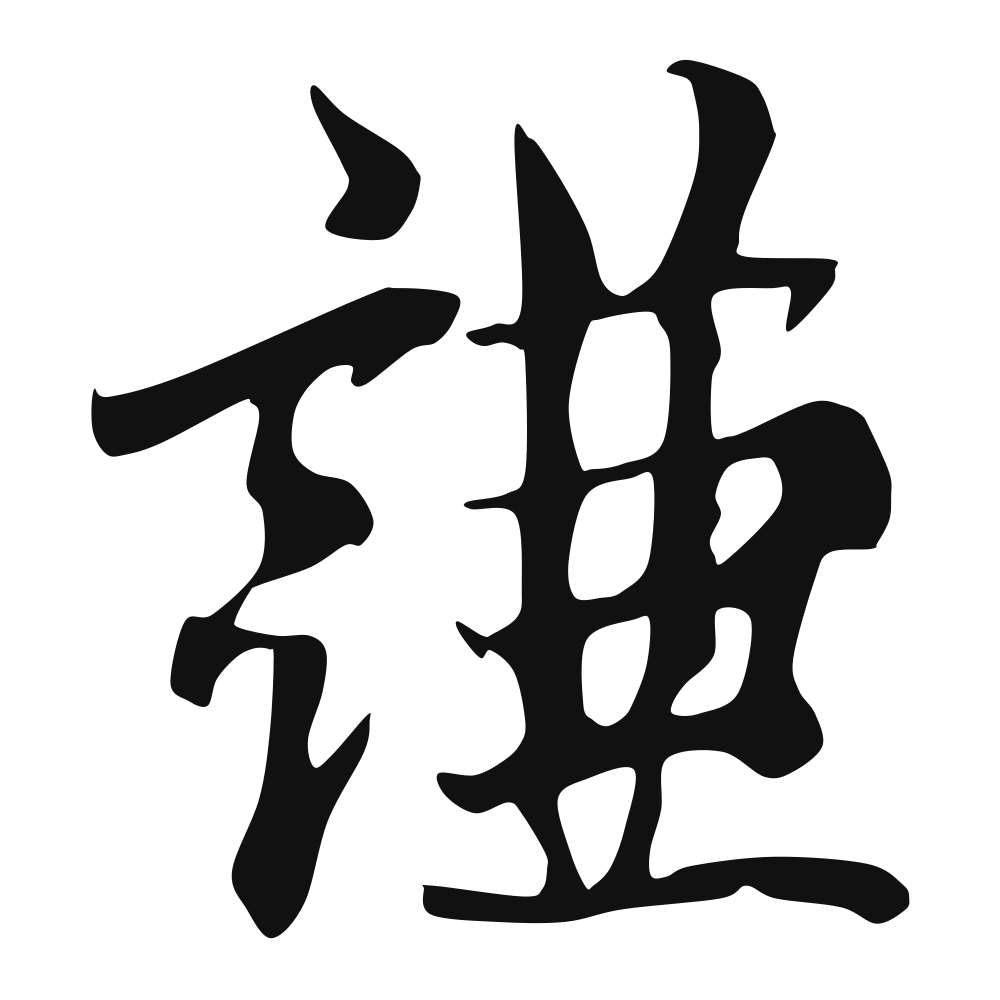
The Calligrapher — Ōuyáng Xún 欧阳询
Tang regular-script master whose 'Ouyang style' is a basic learning model.
Tang calligrapher (557–641), master of regular script/running script — Tang codifier of regular script; crisp, architectural strokes you could measure with a ruler. Tang dynasty
Cultural Story
The sixty-fourth hexagram of the Changes is Qian, humility, the only figure in the book counted wholly auspicious, for the modest man meets no resistance. The character qian is that downward gesture, the step that leaves room for the other. From the hexagram the word passed into qian xun and zi qian, the daily modesty a gentleman was taught to wear like plain cloth.
Common words & phrases
- 谦虚 modest · humble
- 谦逊 humble · modest
- 谦让 yield · modestly decline
- 谦卑 humble · lowly
- 谦和 gentle · modest
- 自谦 be modest
Read the story behind the character
A candidate answers with qian xu, playing down the award, and an elder qian rang the seat to the guest. The host stays qian he through the praise, and a friend reminds you to be qian bei before the judges. The character qian still teaches the small art of taking less room than you might.
Why this character belongs on skin
Speech radical beside 兼, to hold two things at once—谦, the voice that can carry both self and other without dropping either. Laozi loved the low places: rivers rule because they flow downward, valleys endure because they are empty. The 易经's most fortunate hexagram is 谦, the modest mountain crouching quiet in the plain. Humility here is not smallness; it is strength refusing its own announcement, competence that arrives soft-footed. Western saints called it the mother of virtues; Eastern sages called it survival. There is a slow power in ink that whispers instead of shouts—谦 at the wrist, the nape, the inside of the arm, a secret pact: I will not need to be the loudest thing in the room.
Own this character
Purchase delivers the original SVG of this glyph, brushed by Ōuyáng Xún 欧阳询, ready to place on skin, paper, or screen.