
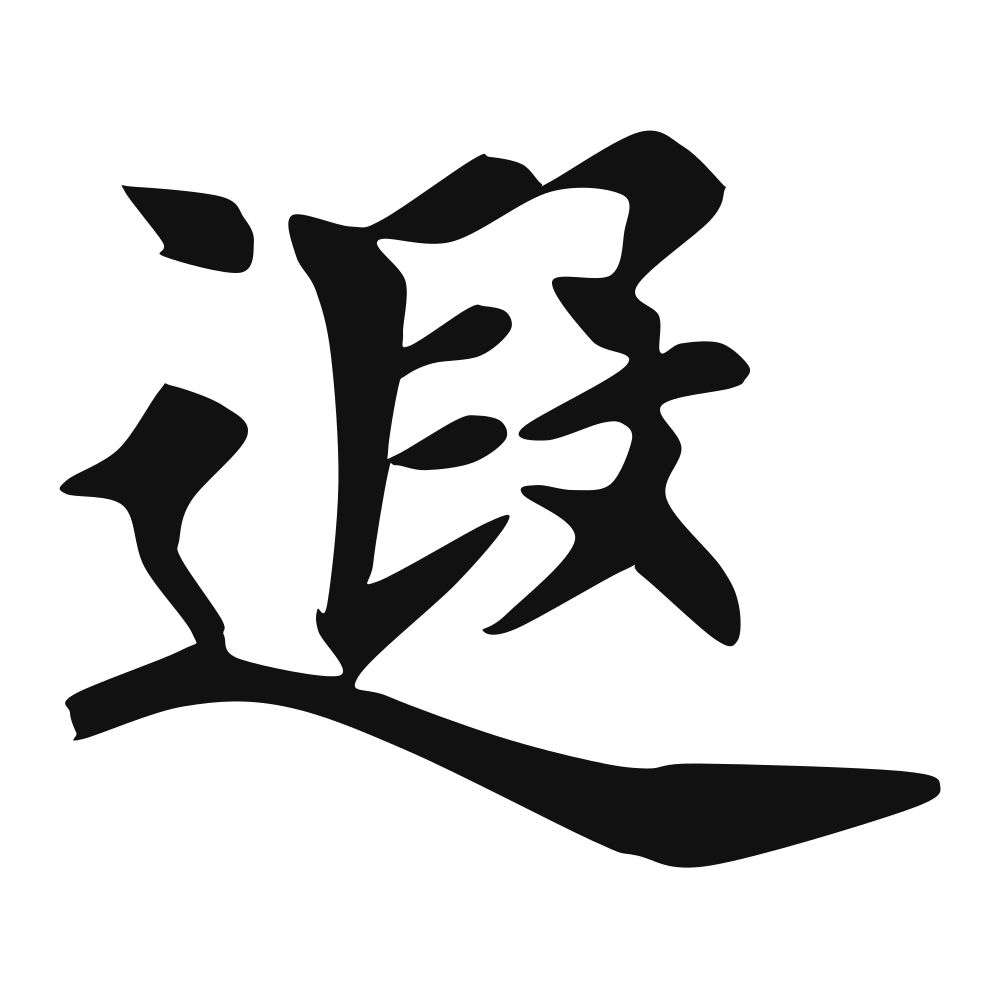
遐
distant; long-lasting; to abandon
Closest English meanings
far·distant·remote·long·prolonged
The Calligrapher — Ōuyáng Xún 欧阳询
Tang regular-script master whose 'Ouyang style' is a basic learning model.
Tang calligrapher (557–641), master of regular script/running script — Tang codifier of regular script; crisp, architectural strokes you could measure with a ruler. Tang dynasty
Cultural Story
Xia is distance at its longest — farther than far. The Book of Documents pairs it perfectly with er: 'to climb high you must start from below; to reach the far you must start from the near.' Xia has always been the horizon word.
Common words & phrases
- 遐想 reverie · daydream · fantasy · muse
- 遐迩 far and near · everywhere · widely · afar
- 遐龄 advanced age · longevity · old age · long life
- 幽遐 remote · secluded · distant · far
Read the story behind the character
Xia drifts through modern prose: xiaxiang (reverie) staring from the train window, xiaer (known far and near) the little shop celebrities visit, xialing (great age) the birthday card for a ninety-year-old, youxia (deep and remote) valleys in the travel essay. It is distance with depth — far in every direction.
Why this character belongs on skin
Distance, in this character, is a blessing and not a wound. It stands inside words for reverie — the mind setting out on a journey the body is too wise to join — and inside words for long life, the far years, the horizon of a well-spent century. The ancients blessed their elders with it: may your road be long, may your ridgepole stand a hundred autumns. There is a freedom in far things that near things cannot give; the mountain you will never climb is the one that keeps your imagination alive. To wear this character is to declare that you live aimed outward — past the fence, past the harbor lights, past the last mapped mile. The body stays. The gaze does not. Sailors say you can tell a destined ship by the way it sits at anchor: already leaning.
Own this character
Purchase delivers the original SVG of this glyph, brushed by Ōuyáng Xún 欧阳询, ready to place on skin, paper, or screen.