
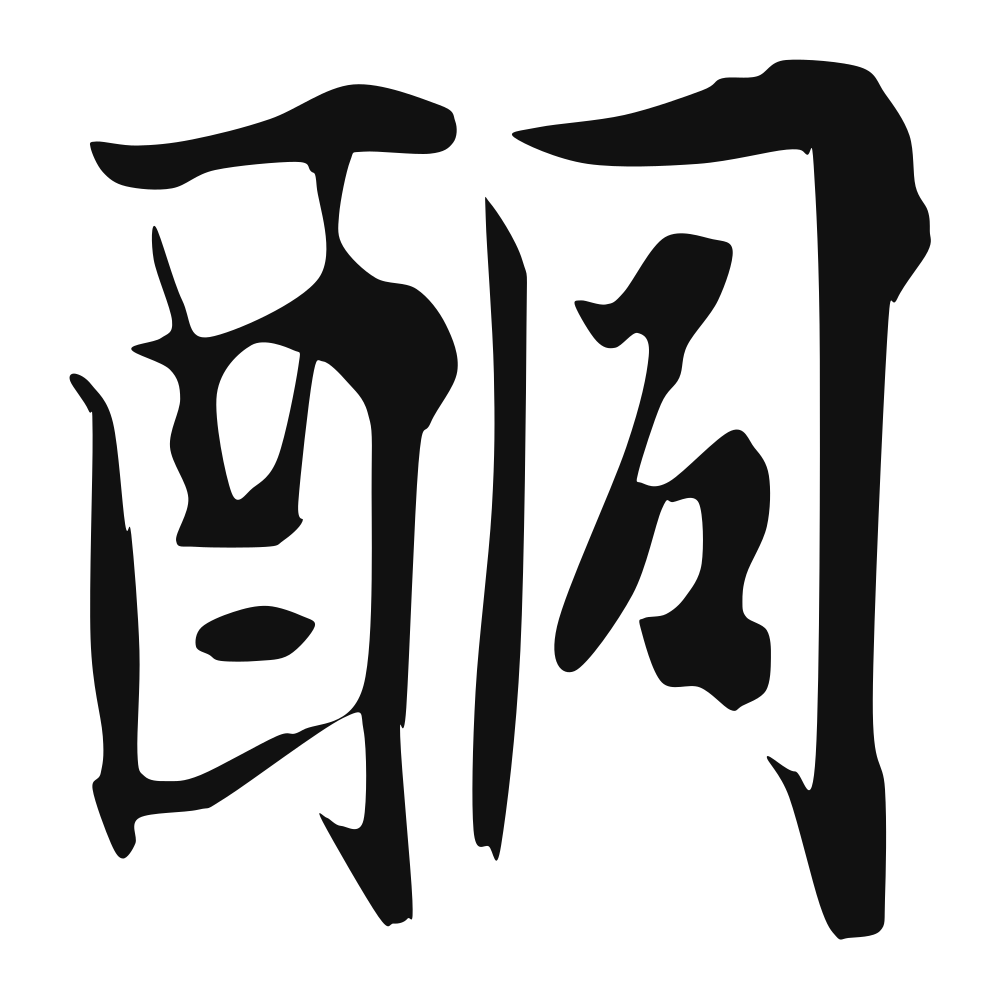
The Calligrapher — Ōuyáng Xún 欧阳询
Tang regular-script master whose 'Ouyang style' is a basic learning model.
Tang calligrapher (557–641), master of regular script/running script — Tang codifier of regular script; crisp, architectural strokes you could measure with a ruler. Tang dynasty
Cultural Story
Chemists borrowed the wine radical 酉 to build 酮, a family of compounds marked by a carbonyl group, and named 丙酮 the everyday acetone that strips lacquer from a nail. The character is a modern graft on an ancient root, the old sign for fermentation now tagging a reactor's products. Its history is the history of how a wine jar became a test tube.
Common words & phrases
- 丙酮 acetone
- 酮症 ketosis
- 糖尿酮 diabetic ketone
Read the story behind the character
A salon keeps 丙酮 to lift old polish, and a diabetes clinic watches a patient for 酮症, the dangerous acidity of 糖尿酮 when the body burns fat too fast. The 酮 now sits in a bottle and a chart. The character that borrowed the wine-root for the lab now marks a remover on a shelf and a warning on a monitor, the old brewing sign turned to chemistry.
Why this character belongs on skin
Even chemistry has its sensuality, and 酮 proves it: the radical is 酉, the wine jar, ancient symbol of fermentation and intoxication, hitched to a modern syllable for the ketones—the fragrance molecules of the world. Rasberry ketone, musk, the buttery scent of cream on the stove: many of what perfume houses call the animal and gourmand notes belong to this family. The wine radical remembers that all these smells begin in transformation, sugar becoming something headier. The Chinese alchemists searched their jars for immortality and found, instead, the science of change. 酮 is transformation you can smell. Worn on the skin, it reads as an inside joke with the senses—a character for the person who knows that desire, properly understood, is just chemistry done beautifully.
Own this character
Purchase delivers the original SVG of this glyph, brushed by Ōuyáng Xún 欧阳询, ready to place on skin, paper, or screen.