
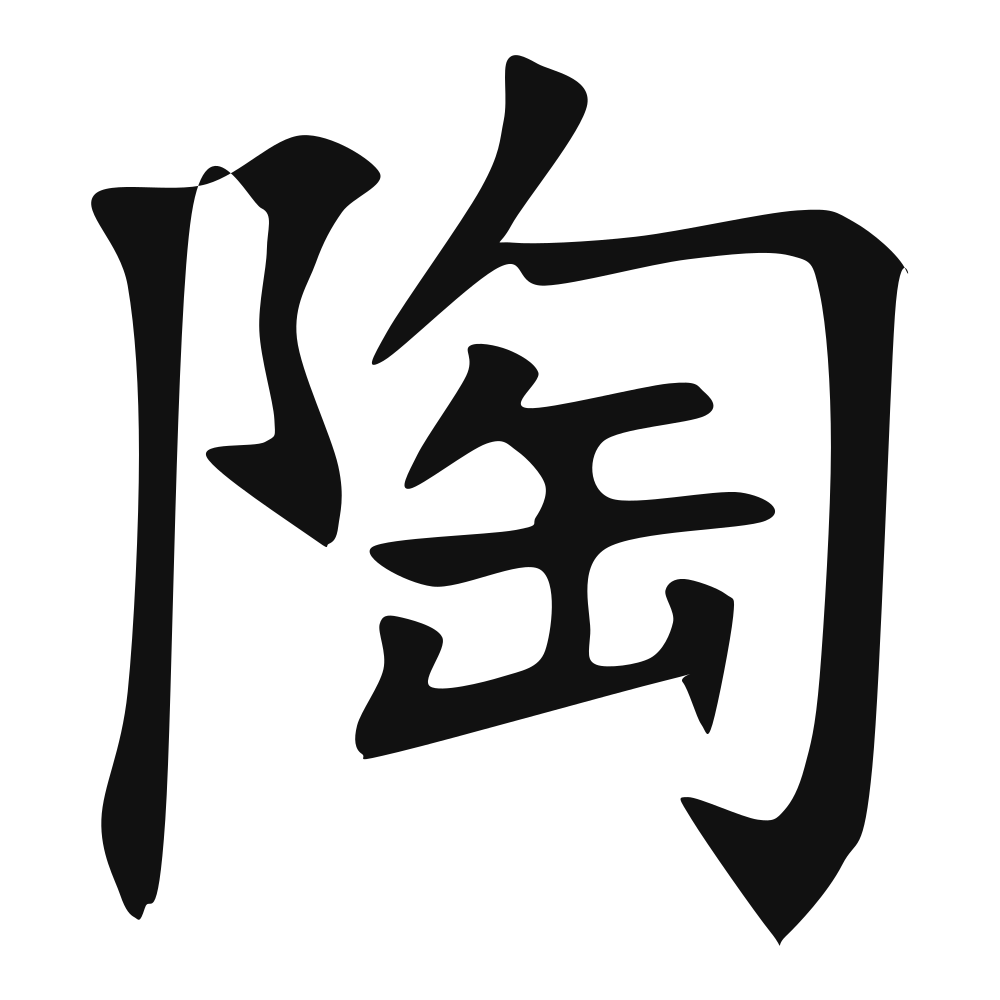
陶
surname Tao; pottery; pleased
Closest English meanings
pottery·cultivate·Tao·mold
The Calligrapher — Ōuyáng Xún 欧阳询
Tang regular-script master whose 'Ouyang style' is a basic learning model.
Tang calligrapher (557–641), master of regular script/running script — Tang codifier of regular script; crisp, architectural strokes you could measure with a ruler. Tang dynasty
Cultural Story
陶 shows the hill radical 阝 with 匋. The Shuowen ties it to pottery-making, shaping clay on a wheel. Beyond vessels, 陶冶 came to mean molding character, and 陶然 describes contentment. The ancient state of Tao lends the surname and a philosophical resonance.
Common words & phrases
- 陶瓷 ceramics · pottery and porcelain
- 陶冶 mold · cultivate · edify
- 陶醉 revel in · be intoxicated
- 陶器 pottery · earthenware
- 陶土 clay · pottery clay
Read the story behind the character
陶瓷 (ceramics) fill shops, and 陶冶 (cultivate) young minds in class. One may 陶醉 (revel) in music, while 陶器 (pottery) decorates homes and 陶土 (clay) is dug for craft. From kilns to emotions, 陶 shapes and delights.
Why this character belongs on skin
The wheel turns and the wet earth rises under the potter's thumbs into something that was never in the clay before. This character 陶 honors the kiln and the maker, and in use it means both to shape and to be shaped — to cultivate a self, and to grow happily lost in the world. The Daoist is molded by the Way as clay by the hand; the Confucian cultivates character like a vessel fired for use. To wear this mark is to claim the double fortune: that you are being made, and that you are content in the making. Let it rest where your own hands would shape, a quiet record of the firing you survived and the ease you found. The ink is the glaze made permanent, proof you were pressed and turned and baked, and came out not cracked but warmed through, useful, and quietly glad to be the thing the wheel made of you.
Own this character
Purchase delivers the original SVG of this glyph, brushed by Ōuyáng Xún 欧阳询, ready to place on skin, paper, or screen.