
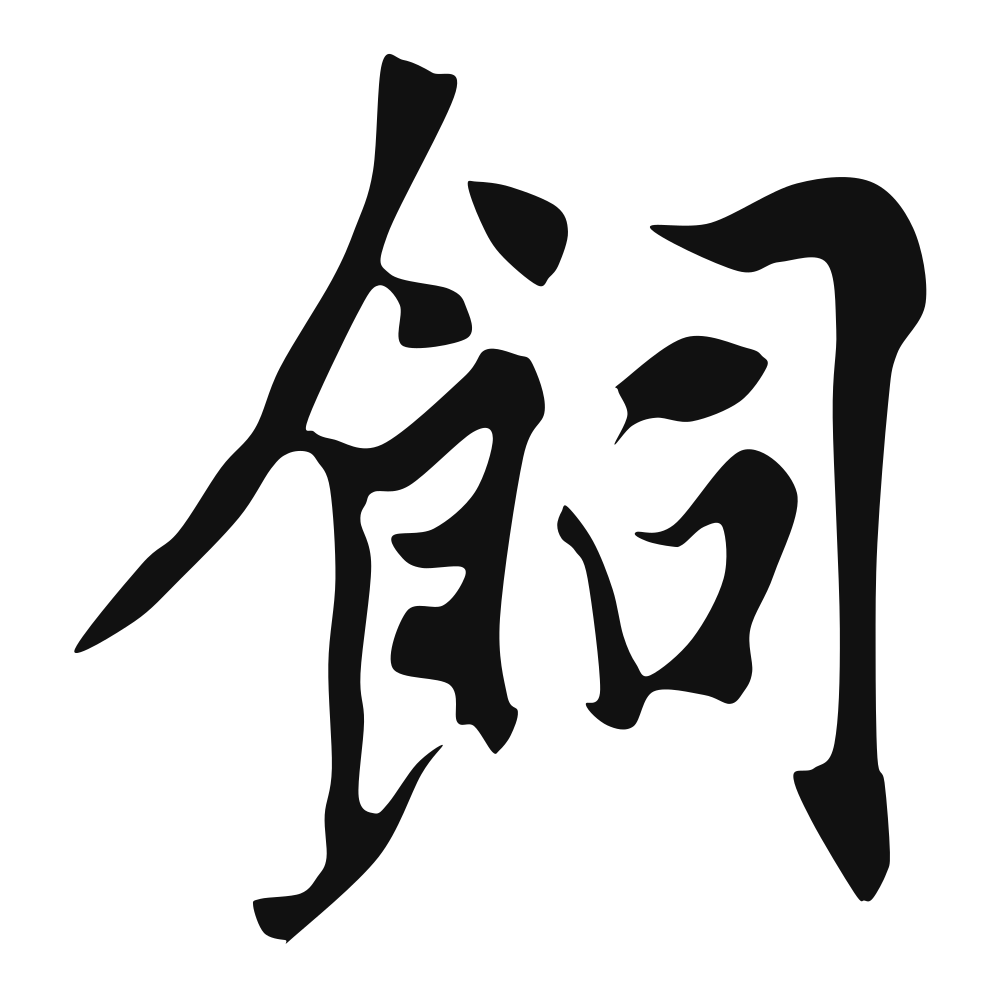
饲
to raise; to rear; to feed
Closest English meanings
raise·feed
The Calligrapher — Ōuyáng Xún 欧阳询
Tang regular-script master whose 'Ouyang style' is a basic learning model.
Tang calligrapher (557–641), master of regular script/running script — Tang codifier of regular script; crisp, architectural strokes you could measure with a ruler. Tang dynasty
Cultural Story
饲 (sì) sets 食 beside the phonetic 司, “to manage.” The word means to feed and thereby raise living things, an extension of 食 from eating to the care of others who eat at our hand.
Common words & phrases
- 饲养 raise · breed
- 饲料 feed · fodder
- 饲育 breed
Read the story behind the character
饲 is the language of husbandry. Farmers 饲养 (raise, breed) livestock, mix 饲料 (fodder) for pigs and chickens, and 饲育 (breed) silkworms or fish. The character keeps the practical rhythm of feeding a farm.
Why this character belongs on skin
You chop the greens and call them to the gate, and the small lives come running. 饲 is the act of feeding—not eating, but giving the food, the daily devotion of the hand that fills another mouth. The character sets food beside a person who tends; it meant to nourish what depends on you, the calf, the aged parent, the caged thing you chose to keep. The Buddhists count 饲 among the mercies, because to feed is to admit the world is hungry and you are, for this moment, its answer. To wear 饲 is to take up the quiet labor of care—the meal made, the water changed, the love administered like medicine. It is the palm extended, the bowl set down without expectation of thanks. Let it mark your hand, the instrument of the gift. Some marks celebrate the self; this one celebrates the self that feeds others. Wear it and you carry the oldest proof that love is mostly the repeated, unglamorous act of giving someone their next meal.
Own this character
Purchase delivers the original SVG of this glyph, brushed by Ōuyáng Xún 欧阳询, ready to place on skin, paper, or screen.