
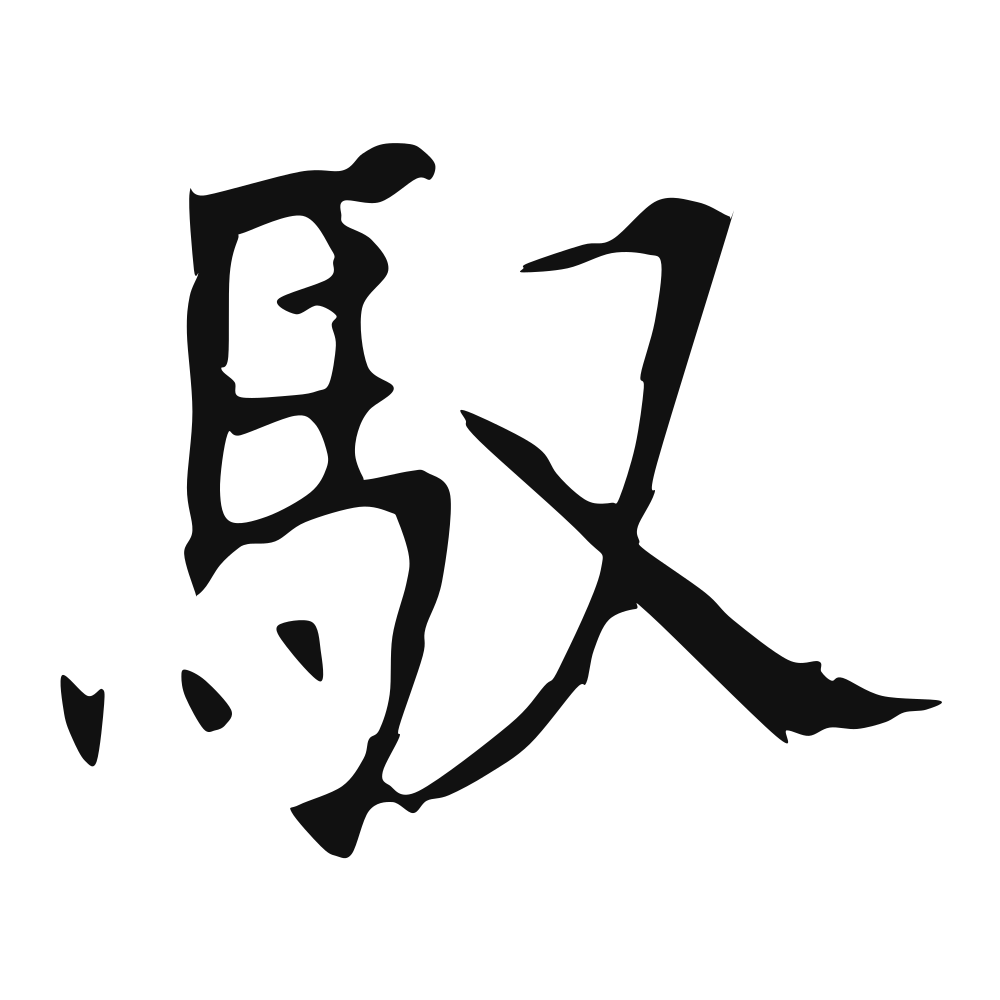
驭
to drive; to manage; to control
Closest English meanings
drive·control·manage
The Calligrapher — Ōuyáng Xún 欧阳询
Tang regular-script master whose 'Ouyang style' is a basic learning model.
Tang calligrapher (557–641), master of regular script/running script — Tang codifier of regular script; crisp, architectural strokes you could measure with a ruler. Tang dynasty
Cultural Story
驭 (yù) shows a hand, 又, guiding a 馬, “horse.” 《説文解字》 gives 使馬也, “to make a horse go,” the earliest word for driving a team. From reins it broadened to mastering any force.
Common words & phrases
- 驾驭 control · drive · master
- 驭手 driver · horseman
- 统驭 control · govern
Read the story behind the character
驭 means control and command. We 驾驭 (master, control) a difficult situation, a 驭手 (driver, horseman) guides the cart, and a leader must 统驭 (govern) a large organization. The character keeps the reins in hand.
Why this character belongs on skin
驭 is the art of holding reins—horse radical joined to the hand that governs, one of the six classical arts a young aristocrat had to master before he was taken seriously. Confucius studied it; the charioteer was the warrior's pilot, and mastery meant neither slackness nor brutality but the living negotiation between force and feel, hands that talk to a thousand pounds of muscle. Kings were judged by it: 驭下, to rein one's subordinates well, power as horsemanship. The Daoists pushed further—the charioteer who watches the road, not the horse, is their image of the unclenched mind. We all drive something: a temper, a habit, a team, a body, a grief. The question is never whether you hold reins but how. To ink 驭 is to claim the reins on purpose—discipline without deadening, control without choke. Place it on the back of the hand or the wrist, where the grip forms. Light hands, strong will. Ride.
Own this character
Purchase delivers the original SVG of this glyph, brushed by Ōuyáng Xún 欧阳询, ready to place on skin, paper, or screen.