
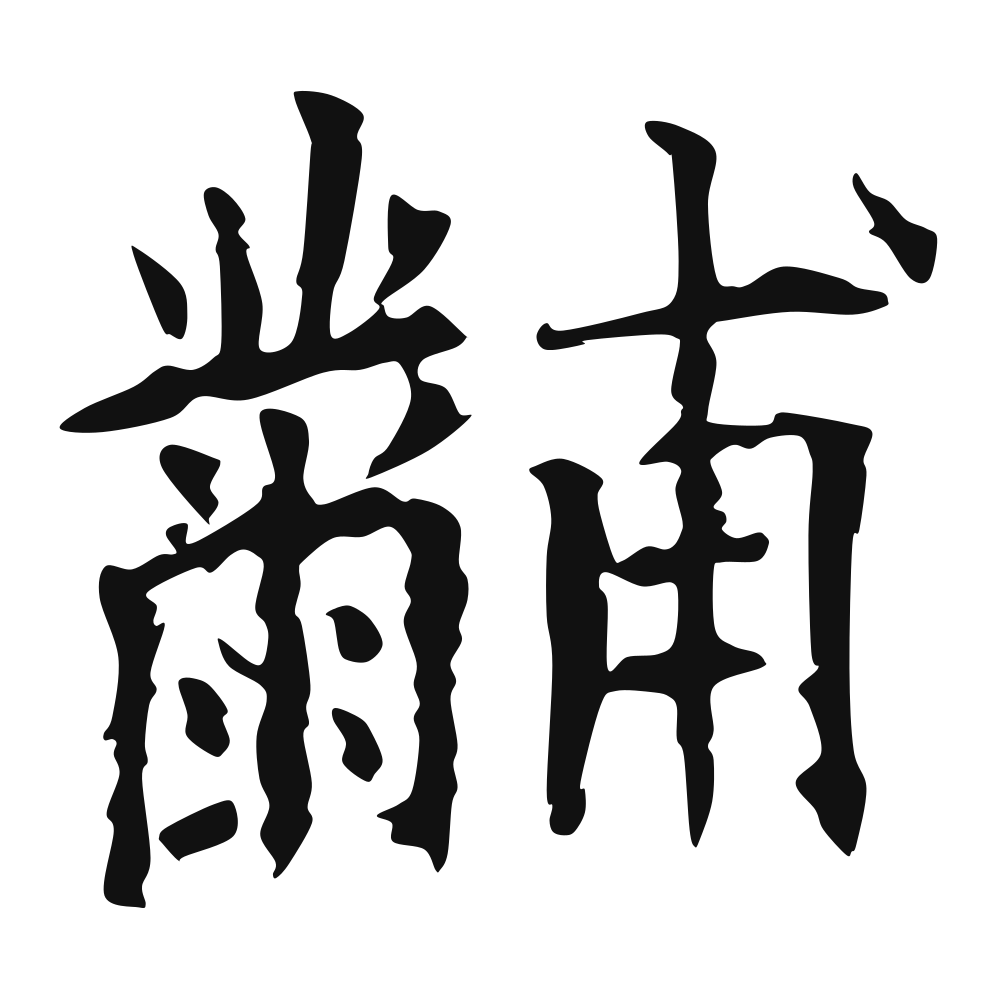
黼
(archaic) motif of axes with black handles and white heads, a symbol of authority embroidered on ceremonial robes
Closest English meanings
axe-pattern embroidery (on robe)
The Calligrapher — Ōuyáng Xún 欧阳询
Tang regular-script master whose 'Ouyang style' is a basic learning model.
Tang calligrapher (557–641), master of regular script/running script — Tang codifier of regular script; crisp, architectural strokes you could measure with a ruler. Tang dynasty
Cultural Story
《説文解字》gives 黼 as “白與黑相次文也” (the pattern of white and black in alternation), a phono-semantic compound from the black radical with the sound 甫. It was the axe-blade motif among the twelve imperial ornaments, cut in sharp light-and-dark contrast on the sovereign's robe to signify decisive power.
Common words & phrases
- 黼黻 embroidery · ornament · fine writing
Read the story behind the character
The 黼黻 (embroidery, ornament, fine writing) now praises polished prose as much as court needlework. Costume dramas stitch the white-black axe pattern on royal robes, and calligraphers borrow 黼 for flourishing inscriptions, so an ax-blade emblem of rule becomes a compliment to elegant writing.
Own this character
Purchase delivers the original SVG of this glyph, brushed by Ōuyáng Xún 欧阳询, ready to place on skin, paper, or screen.