
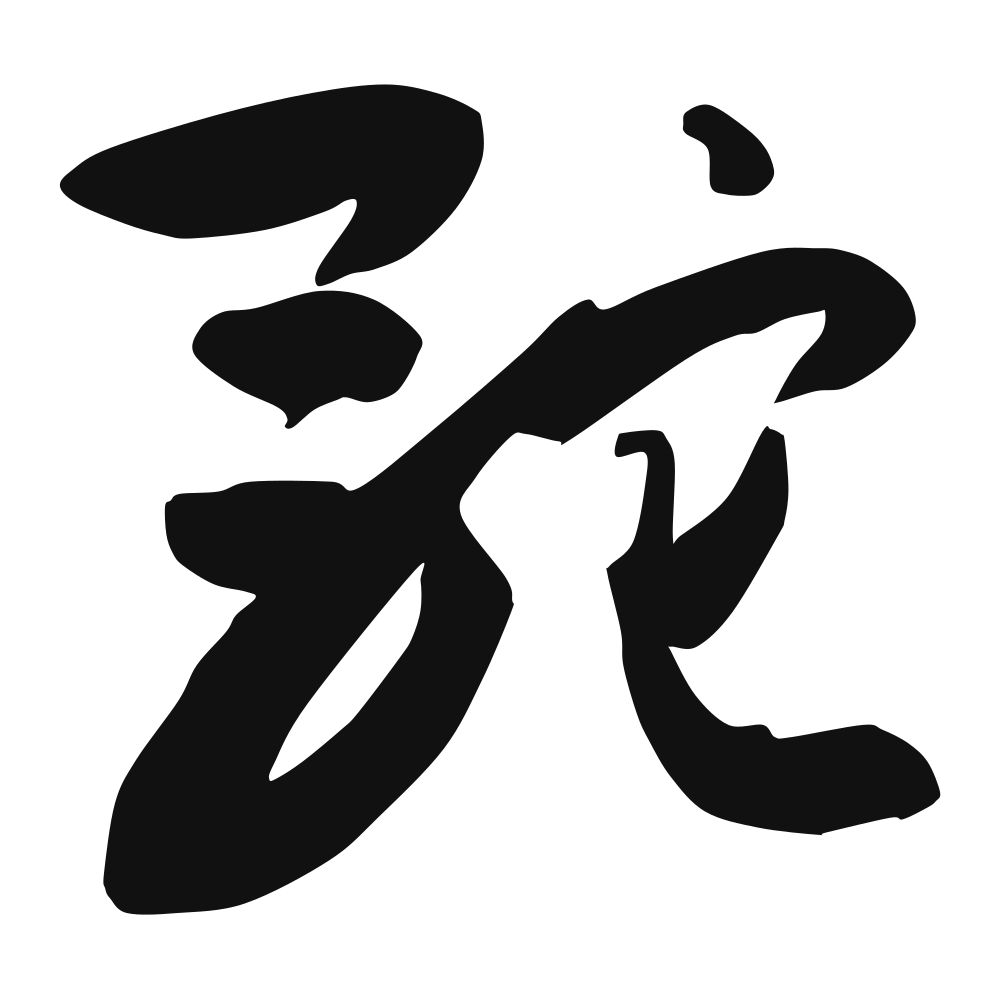
驼
hump or hunchbacked; camel
Closest English meanings
camel·hunchback
The Calligrapher — Péi Xiū 裴休
Tang chancellor and calligrapher; author of the Guifeng Stele in regular script.
Tang calligrapher (), master of regular script — known for 《圭峰碑》. Tang dynasty
Cultural Story
驼 (tuó) sets 馬 beside the phonetic 它, naming the camel, the “ship of the desert” that carries loads in its humped back. On the Silk Road it bore silk and spice for a thousand years.
Common words & phrases
- 骆驼 camel
- 驼背 hunchback
- 驼峰 camel hump
Read the story behind the character
驼 is the camel. The 骆驼 (camel) crosses dunes, a 驼背 (hunchback) curves like its slope, and a 驼峰 (camel hump) is both anatomy and a dish. The character carries the romance of caravan trails.
Why this character belongs on skin
He carries the desert on his back and asks for nothing. 驼 is the camel, the beast with the hump that stores the water of survival, the silent traveler of the long, waterless road. The Silk Road owed its life to him; the monk rode him toward the sutra and the sand. To ink 驼 is to honor endurance without spectacle — the capacity to hold what others cannot, to keep moving when there is no oasis in sight. There is a Buddhism of patient bearing, a Christ in the beast of burden. Let this character rest on the upper back, the place that carries, where your own load sits. Some marks celebrate the sprint; this one bows to the long haul, the unglamorous strength. Carry the camel. It is the proof that you, too, were built to bear the dry miles and still arrive, unhurried, whole.
Own this character
Purchase delivers the original SVG of this glyph, brushed by Péi Xiū 裴休, ready to place on skin, paper, or screen.