
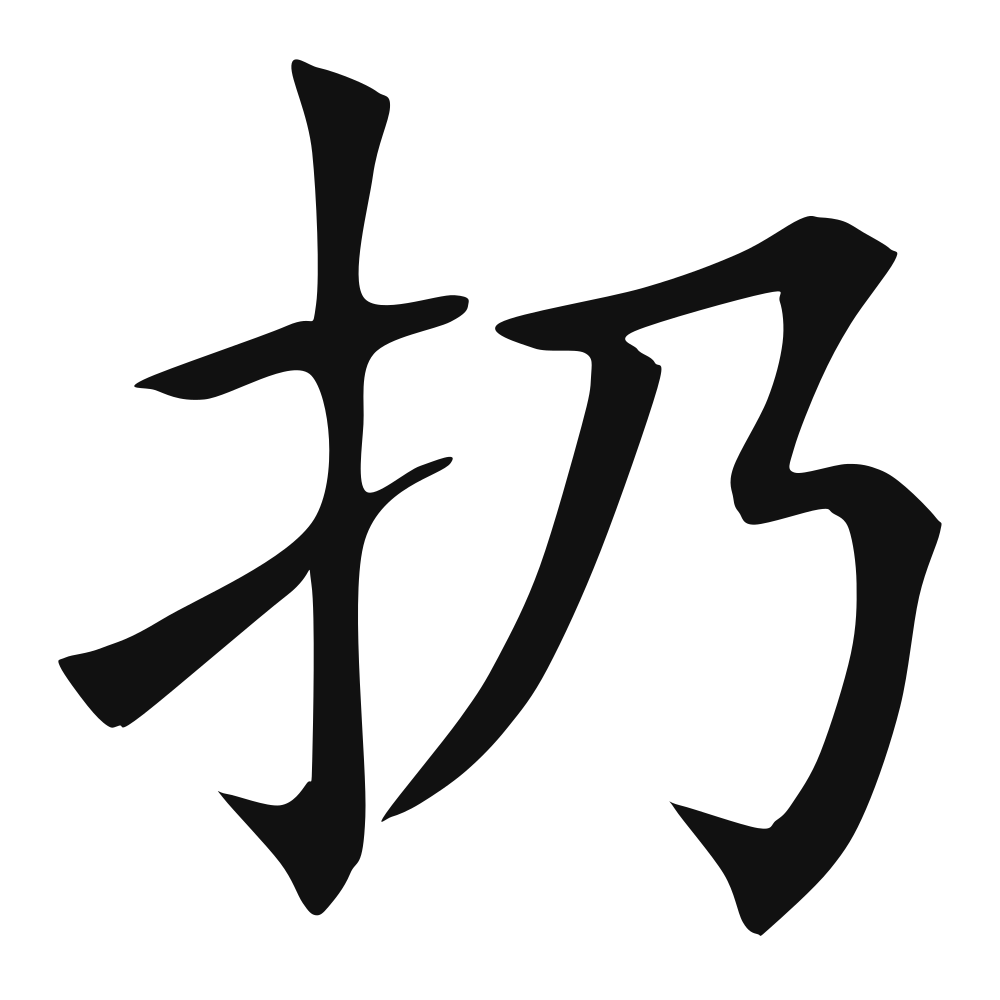
扔
to throw; to throw away
Closest English meanings
throw·cast·toss
The Calligrapher — Shěn Chuánshī 沈传师
Tang running-script master prized by Mi Fu for his lean, lofty style.
Tang calligrapher (), master of running script — known for 《柳州石》,米芾推重. Tang dynasty
Cultural Story
扔 is a late word for the throw; the classics preferred 掷 and 投 for the same arc. The vernacular gave it to the discard and the drop, the thing let go without ceremony. The hand with 乃, then, is the motion that ends in release. It is the casual heave, not the classical cast.
Common words & phrases
- 扔掉 throw away · discard
- 扔下 drop · leave behind
- 乱扔 litter · throw about
Read the story behind the character
扔 is the everyday discard: 扔掉 the receipt, 扔下 the bag you abandon, 乱扔 the litter on the stair. It names the letting-go with no ceremony, the opposite of 捡. We use it for the trash and the burden alike, the thing we are done carrying.
Why this character belongs on skin
扔 is to throw away — to cast off, to let something leave your hand for good. Its root is the hand and a motion of release, and there is a peculiar freedom in the character, the relief of the burden finally gone. We hoard too much: grudges, old loves, the selves we outgrew. To wear 扔 is to practice the art of the drop — the clean arc of letting go, the muscle memory of freedom. It is not careless; it is chosen. The Buddhist drops the load at the roadside; the warrior drops the enemy's gift. Place it where you carry your weight — and let it mean you have learned the hardest lesson: that some things are lighter once they are airborne. Open the fingers. Feel it fall. Walk on lighter than you came.
Own this character
Purchase delivers the original SVG of this glyph, brushed by Shěn Chuánshī 沈传师, ready to place on skin, paper, or screen.