
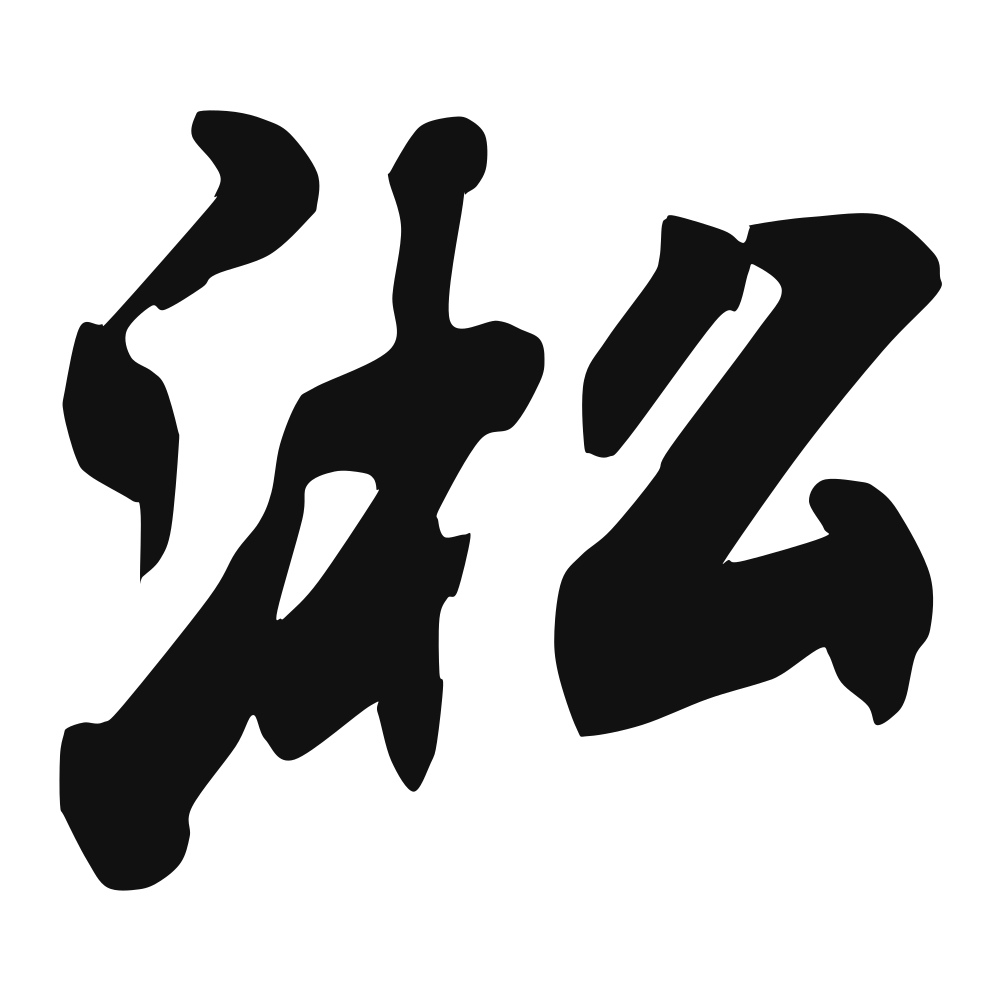
淞
name of a river in Jiangsu Province
Closest English meanings
river mist·Wusong
The Calligrapher — Shì Huáirén 释怀仁
Tang monk who compiled Wang Xizhi's script into the Sacred Teachings stele.
Tang calligrapher (), master of running script — known for 集王羲之行书《圣教序》. Tang dynasty
Cultural Story
淞 names a mist that clings to rivers in cold weather; the famous 雾淞 (rime) frosts the branches of the north into crystal white. The 吴淞 (Wusong) river guarded old Shanghai, and the 淞沪 (Wusong-Shanghai) front became a byword for resistance in the wars of the last century.
Common words & phrases
- 雾淞 rime
- 吴淞 Wusong
- 淞沪 Wusong-Shanghai area
Read the story behind the character
Winter tourists chase the 雾淞 (rime) coating the trees in silver. The 吴淞 (Wusong) dock still unloads containers at dawn, and the 淞沪 (Wusong-Shanghai) railway carries commuters into the city. Your map app routes you around the 淞沪 roads jammed with the morning traffic.
Why this character belongs on skin
Song is the name of rivers—the Wusong that pours through Shanghai into the sea—but northern China gave it a second, more enchanted life: wusong, the hoarfrost, the white rime that on certain winter dawns coats every branch of every tree along the riverbanks at Jilin, so that the world appears carved from crystal by morning and gone by noon. It is one of the great natural spectacles of the East, and it lasts hours. There is the whole teaching: the most beautiful states do not hold. Frost blossom, mist flower—beauty that requires you to be there, at dawn, on the cold bank, or miss it forever. The Buddhists said all conditioned things are like dew, like lightning; the frost trees are their gentlest proof. To wear song is to carry a winter river on the skin and its lesson with it: love what blossoms briefly, go out early, stand in the cold when the cold is worth it. Some mornings the ordinary world dresses in light for you alone, and the only obligation is to look before it melts.
Own this character
Purchase delivers the original SVG of this glyph, brushed by Shì Huáirén 释怀仁, ready to place on skin, paper, or screen.