
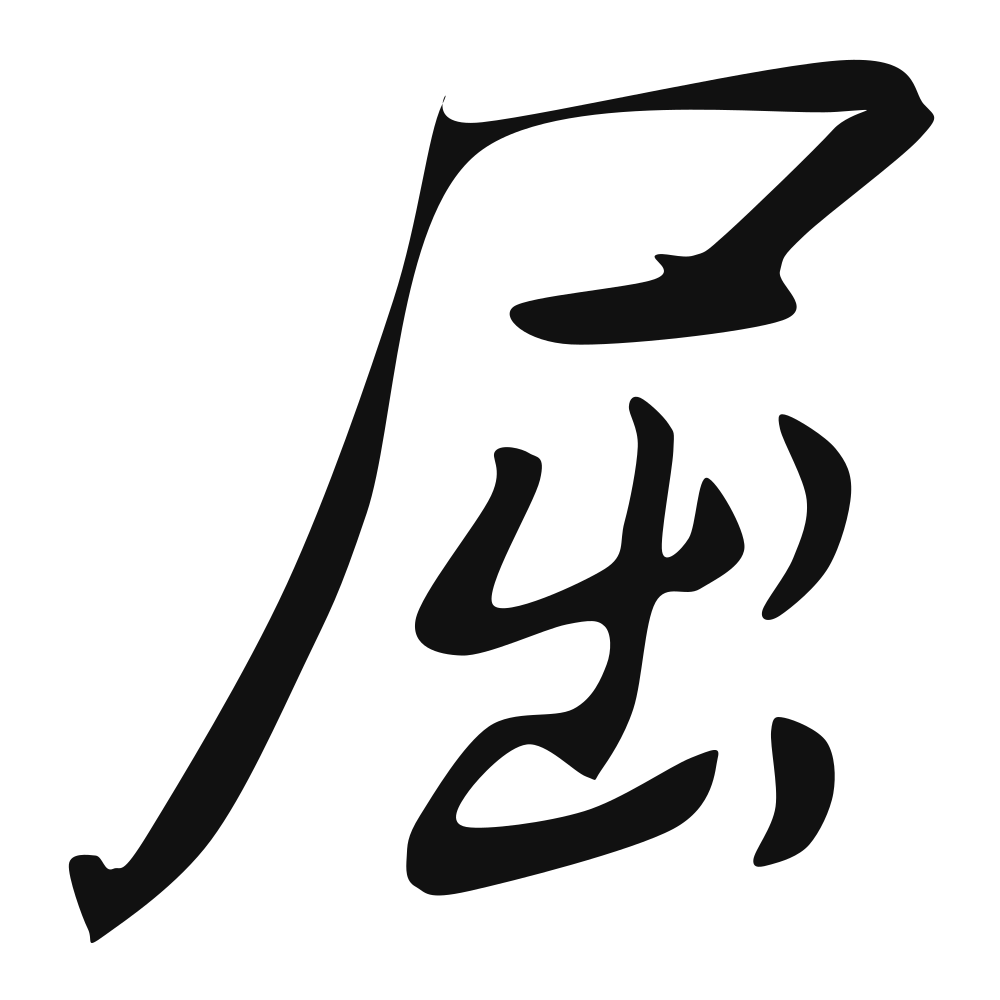
屈
surname Qu; bent; to feel wronged
Closest English meanings
bend·wrong·submit
The Calligrapher — Shì Zhìguǒ 释智果
Sui monk-calligrapher and student of Zhiyong; author of the 'Heart-Form Ode' on structure
Sui calligrapher (), master of regular script — known for 《心成颂》. Sui dynasty
Cultural Story
屈 shows a tail and a body, meaning to bend or to suffer wrong; the Shuowen gives to bend. One would 屈膝 (bend the knee) in submission, yet a hero stays 不屈 (undefeated). To feel 委屈 (wronged) was a classical sorrow, and to 屈服 (submit, yield) meant losing one's hard-won stance.
Common words & phrases
- 委屈 feel wronged
- 屈服 submit · yield
- 屈膝 bend the knee
- 屈指 count on fingers
- 不屈 undefeated
Read the story behind the character
You feel 委屈 (wronged) when blamed unfairly, and refuse to 屈服 (submit, yield) to a bully. Kneeling means 屈膝 (bend the knee), and you 屈指 (count on fingers) the days to vacation. The phrase 不屈 (undefeated) headlines a comeback story; the word bends from the body to the will.
Why this character belongs on skin
The bamboo bends in the storm and does not break; the man who will not bend is kindling by morning. 屈 is to bend, to submit—and also the grievance of being wronged, the knee forced down against its will. The Daoist prizes the yielding; the warrior knows when to bow so he may rise. But 屈 also holds the unbroken spine, the 不屈 who would rather be broken than falsified. To carry this character is to hold both truths: the wisdom of the flexible and the honor of the unbent, and to know which is called for. Let it rest behind your knee, the joint that folds so you may stand again. It is a mark for the survivor, the one who has been pressed low and chosen, each time, whether to spring or to stand. The ink remembers the shape of your breaking and your refusal. Bend when the wind demands; rise when it passes. Either way, you are still here, and that is the only victory the storm cannot take.
Own this character
Purchase delivers the original SVG of this glyph, brushed by Shì Zhìguǒ 释智果, ready to place on skin, paper, or screen.