
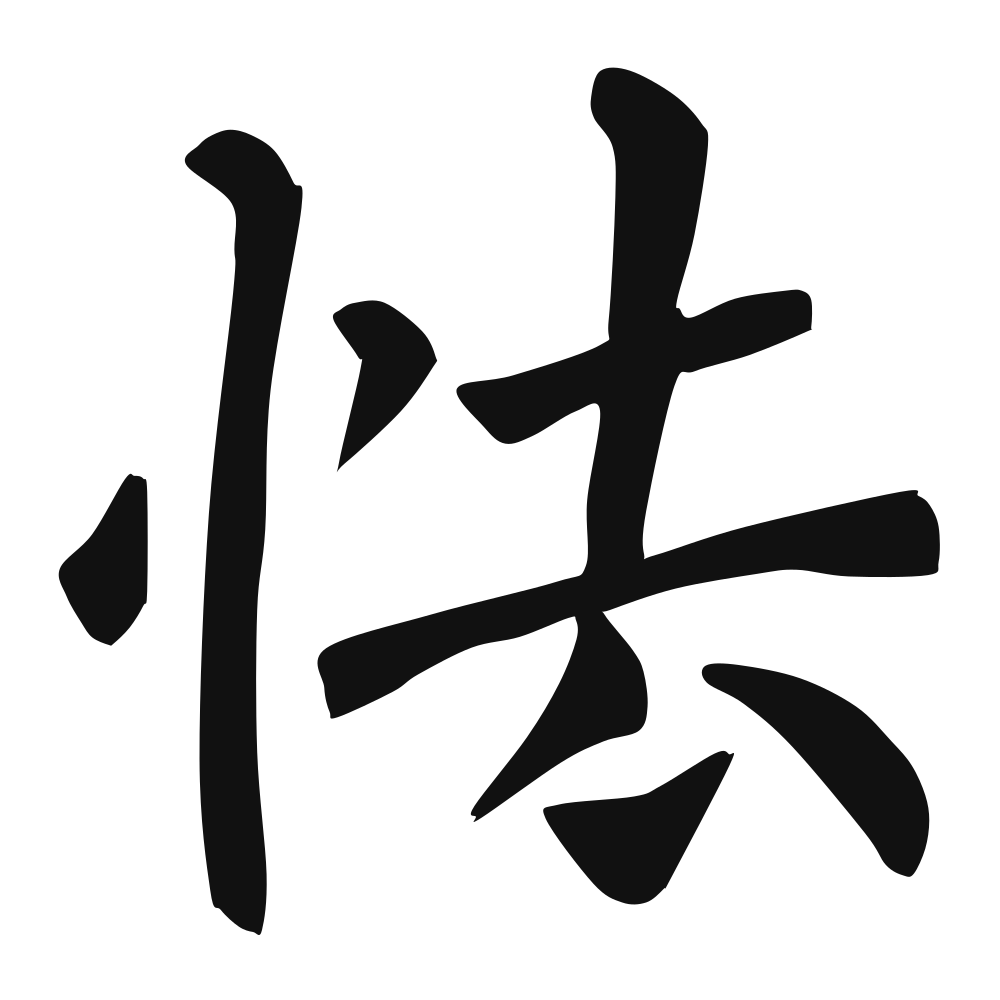
怯
timid; cowardly; rustic; Taiwan pr. [que4]
Closest English meanings
timid·cowardly
The Calligrapher — Shì Zhìguǒ 释智果
Sui monk-calligrapher and student of Zhiyong; author of the 'Heart-Form Ode' on structure
Sui calligrapher (), master of regular script — known for 《心成颂》. Sui dynasty
Cultural Story
怯 is the heart that shrinks. 胆怯 is the smallness at the edge of the act, and the word kept that flinch — not cowardice whole but the step taken back, the breath held when the room looks. A narrowing, not a flight; the body's vote against the risk.
Common words & phrases
- 胆怯 timid · shrinking
- 怯弱 timid and weak
- 怯场 stage fright
- 羞怯 shy · timid
Read the story behind the character
胆怯 is the fear before the speech, 怯场 the blank at the stage, 羞怯 the look a stranger draws, 怯弱 the softness a bully smells. The edge is a mic now; the flinch is universal. We still shrink at the act, and call the flinch nerves, which the old word already held without shame.
Why this character belongs on skin
The hand reaches and then withdraws, the word forms and then dissolves, not from lack of love but from the old, learned fear of wanting. 怯 is timidity, the cowardice that lives beside desire like a smaller brother. The warriors despised it; the poets understood it, for 怯 is often just tenderness afraid of its own exposure. To be 怯 is to feel the stakes. A tattoo of this character is not a confession of weakness but a memorial to the courage it costs you to be soft. Wear it where the wrist bends, the place that flinches. You were afraid and you reached anyway. That is the whole of it. The fearless man feels nothing; only the trembling one knows the price of a single honest gesture.
Own this character
Purchase delivers the original SVG of this glyph, brushed by Shì Zhìguǒ 释智果, ready to place on skin, paper, or screen.