
The Calligrapher — Shì Zhìguǒ 释智果
Sui monk-calligrapher and student of Zhiyong; author of the 'Heart-Form Ode' on structure
Sui calligrapher (), master of regular script — known for 《心成颂》. Sui dynasty
Cultural Story
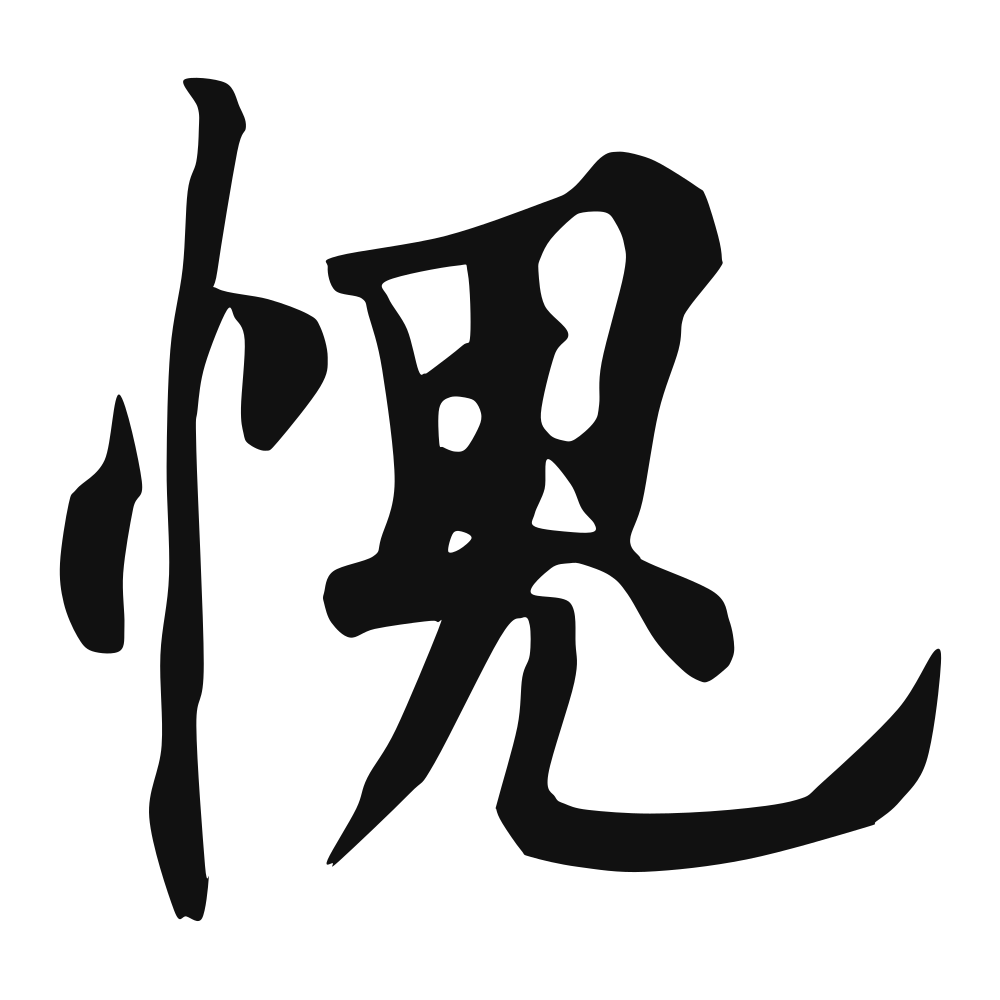
愧 is the shame that measures you against a standard. The men of the 論語 felt 愧 before the man who lived better, and the word always implies a witness, real or imagined. The heart with 鬼, a spirit, is the dread of being seen wanting. It is the inward accounting, the soul caught in its own light.
Common words & phrases
- 惭愧 ashamed · embarrassed
- 愧疚 guilty · remorseful
- 无愧 worthy · not ashamed
- 愧怍 ashamed
- 羞愧 ashamed · shameful
Read the story behind the character
愧 is the daily small shame: 惭愧 the favor you could not return, 愧疚 the promise you broke, 无愧 the life you can defend. 羞愧 is the lie that surfaced. It names the gap between the self and the self's own expectations, the quiet audit everyone runs.
Why this character belongs on skin
The heart radical, and beside it a character meaning ghost — this is shame as a haunting: the dead voice at the dinner table, the replay that starts the moment the lights go out. Confucianism took the feeling seriously in a way modern culture is too embarrassed to manage: shame at falling short of your own standard was considered the beginning of virtue, not the end of it. A person incapable of it was called shameless, and it was never a compliment. The danger, of course, is living as the ghost's tenancy — renting your skull to a tenant who never leaves and never forgives. The traditions drew a line between the shame that teaches and the shame that devours, and the line is whether it moves you to mend. Ink this character for the mornings after. A treaty signed with your conscience: haunted, yes — but taught, and mending, and still here.
Own this character
Purchase delivers the original SVG of this glyph, brushed by Shì Zhìguǒ 释智果, ready to place on skin, paper, or screen.