
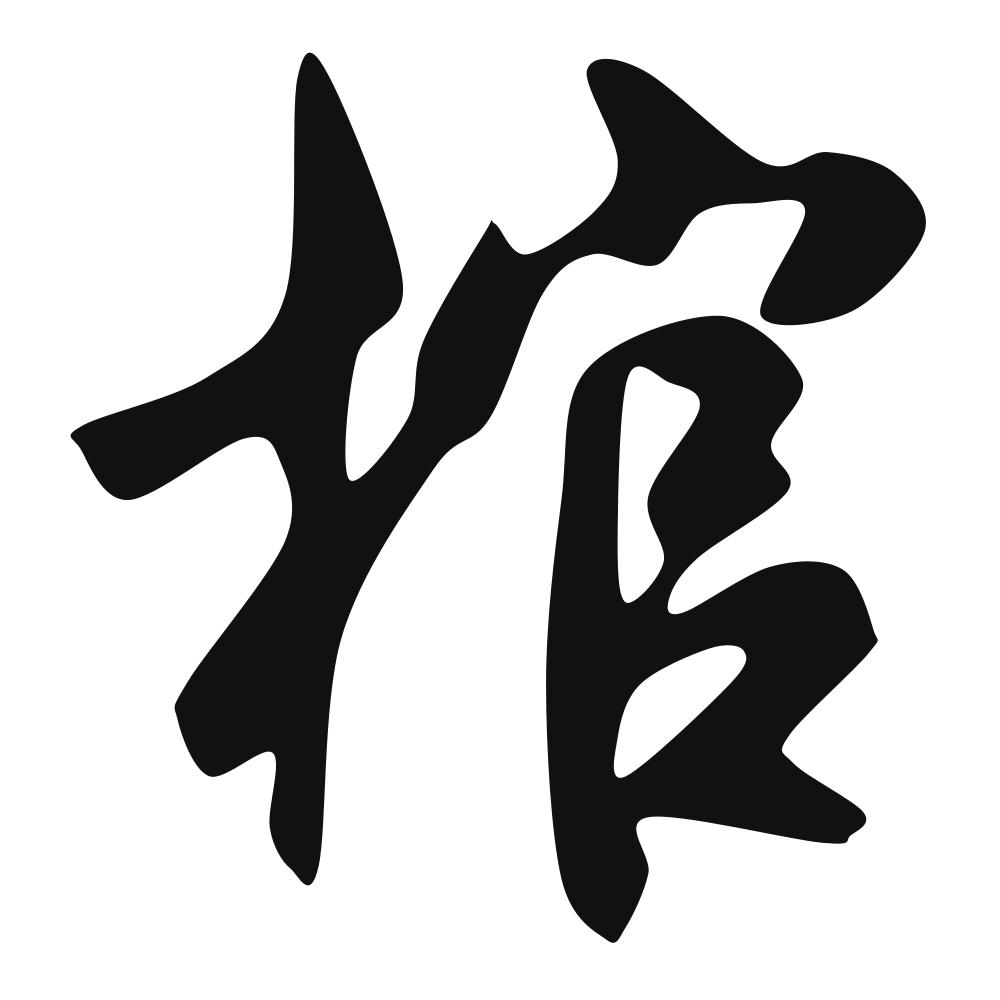
The Calligrapher — Sòng Lián 宋濂
Ming founding-era scholar of upright regular script.
Ming calligrapher (), master of regular script — known for 明初文臣. Ming dynasty
Cultural Story
棺 is the coffin, the 木 that receives the dead — and the 棺椁 the inner and outer shells a noble was entitled to, a measure of rank in death as in life. The character is the final timber, the box that closes a biography. The 論語-era mourners spent fortunes on it and the ceremony around it.
Common words & phrases
- 棺材 coffin
- 棺木 coffin · coffin wood
- 棺椁 inner and outer coffins
Read the story behind the character
棺 is the box at the end: 棺材 the plain pine of a village funeral, 棺木 the wood a carpenter shapes, 棺椁 the double shell in a museum of tombs. The character is death's furniture, the thing a family buys once and names rarely, the timber that ends the long account of a life.
Why this character belongs on skin
We spend our lives avoiding the shape of the last room. The guan — the coffin — is carved of wood and named for the official, as if death too required its appointed office. But the Buddhists whisper a stranger comfort: the body was always a vessel borrowing time, and what we fear is only the emptying of a borrowed cup. To ink guan is not morbidity; it is the freedom of the man who has made peace with the ending and so can live the middle without flinching. Memento mori, written in a tongue older than Latin. Let it sit close to the heart, not to darken you but to lighten the days — for the one who remembers the coffin walks lighter, loves louder, and fears less.
Own this character
Purchase delivers the original SVG of this glyph, brushed by Sòng Lián 宋濂, ready to place on skin, paper, or screen.