
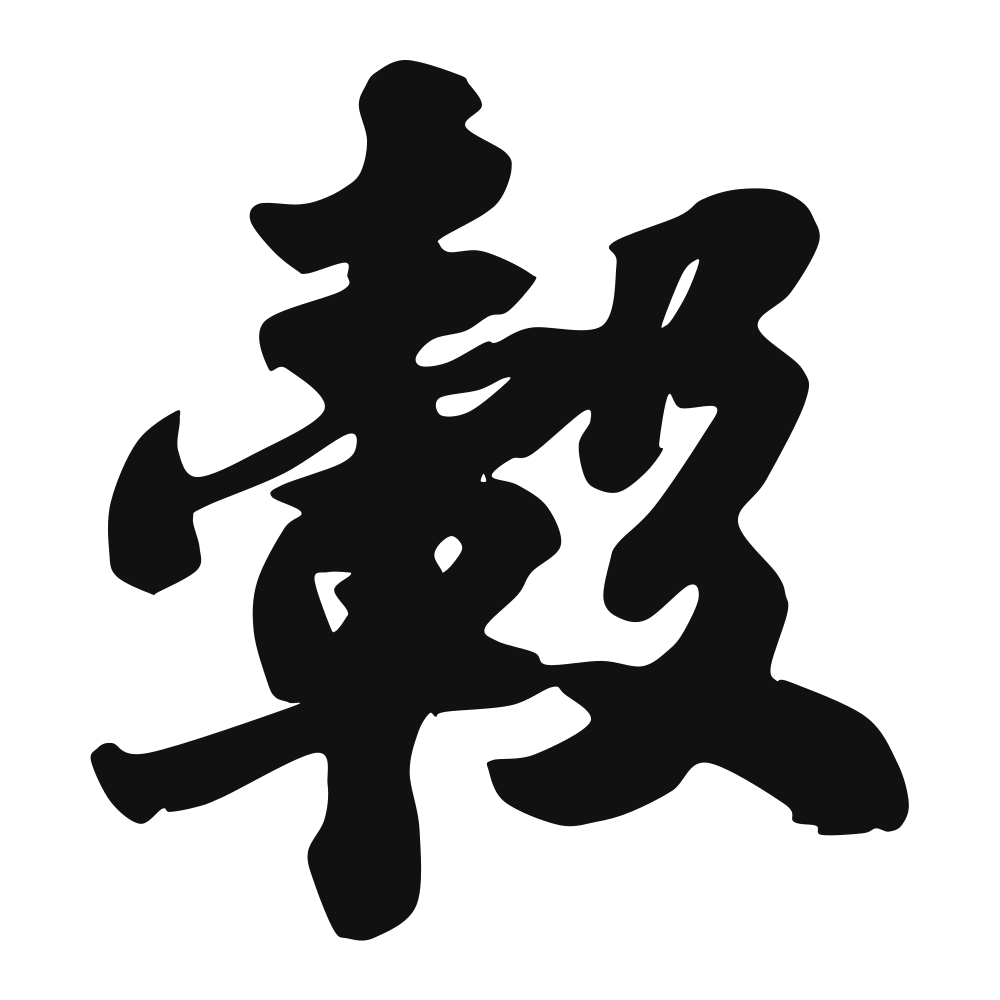
The Calligrapher — Sū Shì 苏轼
Song literatus whose spontaneous running script shaped the literati ideal.
Song calligrapher (1037–1101), master of running script/regular script — Song poet-statesman and polymath whose expressive running script made personality, not rules, the point. Song dynasty
Cultural Story
毂 is the hub at the center of a wheel, the part where the spokes meet the axle. The 說文解字 defines it plainly as '輻所湊也', where the spokes gather. 莊子 and later writers used 轂 to evoke motion and convergence; ancient chariots, with their lacquered 車轂 and 輪轂, carried nobles and armies across the realm.
Common words & phrases
- 轮毂 wheel hub
- 车毂 wheel hub
Read the story behind the character
Today the 輪轂 (wheel hub) is what car lovers polish and brag about, and a bent 車轂 after a pothole means a costly repair. Though we no longer ride chariots, the hub still sits at the heart of every spinning wheel — from a delivery bike to a high-speed train — quietly holding the spokes together.
Why this character belongs on skin
Laozi saw it first and never stopped saying it: thirty spokes meet at the empty hub — 毂 — and it is the emptiness at the center that makes the wheel useful. The hole does the work. The Dao De Jing's eleventh chapter turns entirely on this, clay pots and rooms and hubs, all useful because of their hollow, all ruined by being filled. 毂 is that still point where every spoke arrives, where all the motion of the road gathers into silence and comes out as rolling; the chariots of six kingdoms turned on it and none of their riders thought of it once. Your life has spokes — work, love, grief, hunger, the phone that never stops — and they need somewhere to meet, or they tear the wheel apart. Ink 毂 over the sternum or the wrist, wherever you keep your center: the quiet hollow the spokes obey, the emptiness that turns everything.
Own this character
Purchase delivers the original SVG of this glyph, brushed by Sū Shì 苏轼, ready to place on skin, paper, or screen.