
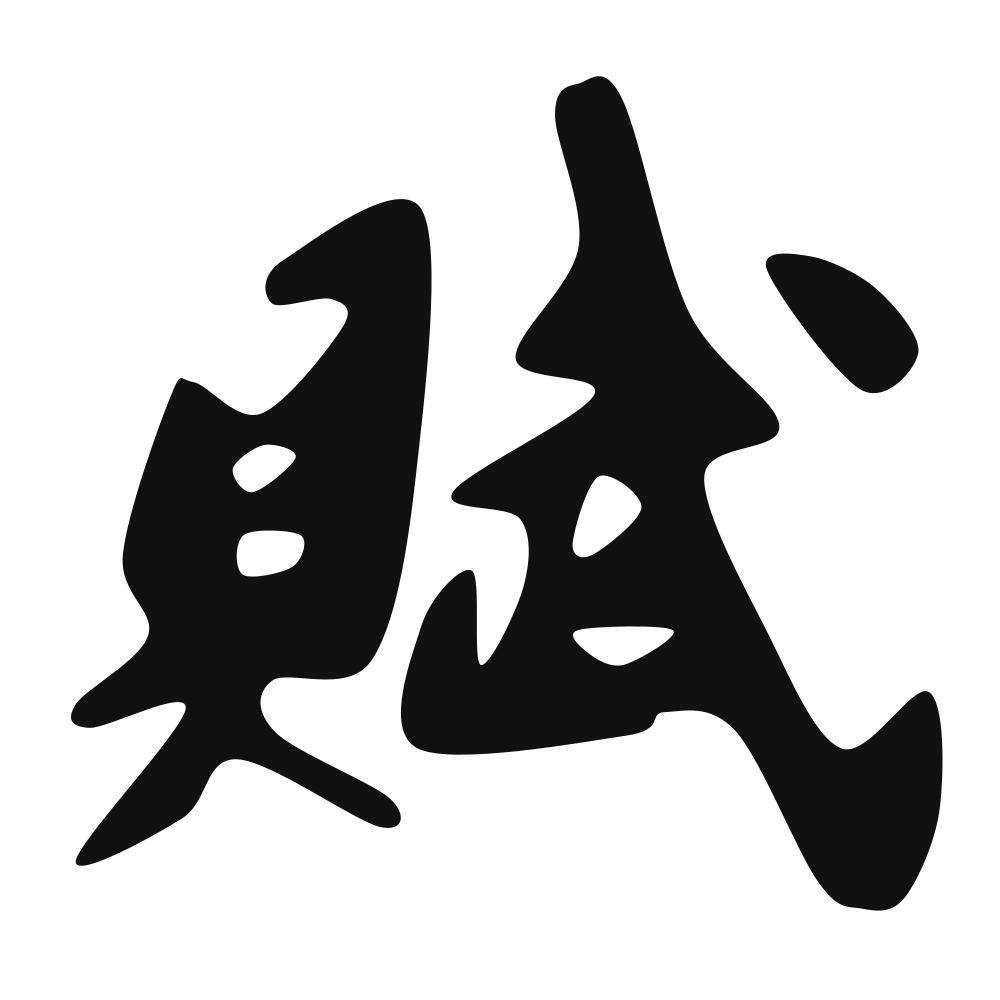
赋
poetic essay; taxation; to bestow on; to endow with
Closest English meanings
tax·compose·endow·bestow
The Calligrapher — Sū Shì 苏轼
Song literatus whose spontaneous running script shaped the literati ideal.
Song calligrapher (1037–1101), master of running script/regular script — Song poet-statesman and polymath whose expressive running script made personality, not rules, the point. Song dynasty
Etymology & Meaning · 字义溯源
2 · The Character: 赋 赋 (賦, fù) begins as a fiscal word. The Shuowen Jiezi (《说文解字》 貝部) glosses it '賦,斂也' — to levy, to gather in; the graph is 貝 (cowrie money) plus 武 (military), the tax that feeds an army. 《前汉·刑法志》 spells it out: '税以足食,赋以足兵'. From levying it turned to bestowing — 朱熹 on 《礼·中庸》: '气以成形,理亦赋焉', form is given and pattern is bestowed with it; hence 天赋, heaven-endowed talent. Third, it names a literary genre. 《诗·周南·关雎序》 lists the six modes: '诗有六义…二曰赋'; 疏 explains '赋之言铺,直铺陈今之政教善恶' — direct exposition. Ban Gu: '赋者,古诗之流' (《两都赋序》), and Su Shi's 《赤壁赋》 is the form's summit. 赋 is a free morpheme. Honest note: modern Chinese hears 赋 first as 税赋 (taxation) or 天赋 (innate talent), not as 'poetry'. Sell it as what is levied and bestowed — never simply as 'a poem'.
Cultural Story
When Sima Xiangru presented his 子虚赋 to the Han emperor, the ruler sighed that he had missed such a man in his own age. 赋, the rhapsody, was both poem and praise, and 赋税 its colder twin, the tax a household owed. The same character could sing a hunt or reckon a ledger.
Common words & phrases
- 赋予 endow · bestow · entrust
- 天赋 talent · gift · endowment
- 赋税 taxes · taxation · levy
- 辞赋 rhapsody · fu prose · poetic essay
- 赋闲 unemployed · idle · at leisure
- 赋诗 compose a poem · write verse
Read the story behind the character
At a graduation, a speaker says each student is 赋予, endowed, with 天赋, a gift, for something. An accountant files 赋税 while a retired uncle sits 赋闲, idle, by the window. From Han rhapsodies to a tax form, 赋 still names what is given or owed by fortune and state. The poem and the tax share one roof, the gift given and the share taken.
Why this character belongs on skin
It begins as a whisper of wealth—贝, the shell of money—joined to a hand that gives. 赋 means to endow, to be granted something native and unearned: talent, temperament, the raw gift. In the classics it also names the fu, that rhapsodic prose-poem meant to dazzle an emperor's court with cascading images. So the character holds both meanings at once: what you were given, and what you make of it—endowment transmuted into art. There is no luck here without labor; the gift is only the first beat of the music, never the whole song. A tattoo of 赋 says: I was given this fire, and I intend to spend it beautifully. Some inheritances you write onto the skin itself, word by burning word.
Own this character
Purchase delivers the original SVG of this glyph, brushed by Sū Shì 苏轼, ready to place on skin, paper, or screen.