
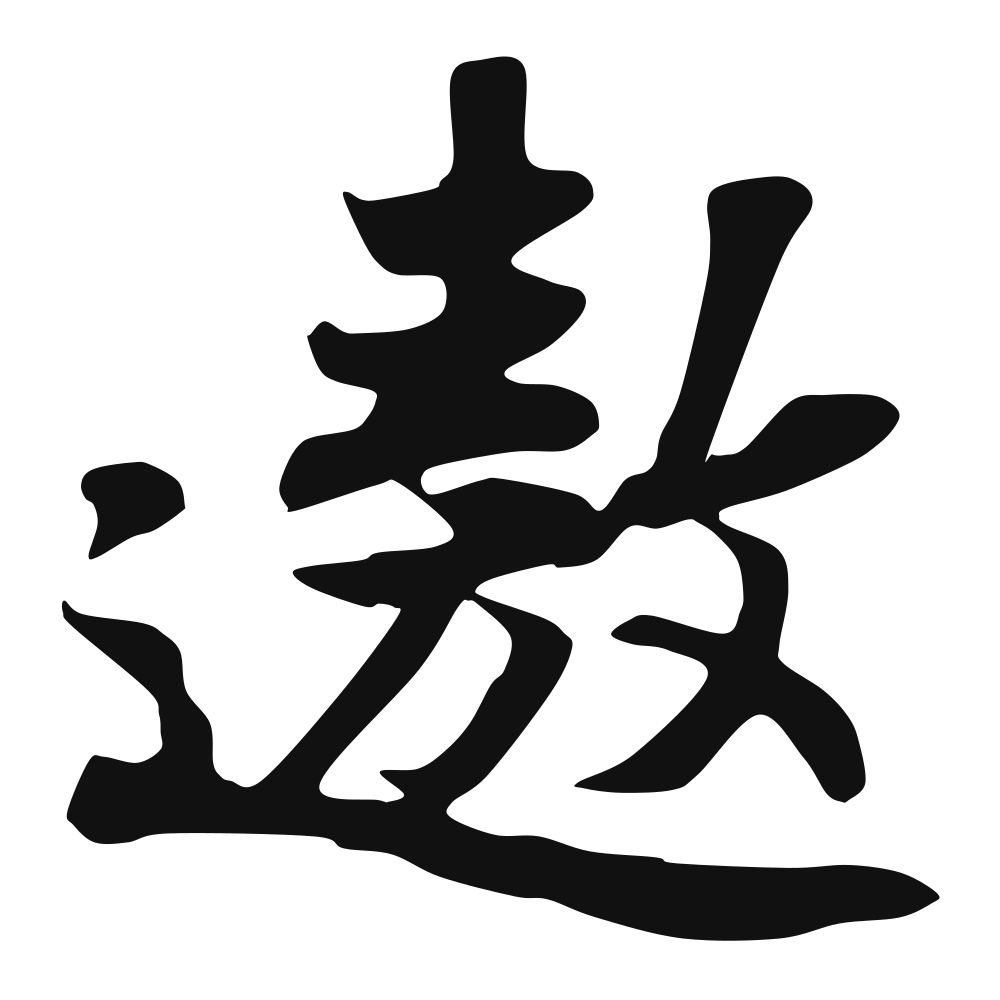
遨
to make an excursion; to ramble; to travel
Closest English meanings
roam·wander·travel freely
The Calligrapher — Sū Shì 苏轼
Song literatus whose spontaneous running script shaped the literati ideal.
Song calligrapher (1037–1101), master of running script/regular script — Song poet-statesman and polymath whose expressive running script made personality, not rules, the point. Song dynasty
Cultural Story
Qu Yuan's 'Far-off Journey' (远游), one of the Chu Ci poems, sends the speaker's spirit drifting beyond the nine heavens and the four seas. The word 遨游 later named exactly that motion — a free, unhurried roaming with no destination in view. Han and Tang poets reached for it whenever they pictured an immortal or a released scholar wandering the misted peaks.
Common words & phrases
- 遨游 roam · travel · wander freely
Read the story behind the character
On a quiet afternoon a student opens her laptop and 遨游 the open web, drifting from a history article to a map of old trade routes with no particular aim. The word fits the mood exactly: free movement without a fixed destination. Later she laces her shoes and 遨游 the lakeside path on a bicycle, the same unhurried wandering translated into motion.
Why this character belongs on skin
遨 is the free part of 遨游—roaming without errand, going because the legs want to and the map does not object. The Zhuangzi's wanderer drifts this way, 逍遥游, riding nothing, tied to nothing; the immortals of the Li Sao tour the four quarters of the sky on it. This is not travel, which has an itinerary. It is the older, looser art of motion for its own sake—the walk that becomes a day, the road that becomes a decade, the character for every person who ever felt the walls and answered with departure. You know the itch. It is older than your plans: the hitchhiker's thumb of the soul, the wish to be a cloud with a bank account. Society files this under aimless. Zhuangzi files it under freedom, and history has mostly agreed with him. Ink 遨 on the foot, or the flank of a rib, and keep it as a standing permission slip—signed by you, addressed to you: go again, go nowhere in particular, and call the going holy.
Own this character
Purchase delivers the original SVG of this glyph, brushed by Sū Shì 苏轼, ready to place on skin, paper, or screen.