
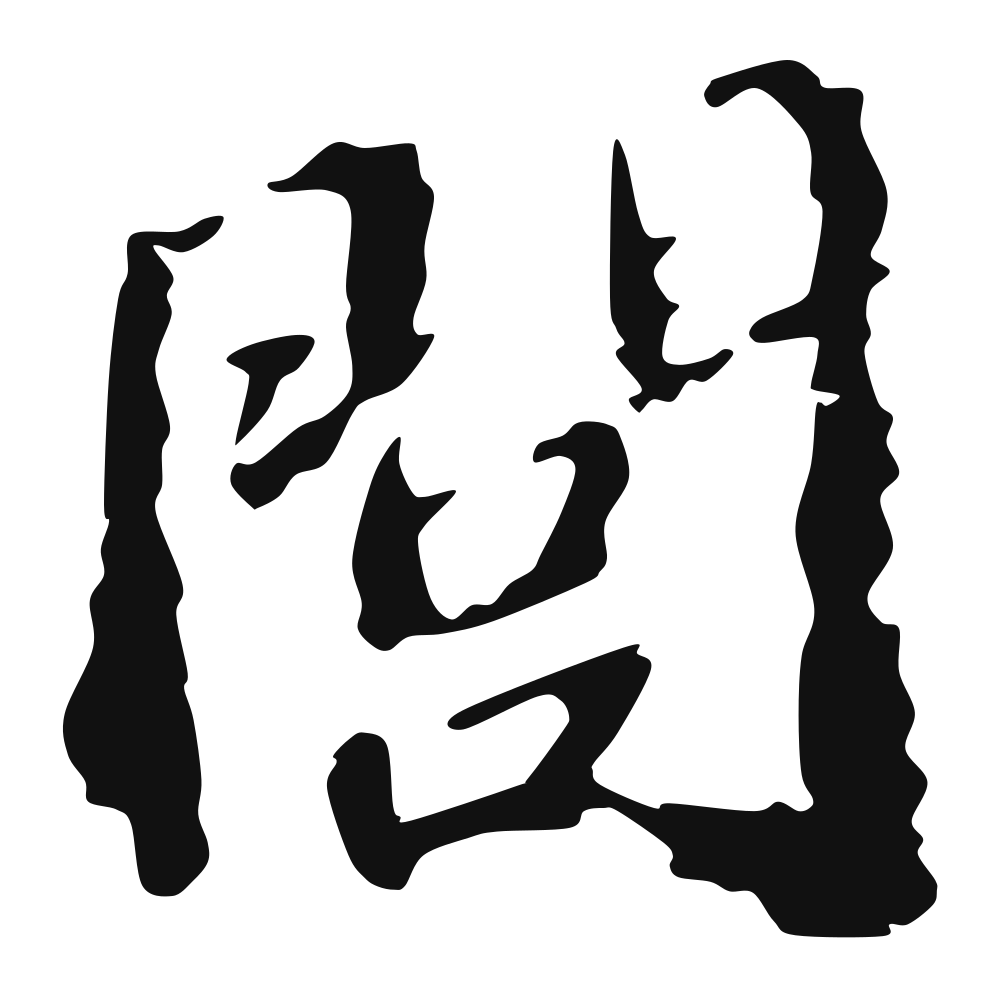
闾
gate of a village; village
Closest English meanings
village gate·neighborhood
The Calligrapher — Sū Shì 苏轼
Song literatus whose spontaneous running script shaped the literati ideal.
Song calligrapher (1037–1101), master of running script/regular script — Song poet-statesman and polymath whose expressive running script made personality, not rules, the point. Song dynasty
Cultural Story
閭 joins 門 with 呂 and in Zhou dynasty administration was the gate of a neighborhood unit, originally twenty-five families sharing an entrance. It stood for the local community, the small world of alley and lane where ordinary people lived. 闾里 and 闾巷 name these quarters, and 闾阎 became a polite term for the common folk and their humble dwellings.
Common words & phrases
- 闾里 neighborhood · village
- 闾巷 alley · lane
- 乡闾 hometown · native place
- 闾阎 common people · neighborhood
Read the story behind the character
Now 闾 survives mostly in writing about hometown and community: 乡闾 is one's native place, 闾巷 a narrow alley, and 闾阎 the common people. You meet it in memoirs of old towns and in official prose praising grassroots life. Though no village keeps a literal 闾 gate today, the character still evokes the neighborly scale of life before the megacity, the door shared by a street's families.
Why this character belongs on skin
In ancient China the lü was the gate of a neighborhood — twenty-five households sharing one entrance, one watch, one life in common. The character still carries the smell of it: cooking smoke, gossip at dusk, lanterns reflected in wet stone. We have been telling ourselves for two centuries that the individual is the real unit of existence, and the evidence keeps saying otherwise. The Hebrew prophets addressed cities; the early church met in courtyards; the Chinese made the village gate a word of its own. Belonging is not a sentiment but an architecture — a door through which everyone you owe and who owes you must pass. To wear this character is to declare a side in the oldest argument: against the hermit, for the hearth. It admits dependency, which is the one thing modern pride cannot stomach. But no one is saved alone, said the desert monk, and no one grieves alone either, if the gate is open. Keep it open.
Own this character
Purchase delivers the original SVG of this glyph, brushed by Sū Shì 苏轼, ready to place on skin, paper, or screen.