
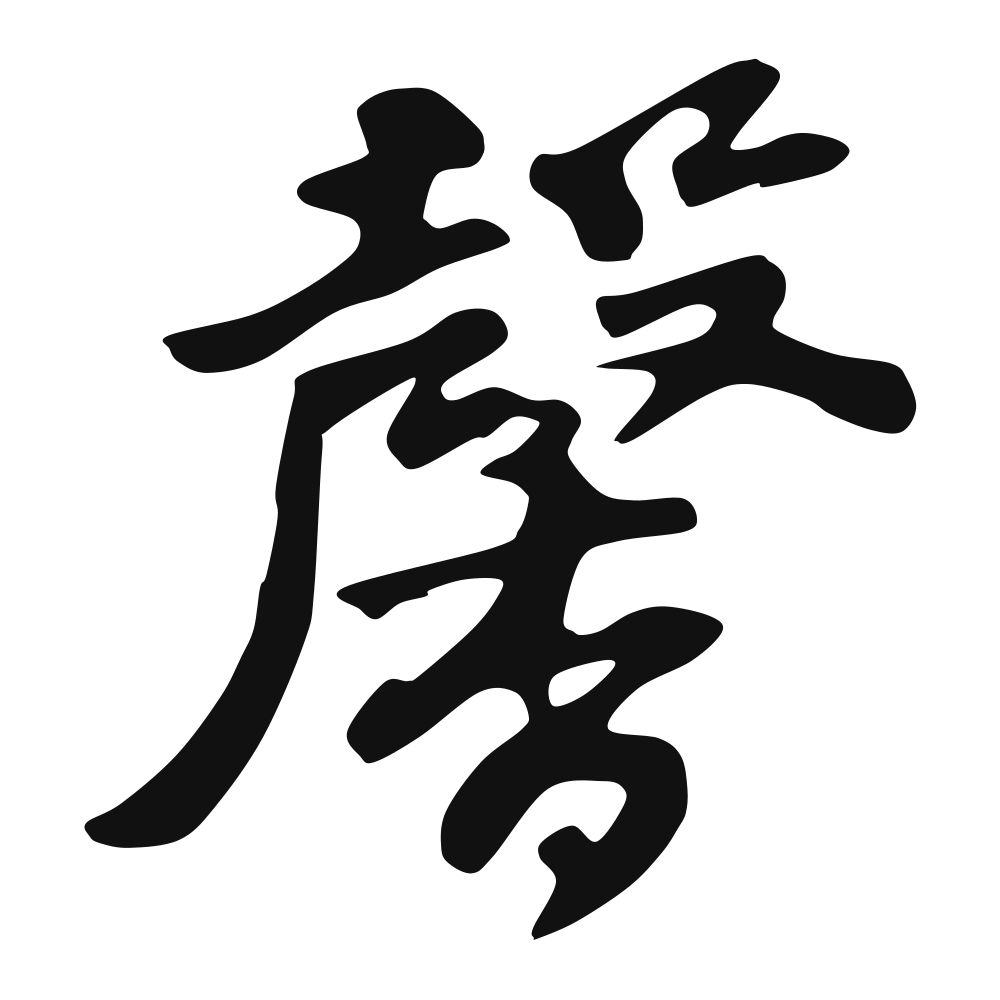
馨
fragrant
Closest English meanings
fragrant·aroma·sweet-smelling·scented
The Calligrapher — Sū Shì 苏轼
Song literatus whose spontaneous running script shaped the literati ideal.
Song calligrapher (1037–1101), master of running script/regular script — Song poet-statesman and polymath whose expressive running script made personality, not rules, the point. Song dynasty
Cultural Story
馨 (xīn) sets 香 beside the phonetic 殸. 《説文解字》 reads 香之遠聞也, “a fragrance heard from afar,” scent that travels far on the air. It praised both incense and a good name spreading widely.
Common words & phrases
- 温馨 warm · cozy · tender
- 馨香 fragrant · aroma · sweet smell
- 清馨 fresh fragrance · delicate scent
- 芳馨 fragrance · sweet smell
- 宁馨儿 lovely child · darling
Read the story behind the character
馨 means a fragrance that reaches far. A home feels 温馨 (warm, cozy), flowers give 馨香 (sweet aroma), a garden keeps 清馨 (delicate scent), and a 芳馨 (fragrance) marks a lovely place. A 宁馨儿 is a darling child.
Why this character belongs on skin
Some scents you notice; others you only miss when they're gone. Xīn is the second kind—a fragrance that travels, that lingers in a room after the flowers are taken away, that fills a hall not because it is strong but because it is true. The character joins fragrance with a vessel held up in offering, and the ancients used it first for the smell of sacrificial grain rising toward heaven—a sweetness meant for gods, not noses. Then the poets took it and gave it the higher meaning: virtue has a scent. The Book of Documents says a bright ruler's xīn-de—his fragrant virtue—reaches even the spirits. Li Bai named a daughter there. In a world drunk on noise, this character is an argument for the kind of person whose influence is like that aroma—unannounced, unforced, still present in the house years after they left it. You have met one; you know exactly who. This is ink for becoming that, or for carrying theirs with you: a sweetness given, a fragrance that stays.
Own this character
Purchase delivers the original SVG of this glyph, brushed by Sū Shì 苏轼, ready to place on skin, paper, or screen.