
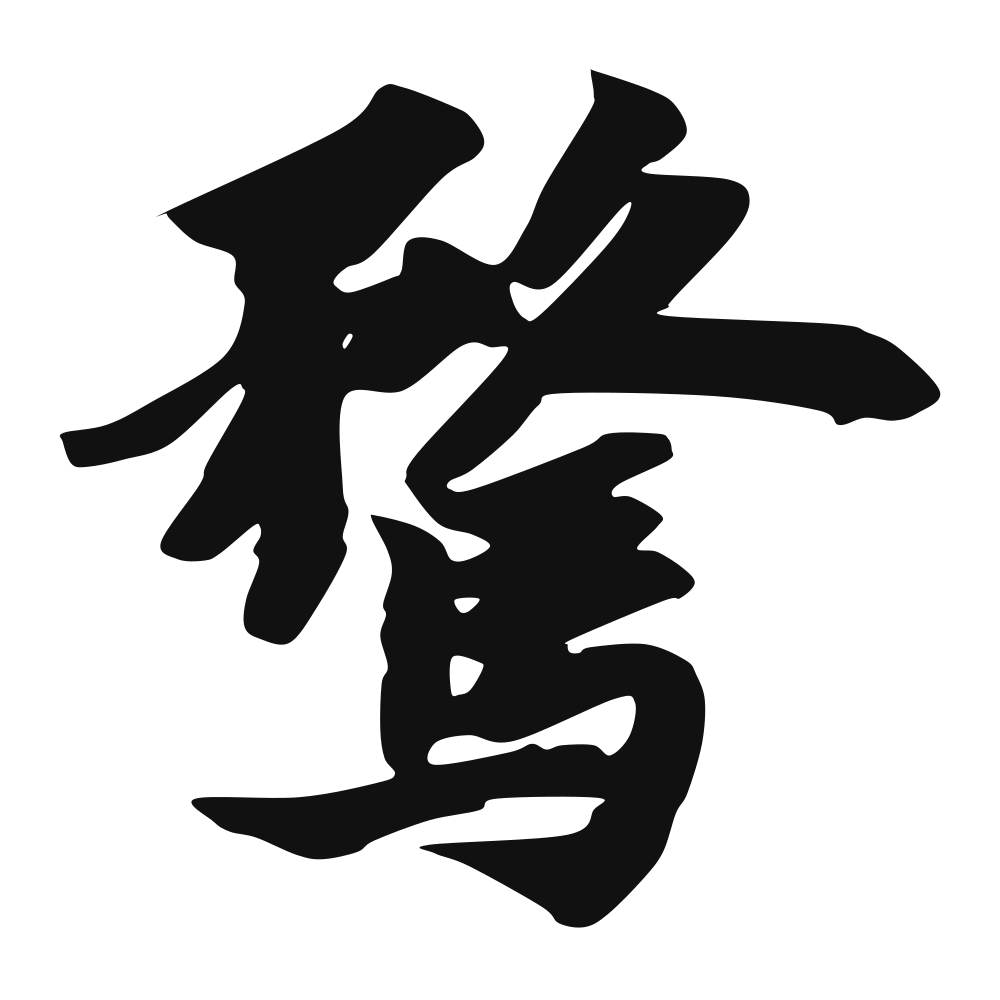
骛
(bound form) to rush about; to strive for
Closest English meanings
rush·seek·pursue
The Calligrapher — Sū Shì 苏轼
Song literatus whose spontaneous running script shaped the literati ideal.
Song calligrapher (1037–1101), master of running script/regular script — Song poet-statesman and polymath whose expressive running script made personality, not rules, the point. Song dynasty
Cultural Story
骛 combines 马 with 敄 and is defined in the 《説文解字》 as 乱驰也, "to gallop about chaotically." It captured a horse rushing heedlessly, and so came to mean pursuing or seeking after something with urgency.
Common words & phrases
- 好高骛远 aim too high · unrealistic
- 驰骛 gallop · range far
Read the story behind the character
We warn against 好高骛远, aiming too high and unrealistically, chasing dreams beyond reach. To 驰骛 is to range far in thought or ambition. The character still nudges us: motion without aim is just a horse running loose across the field.
Why this character belongs on skin
The horse radical is right there in the character, and it means exactly what it looks like: a horse at full stretch, mane flying, eyes on something far ahead. 骛 is the verb for wanting badly—for galloping toward, for being in motion because desire refuses to sit still. The classic phrase 好高骛远 chases what is high and distant, sometimes as criticism, but hear the adrenaline in it anyway. Buddhism would caution you; Confucius would tell you to trot; the Daoists would say the horse knows the way home without a map. But you have felt it, that pull in the chest that is not patience and cannot be reasoned with—the horizon problem, the ache that only velocity quiets. Every ambition you have ever had had hooves. This character does not promise you arrive. It promises the run: wind in the face, ground hammering under, the far thing growing real. Put it on and stay in motion. The distance was always the point.
Own this character
Purchase delivers the original SVG of this glyph, brushed by Sū Shì 苏轼, ready to place on skin, paper, or screen.