
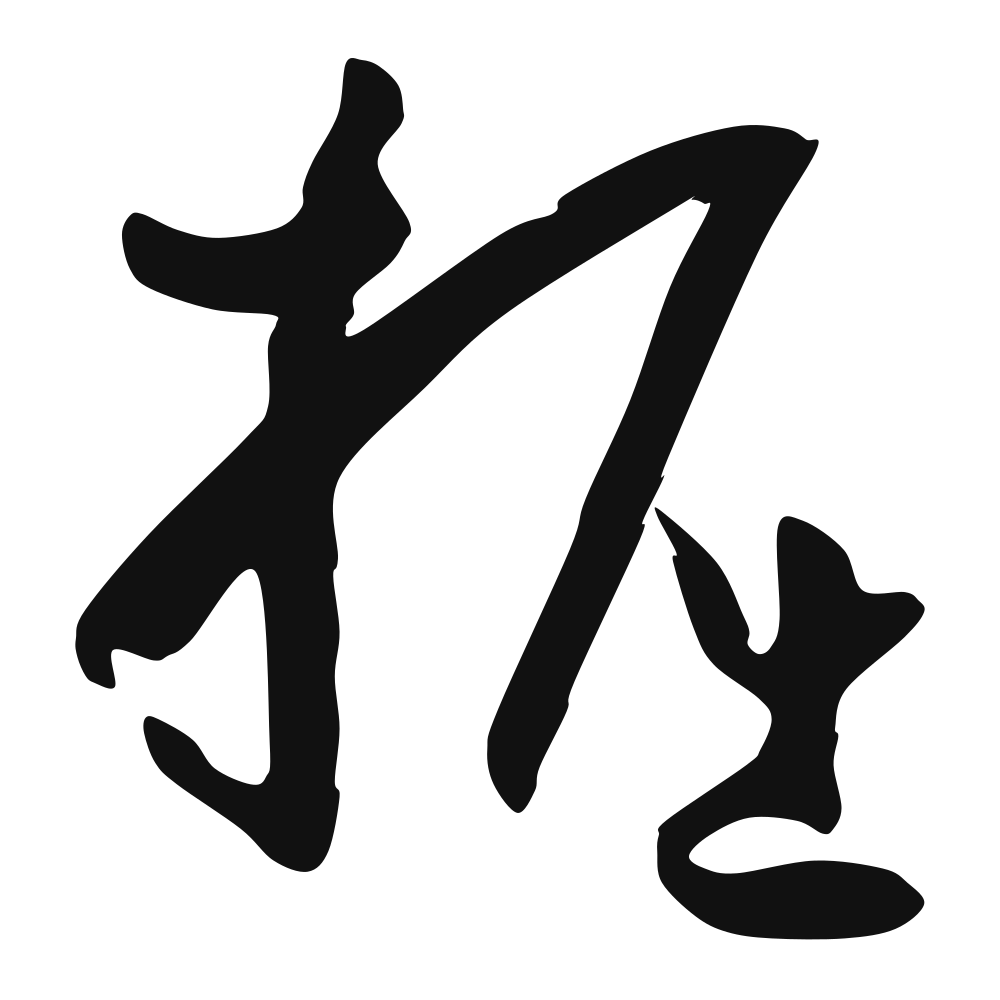
The Calligrapher — Sūn Guòtíng 孙过庭
Tang cursive master and author of the key treatise 'Shu Pu'.
Tang calligrapher (约646–691), master of cursive script — known for 《书谱》. Tang dynasty
Cultural Story
To 掘 is to dig the earth for water, for a grave, for a root, the oldest labor of the settled people. The annals show the besiegers 掘ing the rival's wells; the character is the hand against the soil, the downward argument with the ground, and the besieger who dug the enemy's well first drank from it, which is the whole point of a siege nobody admits.
Common words & phrases
- 挖掘 excavate · dig · unearth
- 掘土 dig earth
- 掘井 dig a well
- 掘进 driving (tunnel) · excavation
Read the story behind the character
A machine 挖掘s the metro; a man 掘井 for the village; a dog 掘土 for the bone. The besieged well is a tunnel now. The hand against the soil is the same, whether it brings water, a railway, or merely the bone a dog insists on owning, and the tunnel is only the well, lengthened until it scares the ground above it.
Why this character belongs on skin
The man with the broken spoon kept digging because somewhere below the rubble he heard a sound like water. To dig is to refuse the surface, to believe the truth is buried and worth the ache in the shoulders. The character is the hand and the deep cut into the earth, the patient violence of one who will not be satisfied with what lies on top. The Daoists dug their caves to sit in silence until the self collapsed; the miners and the archaeologists alike worship the same gospel of below. To wear this ink is to mark yourself as one who goes down for things, who has sweated for the buried reward. It is not the finding but the digging that defines you. Let it sit where the bone is close to the skin, a small tribute to every depth you have reached, proof that you are the kind of person who will not stop until you hit what is real.
Own this character
Purchase delivers the original SVG of this glyph, brushed by Sūn Guòtíng 孙过庭, ready to place on skin, paper, or screen.