
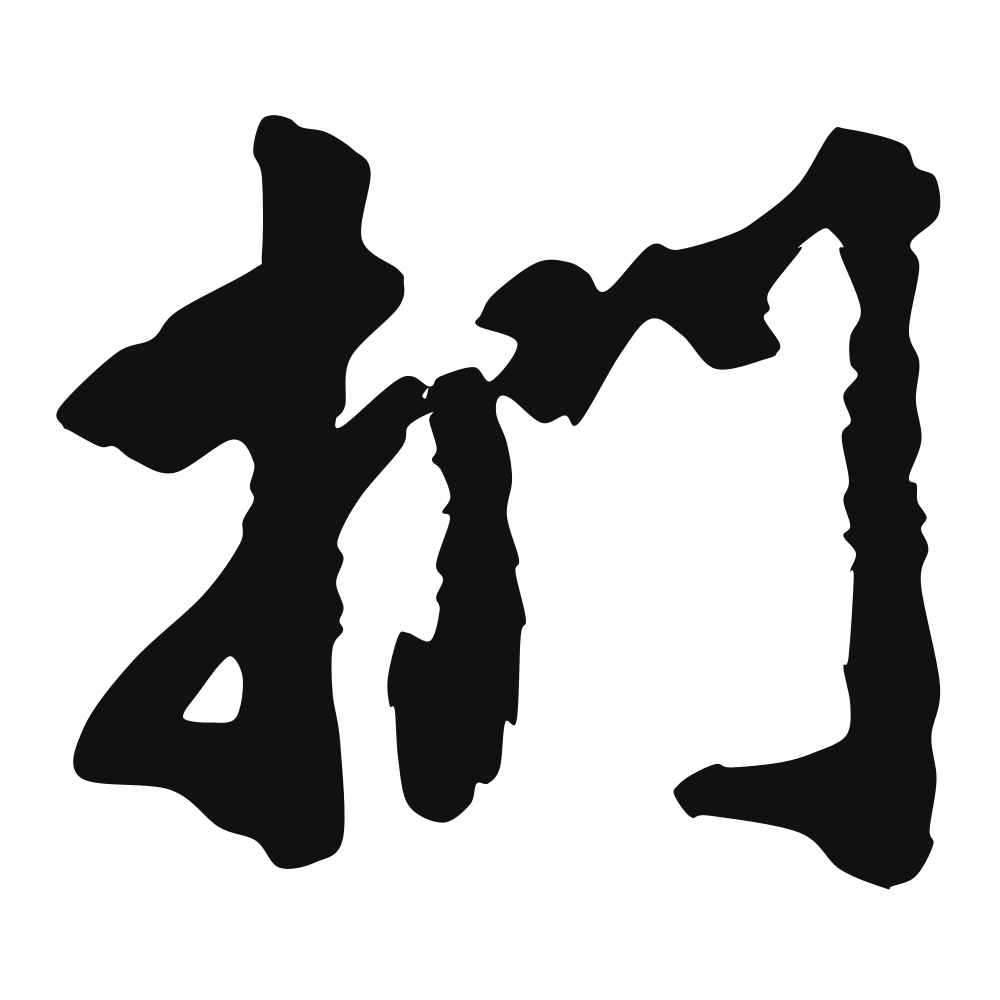
扪
lay hands on; to cover
Closest English meanings
to touch·to feel·to examine
The Calligrapher — Táng Yín 唐寅
Ming 'Talented' painter-calligrapher of elegant running script.
Ming calligrapher (1470–1524), master of running script — known for 《落花诗册》. Ming dynasty
Cultural Story
扪 is to feel with the hand, to examine by touch. Li Bai, climbing in his 蜀道难, writes 扪参历井 — feeling for the star constellations as he climbs — the hand groping the sky. The door with 门 and a hand is the self-search made bodily. It is the touch that asks what is really there.
Common words & phrases
- 扪心 examine one's conscience · search one's heart
- 扪心自问 examine one's own conscience · ask oneself
Read the story behind the character
扪 survives in 扪心 and 扪心自问 — examine your own conscience — the phrase a speaker uses to turn the accusation inward. It is a word of moral inventory, the hand on the chest before the hard admission. You meet it where someone is about to concede a fault.
Why this character belongs on skin
Some knowing happens only through the fingertips. 扪 is to touch with intention — to feel along a wall in the dark, to search a wound, to run a hand over a face the way eyes cannot. The classical phrase 扪心自问, to lay a hand on your own heart and question it, is the character at its most beautiful: conscience rendered physical, truth-seeking as something you do with your palm pressed to your chest, feeling for the honest answer under the ribs. There is an intimacy in this word that sight never reaches. Lovers know it — the way touch asks and answers at once; the blind know it; anyone who has ever groped along a midnight hallway toward a door knows it. We are all, finally, feeling our way. To wear mén is to pledge that kind of attention: to meet the world hand-first, heart-under-palm, and to keep asking the questions only your own chest can answer. Touch is truth's oldest language. This is its character.
Own this character
Purchase delivers the original SVG of this glyph, brushed by Táng Yín 唐寅, ready to place on skin, paper, or screen.