
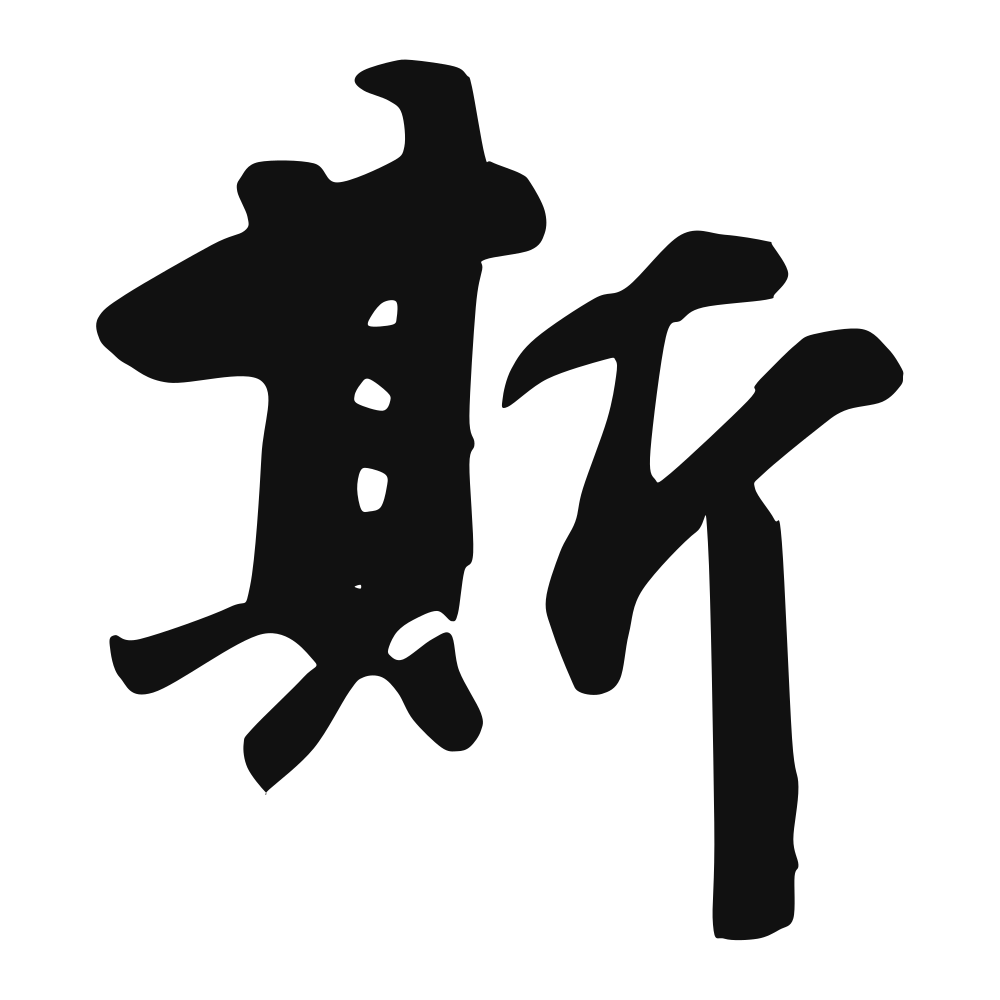
斯
Slovakia; Slovak; (phonetic); this
Closest English meanings
this·then
The Calligrapher — Táng Yín 唐寅
Ming 'Talented' painter-calligrapher of elegant running script.
Ming calligrapher (1470–1524), master of running script — known for 《落花诗册》. Ming dynasty
Etymology & Meaning · 字义溯源
2 · The Character: 斯 Sī (斯) means 'this' or 'thus' (classical demonstrative), and in old use 'to split' (with an axe). It is the here, made clear.
Cultural Story
斯 is the demonstrative that turned literary. 斯人 — 'such a one' — closes the lament for the rare friend; 斯文 is the refined manner the ruffian offends. 伊斯兰 is the sound-loan for Islam. The word is the finger pointing at the particular thing, grown courtly, so that to say 斯 is already to speak like the book.
Where a Western reader can stand: Where a Western reader can stand: 斯 is 'this' or 'thus' — a classical demonstrative; alone it points at the here, abstract without a partner word. The hand is Tang Yin's, the golden boy who came first in the exams, was ruined by a cheating scandal at twenty-nine, and turned the wreckage into paintings — now a folk hero every Chinese child knows. Honest note: that folk hero 'Tang Bohu' is later fiction; the real man's guilt was never proved, and he is a painter whose calligraphy is secondary.
Common words & phrases
- 斯文 refined · genteel
- 瓦斯 gas
- 斯人 this person
- 斯时 this time
- 如斯 thus · like this
- 伊斯兰 Islam
Read the story behind the character
斯文 is the insult — 'don't be such a 斯文 coward' — and the praise. 瓦斯 is gas, borrowed; 如斯 the poet's 'thus.' You meet 斯 mostly in fixed phrases and brand names now. The word that once pointed at 'this very thing' has retreated into the literary and the borrowed, a pointer gone polite and distant.
Why this character belongs on skin
Point to the ground beneath your feet and the word that arrives is the oldest gesture of attention we own. To say this—this moment, this breath, this wound, this love—is to stop the fleeing and name the place you actually stand. The sages of the classical age opened their discourses with this very word, calling the listener down from abstraction into the one true thing in front of him. The Buddhists teach that only this, right here, is real; the rest is memory or fear. We lose our lives reaching for the next when the gift was always the immediate. To wear this is to pledge yourself to the present tense, to the ground that is holding you as you read. This. Here. Now. The rest is commentary. Stand in it.
Own this character
Purchase delivers the original SVG of this glyph, brushed by Táng Yín 唐寅, ready to place on skin, paper, or screen.