
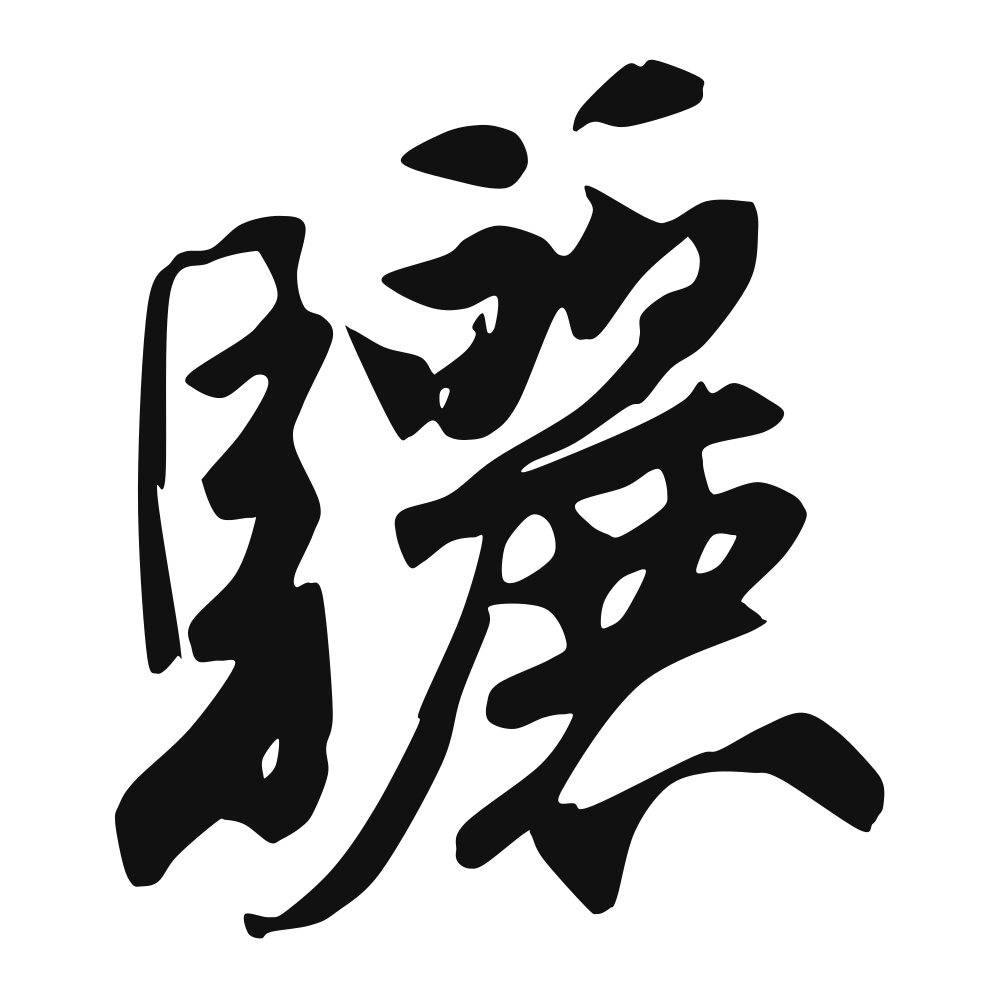
骊
black horse; jet steed; good horse; legendary black dragon
Closest English meanings
black horse
The Calligrapher — Táng Yín 唐寅
Ming 'Talented' painter-calligrapher of elegant running script.
Ming calligrapher (1470–1524), master of running script — known for 《落花诗册》. Ming dynasty
Cultural Story
骈's cousin 骊 sets 马 beside 丽 and is defined in the 《説文解字》 as 马深黑色, "a horse of deep black." Pure black horses were prized in antiquity, and the name attached to places and legends built around the color.
Common words & phrases
- 骊山 Lishan mountain
- 骊歌 farewell song
- 骊龙 black dragon
Read the story behind the character
骊 names 骊山, the hill east of Xi'an where hot springs drew emperors and the Tang court fell. 骊歌 is a farewell song sung as guests departed with a black colt; 骊龙, the black dragon of legend, guarded pearls in the deep. The character still whispers of parting and royalty.
Why this character belongs on skin
The ancients prized a horse so black it seemed to hold the night inside its coat, and they named it 骊 — the steed of the far northwest, the kind of animal a king would trade a city for. The character wears the horse radical like a saddle and carries centuries of poems in which riders cross frost toward distant frontiers, breath steaming, drums far behind them. There's also the old tale of the black dragon 骊龙 whose jaws guard a pearl beneath dark water: the treasure goes only to the one willing to reach in. So the character holds two pulls at once — the noble horse that carries you into the unknown, and the dragon's pearl that rewards the brave hand. Ink 骊 for the part of you that answers both. Along the spine it runs like a mane; on the shoulder blade it waits, saddled, for the next departure.
Own this character
Purchase delivers the original SVG of this glyph, brushed by Táng Yín 唐寅, ready to place on skin, paper, or screen.