
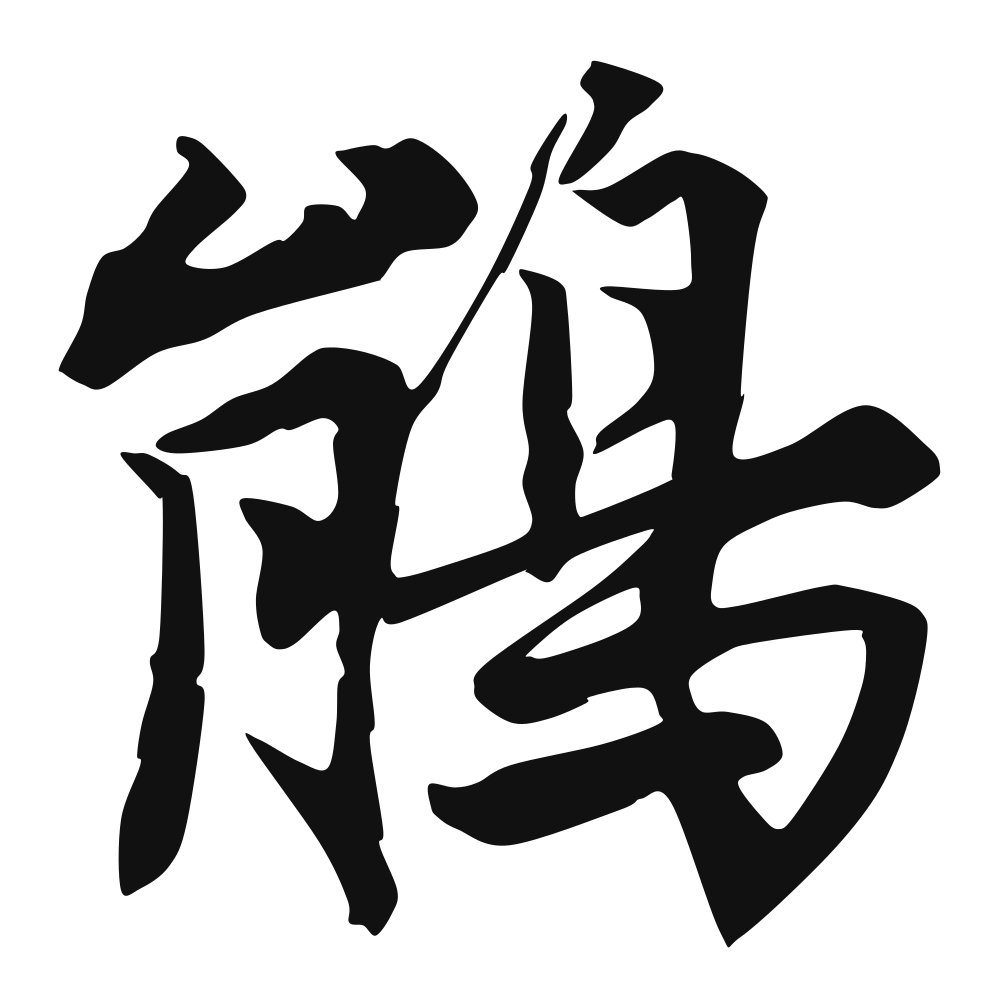
The Calligrapher — Táng Yín 唐寅
Ming 'Talented' painter-calligrapher of elegant running script.
Ming calligrapher (1470–1524), master of running script — known for 《落花诗册》. Ming dynasty
Cultural Story
鹃 names the cuckoo, most famously in 杜鹃. Legend credits the Shu king 杜宇, who after death became the cuckoo, crying blood each spring as it called farmers to plant. The same flower it is said to bleed upon is the 杜鹃 (azalea), binding bird and bloom in one mournful, fertile myth of the fields.
Common words & phrases
- 杜鹃 cuckoo · azalea
- 子鹃 cuckoo
Read the story behind the character
The 杜鹃 (cuckoo) calls through mountain woods, and 子鹃 is another name for the same plaintive bird. In gardens the 杜鹃 also means azalea, blazing red each spring. Nature documentaries and tea labels alike use 杜鹃, so one character spans a weeping legend and the shrub that colors hillsides.
Why this character belongs on skin
The bird radical with silk for a voice — the cuckoo, whose cry in the Tang poems was not birdsong but grief with feathers. Legend says a betrayed king of Shu became a cuckoo and cried until he wept blood, staining the azaleas red; the flowers and the bird still share one name, beauty and sorrow married in a single word. It sings through the late spring nights, far-carrying, inconsolable, the sound of longing that has nowhere left to go. Every heart keeps one such note: the lost beloved, the dead friend, the road not taken that still sings at two in the morning when the defenses are down. The poets did not try to silence it; they wrote it down, and so outlived the grief. This character is that note, made visible. Ink the grief, small and dark, where only you can find it. Beauty was always its other name.
Own this character
Purchase delivers the original SVG of this glyph, brushed by Táng Yín 唐寅, ready to place on skin, paper, or screen.