
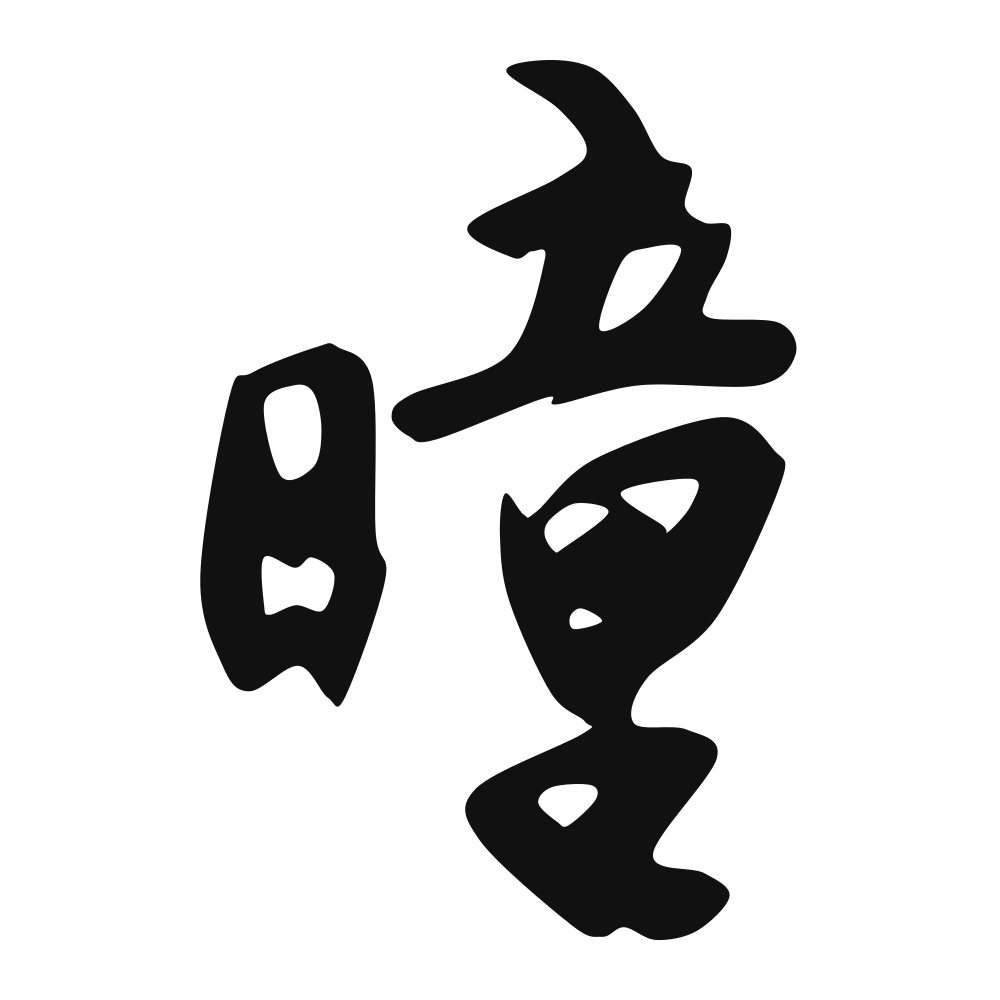
The Calligrapher — Wáng Ānshí 王安石
Song statesman and reformer famed for his vigorous running script.
Song calligrapher (), master of running script — known for 《楞严经旨要》. Song dynasty
Cultural Story
The 瞳 is the dark well at the eye's center, where another person's tiny reflection floats. Han historians record a marvel: the sage Shun, they say, had 重瞳 — double pupils — and so did Xiang Yu, a mark stamped on heroes. Physicians, meanwhile, charted the pupil's widening and shrinking, reading life, death, and deception in its changing black.
Common words & phrases
- 瞳孔 pupil · pupil of eye
- 瞳仁 pupil · iris center
Read the story behind the character
The pupil now meets machines. At the optometrist, drops widen your 瞳孔 (pupil) before a bright scan; phone cameras mimic the eye with an aperture that opens and closes like a 瞳仁 (the dark center of the iris). Novelists still fall for the old poetry — two faces close enough that one lover sees himself floating, small and bright, in the other's 瞳仁.
Why this character belongs on skin
The Greeks believed the pupil held a tiny reflected person — the pupil, the doll — and the Chinese arrived at the same enchantment by another door: 瞳 is the black well at the eye's center, and 瞳仁, the 'kernel' within it, was said to contain the person you're looking at, small and silent, riding in the dark. Old physicians read the soul there; Tang poets wrote of the 瞳 of the crane, of eyes like cold ponds in autumn. It is the body's deepest room — a hole that is an organ, an absence that sees. When someone truly looks at you, you fall into their 瞳 and for a moment live there. Lovers have always known this; the myths of evil eyes and loved ones' gazes are the same legend told in two weathers. To wear 瞳 is to honor that black mirror: the claim that attention is intimacy, that being seen is a form of being saved. Ink it near your own eye. Whatever it reflects from now on, let it reflect deliberately.
Own this character
Purchase delivers the original SVG of this glyph, brushed by Wáng Ānshí 王安石, ready to place on skin, paper, or screen.