
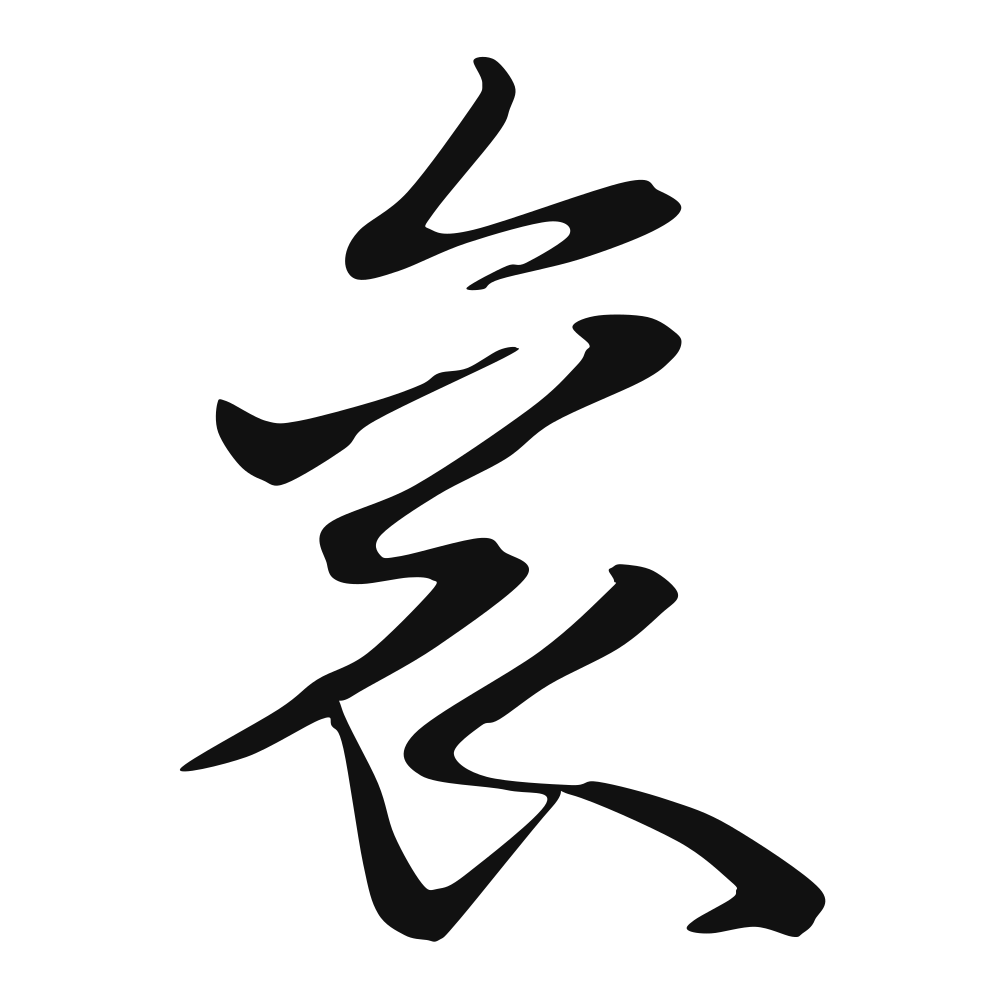
The Calligrapher — Wáng Chǒng 王宠
Ming Suzhou literatus, one of the 'Three Wu Masters'; famed for ethereal small regular script.
Ming calligrapher (1494–1533), master of running script/regular script — known for 《游包山集》. Ming dynasty
Cultural Story
Worn by the Son of Heaven, the gunfu was the emperor's ceremonial robe, embroidered with the twelve symbols and worn with the gunmian crown at the Altar of Heaven when he sacrificed for the realm's harvest. The coiled dragons and axes on its surface were not decoration but a diagram of authority. To wear the gun was to stand as the state made visible.
Common words & phrases
- 衮服 imperial robe
- 衮冕 imperial crown and robe
- 衮衮 numerous · rolling
Read the story behind the character
In the museum hall a mannequin wears a replica gunfu, its dragons dimmed by centuries, while a docent explains the gunmian once crowned a Ming emperor. The old word gungun, rolling and numerous, now describes a crowd of ministers in period drama. The character survives as the costume of the throne, displayed behind glass rather than borne in rite.
Why this character belongs on skin
Before it was anything else, 衮 was the ceremonial robe of emperors — the dragon-embroidered gown worn at the summit of the world, twelve symbols of heaven and earth stitched across its fabric: sun, moon, stars, mountains, axes, and the sacrificial cups. To be clothed in it was to be clothed in obligation; the Zhou kings understood the weight before the glory, and the good ones dressed slowly. There is a seduction in that image, and a warning: the robe confers power and takes freedom in the same gesture, a throne you cannot leave for a walk. As a tattoo it is gloriously ironic — you wear the emperor's regalia on skin that answers to no throne, no ministry, no lineage. It says the sovereignty you claim is self-conferred, embroidered in ink rather than silk, carried lightly because you chose it, and yours to abdicate never.
Own this character
Purchase delivers the original SVG of this glyph, brushed by Wáng Chǒng 王宠, ready to place on skin, paper, or screen.