
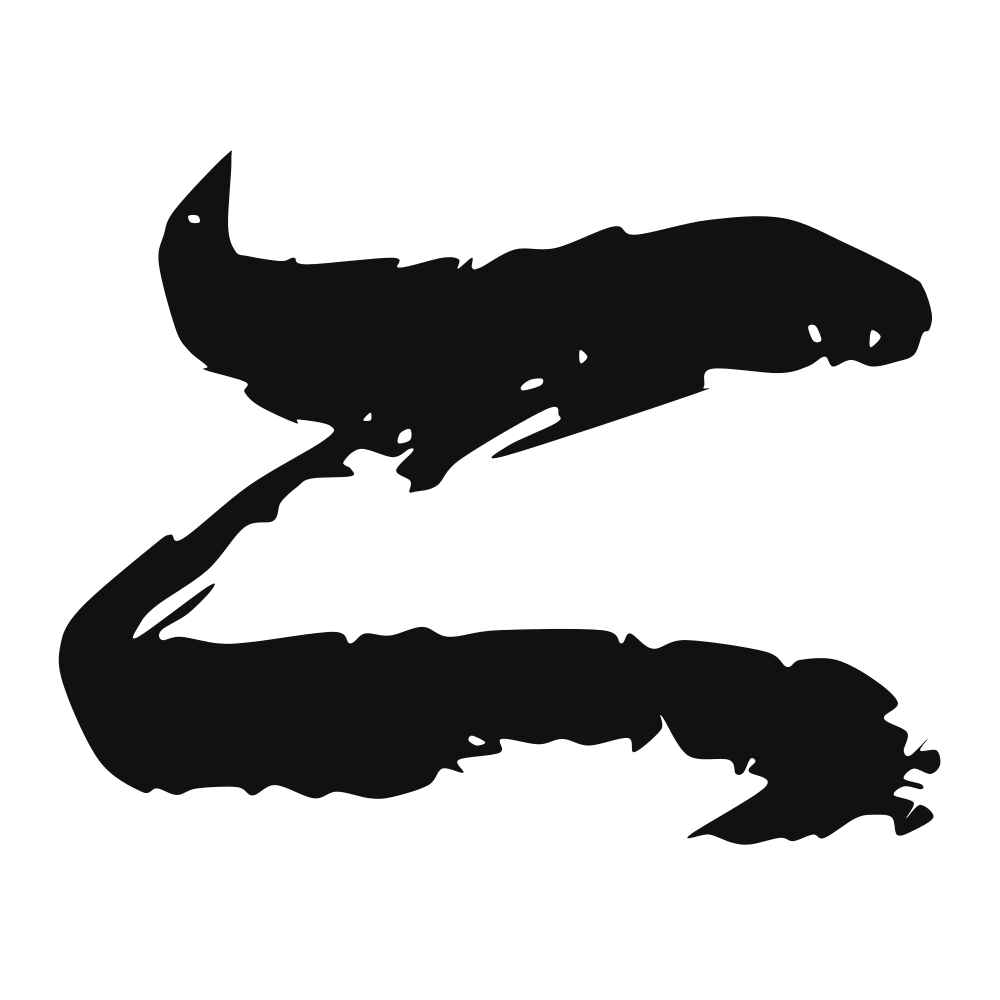
二
two; 2; (Beijing dialect) stupid
Closest English meanings
two
The Calligrapher — Wáng Cí 王慈
Southern Qi calligrapher son of Wang Sengqian; master of cursive in the Wang family line
南朝齐 calligrapher (), master of cursive script — known for 王僧虔之子. Southern Qi dynasty (Southern Dynasties)
Etymology & Meaning · 字义溯源
2 · The Character: 二 二 (èr, 4th tone) is, for Xu Shen, the earth made number: 地之數也。从偶一 — 'the number of earth; from paired ones.' Two parallel strokes, even, receptive, the counterpart to heaven's one. The classics pair it constantly: the Yizhuan (系辞) '分而為二,以象兩' (divided into two, to image the two); the Zuozhuan (定四年) '兼二職' (holding two offices); the Xunzi (议兵) '權出於二者弱' (power divided in two is weak); the Shiji (韩信传) '功無二於天下' (no second to his merit under heaven). As a free morpheme 二 means 'two, pair, second,' and is benign in 二重, 二仪, 二手. Honest disclosure: in modern slang 二 reads as 'silly, scatterbrained' (二乎, 有点二), and alone it can suggest 'half-hearted' (三心二意). On skin 二 is two bars and reads as the number 2, a dash, or a minus. Pair it with a noun (二仪, 二心) or use it deliberately as the earth-number; in Japanese it is ni. The Wuxing attribution is confident: 二 is Fire (火), the even, earthly number.
Cultural Story
二 is the line doubled, two, the first split after one, the number the 易經 sets against itself as yin and yang, the paired forces. A man with 二心 served two masters; the 論語 warns against it. The character is the simplest arithmetic and the oldest suspicion: that things come in pairs, and a pair can mean division, a second loyalty, a second thought.
Where a Western reader can stand: Wang Ci (王慈, 451–491) was a fifth-generation member of the Langye Wang clan — the family of Wang Xizhi — and three of his letters survive in the Wansui Tongtian Tie, Tang tracing copies made with meticulous fidelity. His relaxed running-cursive 二 is the domestic register of the Two Wangs tradition: two strokes written the way an aristocrat who had always written this way would. For a Western reader it is a private, verifiable glimpse of fifth-century handwriting, the earth-number held in an unforced hand.
Common words & phrases
- 二手 second-hand
- 二话 demur · objection
- 二心 disloyalty · half-heartedness
- 二胡 erhu · two-string fiddle
- 二月 February
- 二战 World War II
Read the story behind the character
二手 is the car and the phone; 二话 is what you do not give, 没二话. 二心 is the treason and the doubt; 二胡 the two-string fiddle at the opera. 二月 is the cold month; 二战 the history chapter. The number is plain counting, but it keeps the old shadow of doubling, the secondhand, the second loyalty, the two strings that somehow sing one sorrow.
Own this character
Purchase delivers the original SVG of this glyph, brushed by Wáng Cí 王慈, ready to place on skin, paper, or screen.