
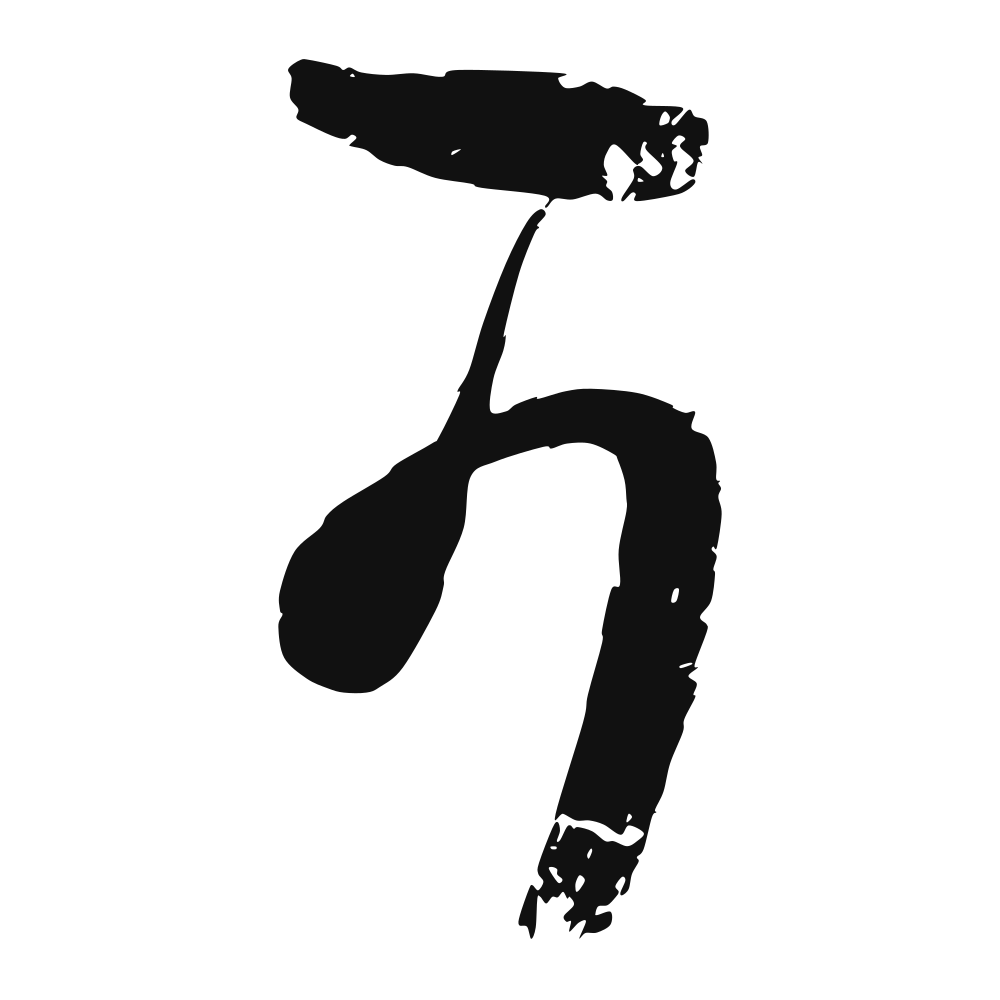
可
(prefix) can; may; able to; -able; to approve; to permit; to suit; (particle used for emphasis) certainly; very; but; however
Closest English meanings
can·may·worthy
The Calligrapher — Wáng Cí 王慈
Southern Qi calligrapher son of Wang Sengqian; master of cursive in the Wang family line
南朝齐 calligrapher (), master of cursive script — known for 王僧虔之子. Southern Qi dynasty (Southern Dynasties)
Etymology & Meaning · 字义溯源
2 · The Character: 可 Kě (3rd tone). 《说文·可部》: 「可,肎(肯)也。从口丂,丂亦声。」 — assent: the mouth agreeing, with 丂 supplying both sound and sense (breath meeting an obstruction and getting through anyway). From assent grow permission, possibility and worth. 《老子》 opens the whole book on it: 「道可道,非常道」 — the way that can be spoken is not the constant way. 《孟子·尽心下》 raises it to ethics: 「可欲之谓善」 — what is worth desiring is called good. In classical Chinese 可 is a full verb: to approve, to permit; the emperor's one-word rescript was 「可」. Honest disclosure: in modern Chinese 可 is mostly grammatical furniture. It is the modal 'can / may' (可以, 可能) and, just as often, the adversative 'but' (可是, 可惜). Worn alone it reads to a native eye like half a sentence — or simply like the word 'but'. Pair it: 可为, 可欲, 无不可.
Cultural Story
可 meant worthy, and then could. Bai Juyi's old charcoal seller stood in thin clothes -- "可怜身上衣正单" -- pitiable, and yet he feared the cold would fail and the price fall. The word carried the turn of feeling toward another's state. 可以 granted permission; 可怜 granted sorrow. It was the hinge between ability and regard.
Where a Western reader can stand: Wang Ci (451–491) was a fifth-generation member of the Langye Wang clan — the family that produced Wang Xizhi — and his relaxed running-cursive survives in the Wansui Tongtian Tie, an album of Tang tracing copies made in 697 from originals the Wang family supplied. His 可 therefore reads as the domestic register of the Two-Wangs tradition: loose, easy, unforced, the everyday handwriting of an aristocrat raised writing this way — intimacy rather than display. As a tattoo, 可 means 'may / can / worth-doing.' Honest note: modern 可 is mostly grammatical — the 'can' of 可以 and the 'but' of 可是 — so a lone 可 can read as half a sentence or simply 'but.' Pair it (可为, 可欲) for a complete thought. No funeral or offensive register. Element Wood (木).
Common words & phrases
- 可以 can · may
- 可是 but
- 可爱 cute · lovely
- 可能 possible · maybe
- 可靠 reliable
- 可惜 pity · unfortunately
Read the story behind the character
A 可爱 cat sleeps on the desk; the forecast says it 可能 rain. A friend proves 可靠 through the long job; the missed train is 可惜 but the next comes soon. The word runs the day's permissions and regrets -- the cuteness, the chance, the trust, the pity. It opens a sentence to possibility and closes it on a feeling, from the pet to the lost seat.
Own this character
Purchase delivers the original SVG of this glyph, brushed by Wáng Cí 王慈, ready to place on skin, paper, or screen.