
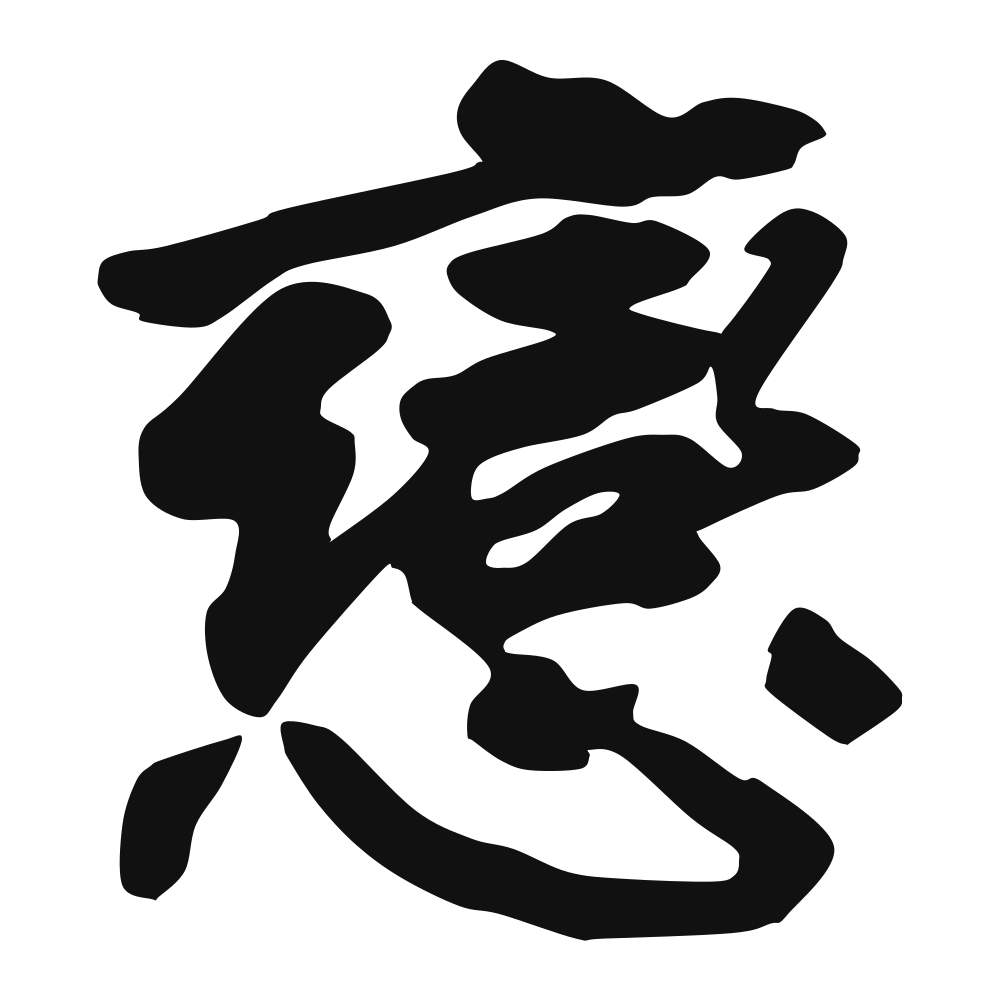
恋
to feel attached to; to long for; to love
Closest English meanings
love·long for
The Calligrapher — Wáng Cí 王慈
Southern Qi calligrapher son of Wang Sengqian; master of cursive in the Wang family line
南朝齐 calligrapher (), master of cursive script — known for 王僧虔之子. Southern Qi dynasty (Southern Dynasties)
Cultural Story
恋 is the cling of feeling, the unwillingness to let the person or the place go. 留恋 is 陶淵明's pause at the gate he is leaving, and the word kept that tenderness — not the chase but the hold, the hand that stays on the doorframe after the decision is made.
Common words & phrases
- 恋爱 love · romance · be in love
- 恋人 lover · sweetheart
- 留恋 be reluctant to leave · cherish
- 眷恋 be sentimentally attached
- 迷恋 be infatuated with · obsess
Read the story behind the character
恋爱 is the status you hide, 恋人 the name you save, 留恋 the ache at the old street, 迷恋 the fix a feed becomes. The gate is a flat now; the hold is real. We still cling past the decision, and call the cling love or habit, as the old poet did without distinguishing the two.
Why this character belongs on skin
There is a word in Chinese older than shame, and it simply means to love — 恋, the ache that leans toward another person and refuses to call it a mistake. The old poets wrote 恋人 for the one they could not unlove; the character carries no gender, no permission slip, only the gravity of wanting to stay. You know this feeling. The text you reread. The hand you reach for across a couch at two a.m. The chosen family you built from scratch because blood was never the point. Love is not a reward for being good. It is the ground you stand on. To carry 恋 on your skin is to say: I was made for this tenderness, and I will not apologize for the way I orbit the people who make me real. Let it mark you. Some loves are homes you carry forever.
Own this character
Purchase delivers the original SVG of this glyph, brushed by Wáng Cí 王慈, ready to place on skin, paper, or screen.