
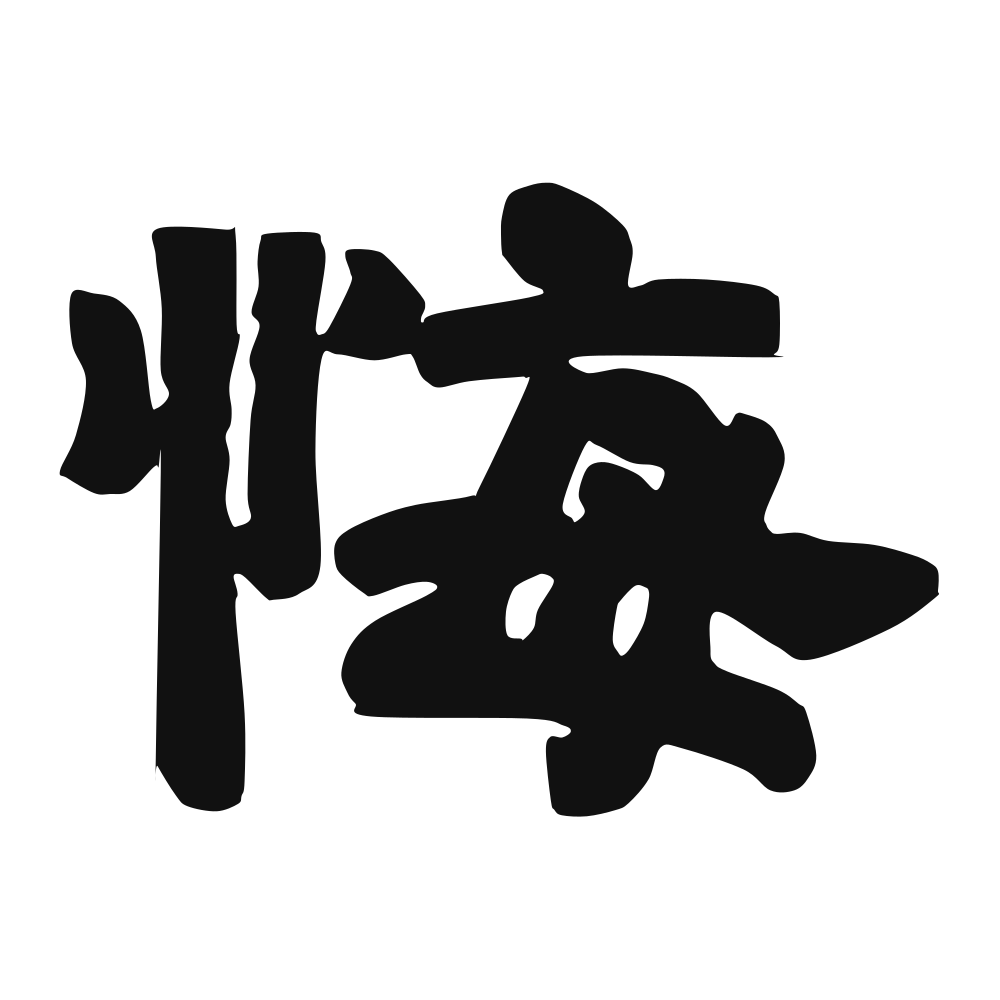
悔
(bound form) to regret; to repent
Closest English meanings
regret·repent·remorse·rue·lament
The Calligrapher — Wáng Cí 王慈
Southern Qi calligrapher son of Wang Sengqian; master of cursive in the Wang family line
南朝齐 calligrapher (), master of cursive script — known for 王僧虔之子. Southern Qi dynasty (Southern Dynasties)
Cultural Story
悔 runs through the 易經 as the quiet tax on bad moves — 悔吝 are the lesser wounds a line of hexagram text warns against. Confucius said he could pity the man who, having erred, would not 悔. The heart with 每, formerly a haze or confusion, is the mind replaying the turn it should not have taken.
Common words & phrases
- 后悔 regret · repent
- 悔恨 remorse · regret deeply · repentance
- 忏悔 confess · repent · acknowledge fault
- 悔改 repent and reform · mend one's ways
- 悔悟 awaken to repentance · realize and regret
Read the story behind the character
悔 is the word of the rearview mirror: 后悔 the choice you would undo, 悔恨 the deeper ache, 悔改 the promise to change. It anchors public apologies and private 2 a.m. replays alike. 忏悔 borrows the church confessional tone for tell-alls and court statements. Regret, in Chinese, is almost always spoken with this one character.
Why this character belongs on skin
We learn the price of a thing only after we have paid it. 悔 is regret, but not the weak kind—it is the heart turning back over its own road, the ache that means you have grown a conscience. The Buddhists name this the sting that precedes awakening; the Christian kneels here, in contrition, and is remade. To carry this character is not to wallow but to witness: I was wrong, and the wrongness changed me. There is a strange tenderness in having something to repent. Let it sit on your skin as a scar that chose to teach rather than to shame, proof that you felt enough to be sorry, and sorry enough to be different. The ink will not erase the past. It will simply say you were brave enough to look at it, and walk on.
Own this character
Purchase delivers the original SVG of this glyph, brushed by Wáng Cí 王慈, ready to place on skin, paper, or screen.