
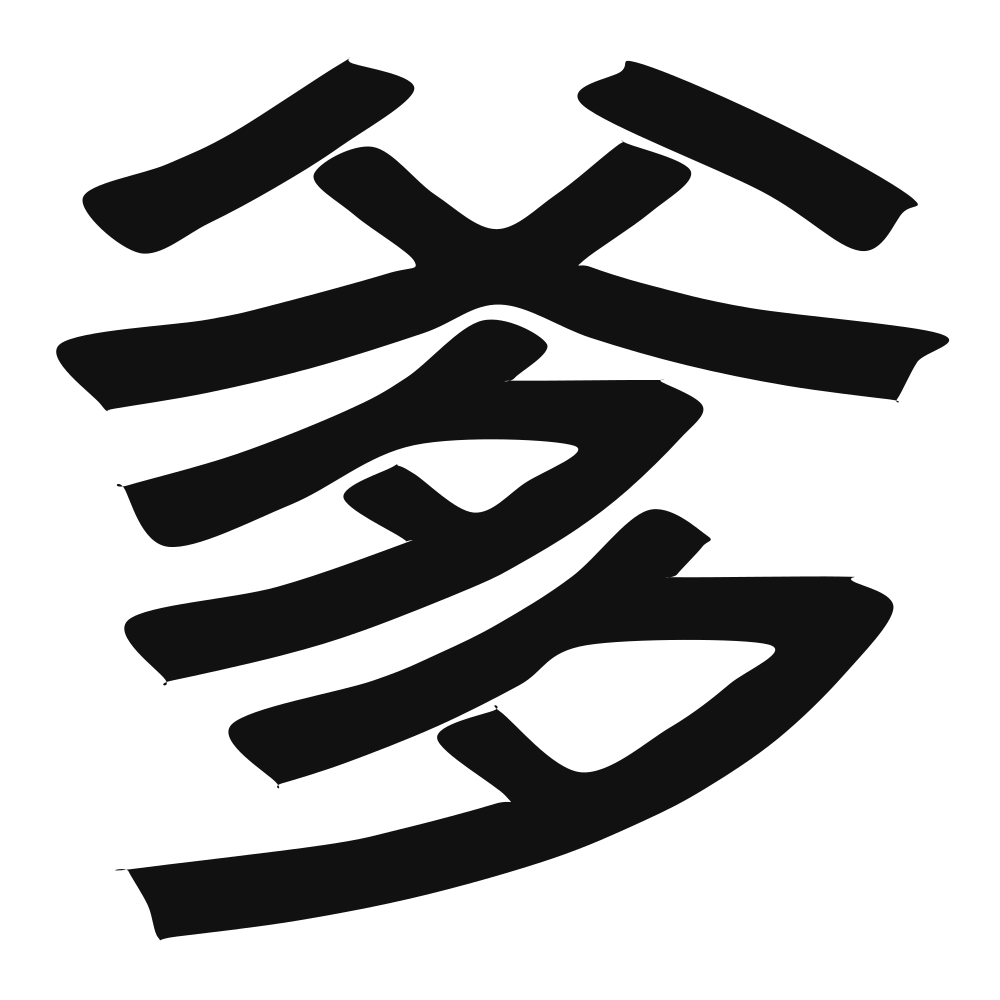
The Calligrapher — Wáng Dǎo 王导
Eastern Jin statesman and calligrapher of running script, uncle of Wang Xizhi.
Eastern Jin calligrapher (), master of running script — known for 琅琊王氏之祖. Eastern Jin dynasty
Cultural Story
爹 is a northern, affectionate 'father,' wider and warmer than the bookish 父. Folk songs and Yuan drama call 爹爹 with tears of parting; a 老爹 is both dad and a kindly old man. 爹娘, father and mother, closes countless letters home from soldiers and scholars on the road. The char carries the hearth-side voice of family across the cold distance of travel.
Common words & phrases
- 爹爹 dad · father
- 老爹 dad · old man
- 干爹 godfather
- 爹娘 parents · father and mother
Read the story behind the character
Up north they cry 爹爹 dad with a laugh, and 老爹 dad mans the grill at the reunion. A child gains a 干爹 godfather at the naming feast, and every letter home ends missing 爹娘, father and mother. We tease that our 爹 snores, but his 爹娘 stories are the ones we retell, the family's living, breathing memory.
Why this character belongs on skin
There is a word for the first man who ever carried you, rough-handed and unashamed. The character 爹 sets an old father above the evening he comes home to, and in its commonness it holds the whole Confucian weight of filial reverence, the father as the root the family grows from. He is not the gentle mother; he is the one who taught you the cost of things, who loved you by building, by leaving early, by saying little. The Christian calls him provider; the warrior calls him the first commander; the heart simply calls him 爹. To wear this is to carry your father's shadow into your own skin, to admit the debt no son can repay and no daughter forgets. Ink it for the man who made you, flaws and all, the quiet gospel of blood. Let it rest where a hand once steadied your shoulder.
Own this character
Purchase delivers the original SVG of this glyph, brushed by Wáng Dǎo 王导, ready to place on skin, paper, or screen.