
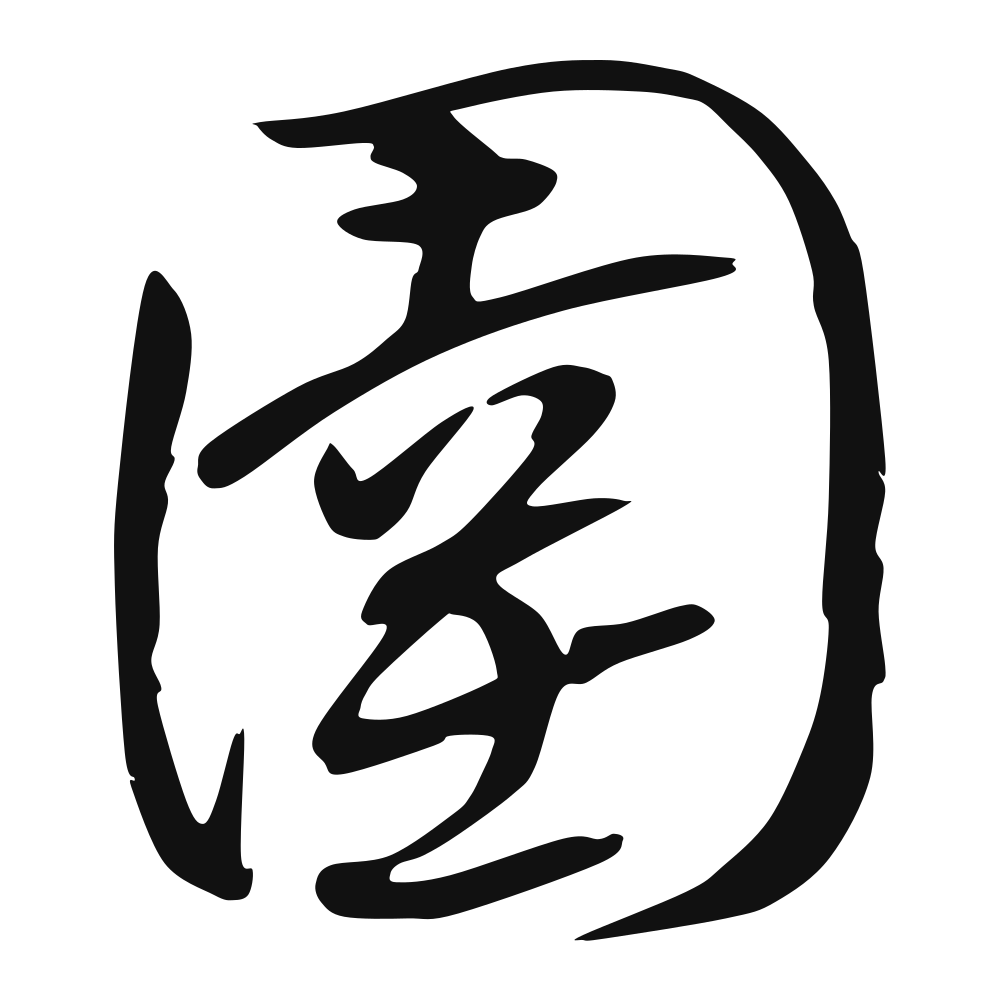
圉
horse stable; frontier
Closest English meanings
stable·restrain·to stop
The Calligrapher — Wáng Duó 王铎
Late-Ming cursive master of monumental, turbulent brushwork.
明末清初 calligrapher (1592–1652), master of cursive script/running script — late-Ming master of wet-ink, falling-and-rising running cursive. late Ming–early Qing
Cultural Story
:The Zhou ritual offices listed the 圉人, the groom who fed the royal horses and kept the 圉 — the stable — in order. In the Odes a horse strains 圉圉, restless in its pen. The word names the boundary where a living thing is held and tended, never quite free.
Common words & phrases
- 圉人 stable keeper · groom
- 圉圉 restrained · cooped up
Read the story behind the character
The stable 圉人 still mucks the stalls before dawn at the riding club. An old horse stands 圉圉 behind the fence, restless and cooped. The word survives mostly in ritual glosses now; a modern groom would simply say the horse is boxed in, waiting for the paddock gate.
Why this character belongs on skin
Strength, held in a paddock. This character shows a horse inside an enclosure — the radical for confinement drawn around the noblest animal the ancients knew — and it means the stable, the paddock, and also to resist, to hold the line. Read the tension and you have half of Chinese philosophy in one glyph: the warhorse pacing his fence, muscle banked like coals, power that is real precisely because it consents to boundary. Let such a horse run wild and it becomes weather — magnificent, useless, gone by morning. The Taoists praised the uncarved block for the same reason; the Stoics built their whole citadel of the self on the same plan. Freedom that cannot be stabled is only impulse with a mane. To ink this character is to claim disciplined power. Your strength is not diminished by the fence. It is gathered there, warm-breathed, waiting for the one morning the gate means it.
Own this character
Purchase delivers the original SVG of this glyph, brushed by Wáng Duó 王铎, ready to place on skin, paper, or screen.