
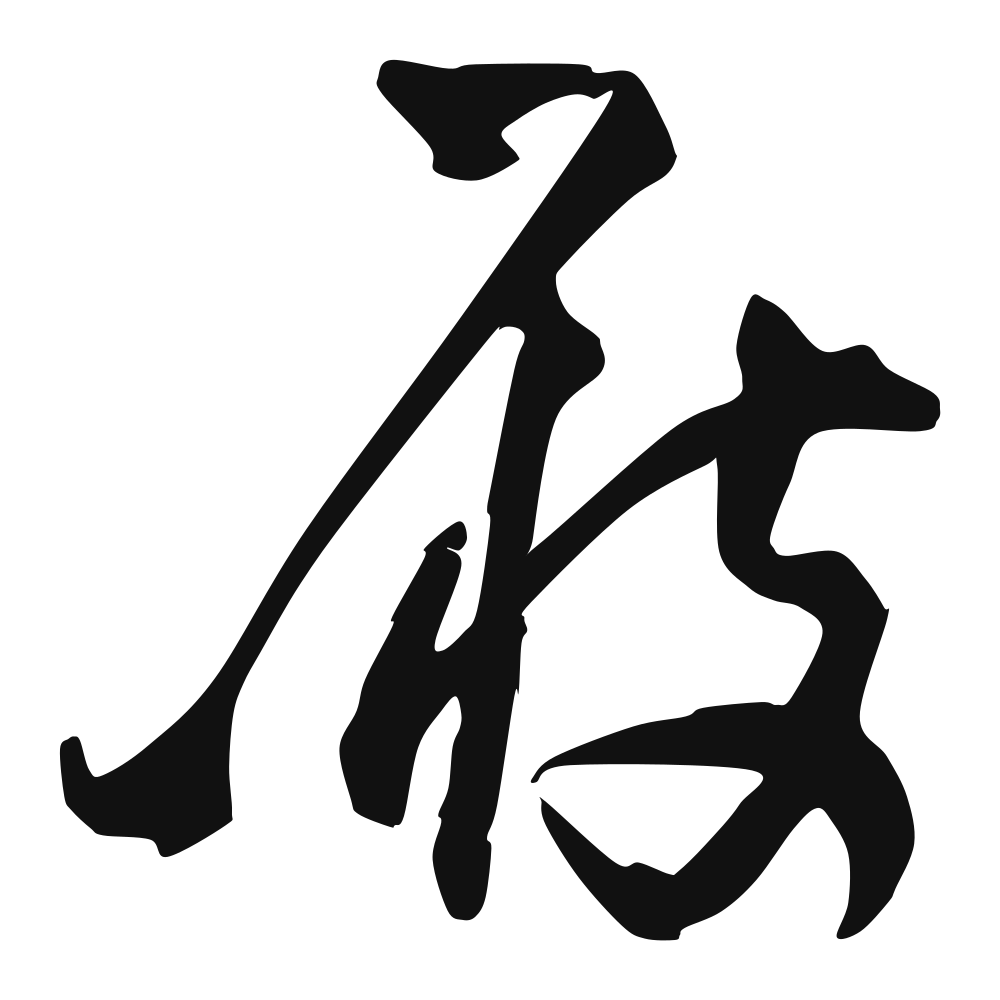
The Calligrapher — Wáng Duó 王铎
Late-Ming cursive master of monumental, turbulent brushwork.
明末清初 calligrapher (1592–1652), master of cursive script/running script — late-Ming master of wet-ink, falling-and-rising running cursive. late Ming–early Qing
Cultural Story
屐 is a wooden clog with teeth beneath; the Shuowen gives shoes with teeth. The poet Xie Lingyun invented a 屐 with movable 屐齿 (clog teeth) for climbing, and 木屐 (wooden clogs) clacked through Tang rain. 屐履 (clogs and shoes) marked a gentleman's leisurely outing to a friend's garden.
Common words & phrases
- 木屐 wooden clogs · geta
- 屐履 clogs and shoes
- 屐齿 clog teeth
Read the story behind the character
You buy a pair of 木屐 (wooden clogs, geta) as a souvenir and hear the 屐齿 (clog teeth) tap the stone. Though 屐履 (clogs and shoes) are rare daily wear now, festivals and museums keep them alive. The character clicks with old rain poems — wooden soles on wet paths, a sound centuries old.
Why this character belongs on skin
Wood on stone, a particular ringing step. The clogs of the ancients had teeth — raised soles that lifted the wearer over mud and dew, and poets made the sound of them the very music of departure: clogs at dawn, mountain paths, a friend's visit through wet grass. Xie Lingyun, the great landscape poet, invented his own pair with removable teeth, climbing in the uppers, descending in the lowers — eccentric, practical, gloriously alive. The character carries all of that: travel taken on foot, the unashamed romance of the long walk, the life that fits itself to rough ground rather than demanding pavement. Wear it and you are claiming that step. Somewhere a path is still damp. You will hear your own clogs on it, going.
Own this character
Purchase delivers the original SVG of this glyph, brushed by Wáng Duó 王铎, ready to place on skin, paper, or screen.