
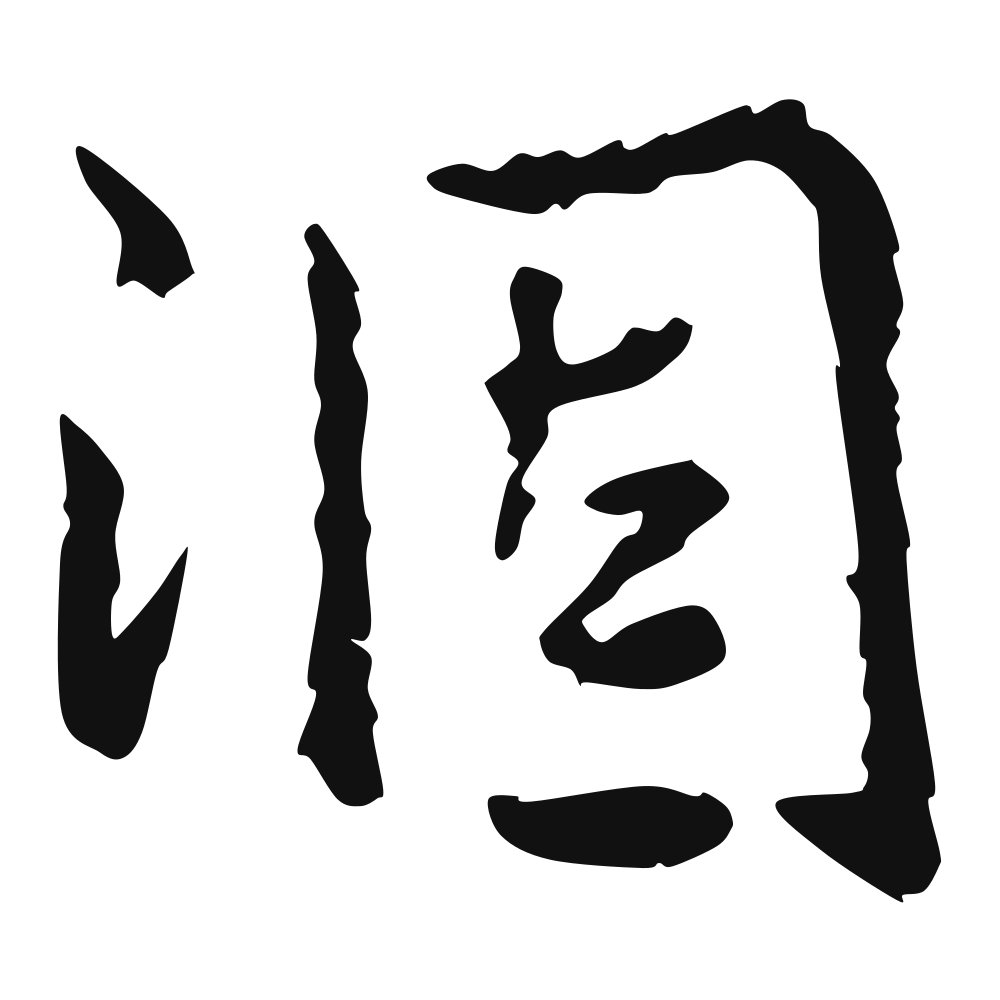
The Calligrapher — Wáng Duó 王铎
Late-Ming cursive master of monumental, turbulent brushwork.
明末清初 calligrapher (1592–1652), master of cursive script/running script — late-Ming master of wet-ink, falling-and-rising running cursive. late Ming–early Qing
Cultural Story
涸 means dried up, a riverbed laid bare. The Zhuang zi warns against 涸 the pond to catch all its fish, greedy and final. A 涸辙 became the image of desperate straits, and 涸竭 described both wells and spent spirits. The word is the end of water, and of hope with it, in the dry bed.
Common words & phrases
- 干涸 dry up · run dry
- 涸辙 dried-up furrow · distress
- 涸竭 exhausted · dried up
Read the story behind the character
The village well ran 干涸 (dry up, run dry) in the drought, and a 涸辙 (dried-up furrow) in the old tale stands for plight. We say resources are 涸竭 (exhausted, dried up) when the budget empties, and the word keeps that stark picture of a bed where the stream used to run.
Why this character belongs on skin
Zhuangzi told it best: a fish stranded in a rut of the road, one shallow spoonful left, gasping. A bucketful of water now, he said, is worth more than the promise of the Yangtze later. 涸 is what dryness does to hope — cracked earth, a riverbed that forgot it was a river. We all know this arithmetic of need, the season when the sources fail and you learn exactly what you cannot live without. But dryness is honest. It strips the water down to what matters and shows you the shape of the channel beneath. Rivers are not made of water; they are made of the bed that remains. Ink this one and you mark the rut you survived — the proof that even a spoonful was enough to keep you, and that the rains, in their own time, always return.
Own this character
Purchase delivers the original SVG of this glyph, brushed by Wáng Duó 王铎, ready to place on skin, paper, or screen.