
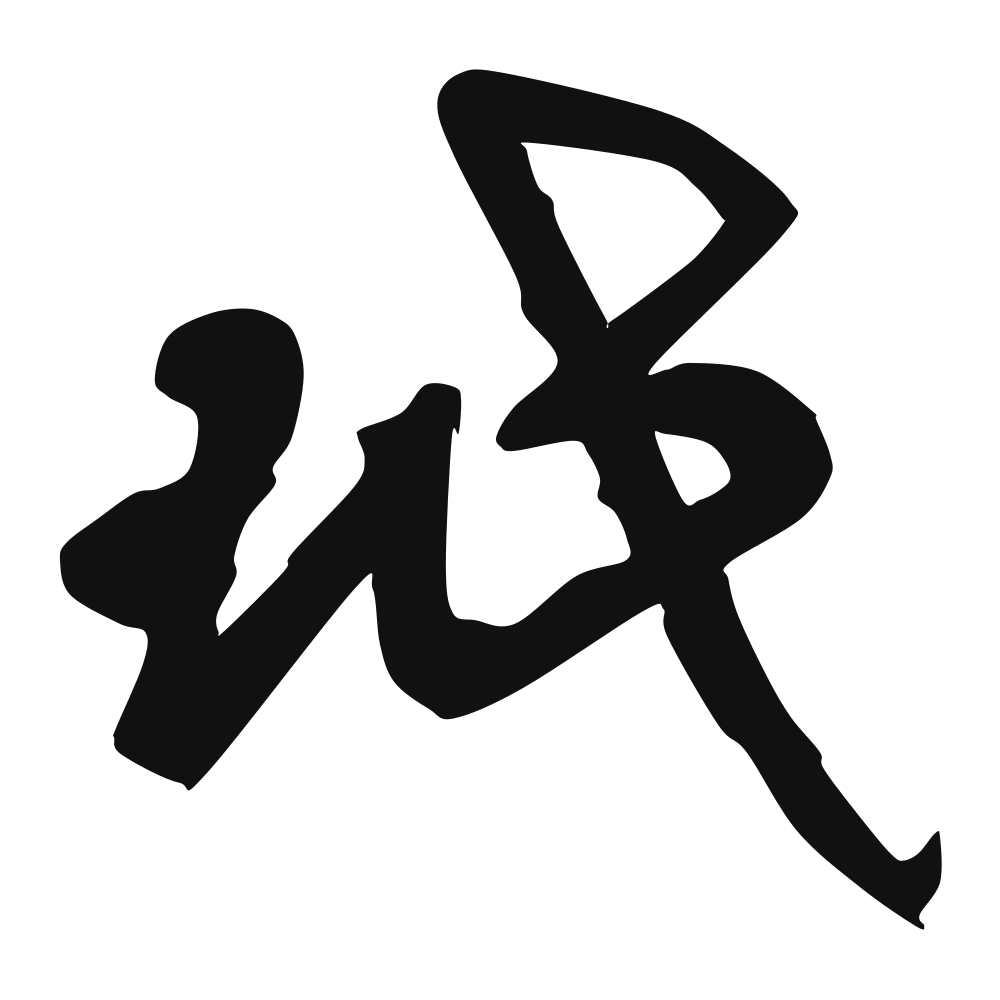
The Calligrapher — Wáng Duó 王铎
Late-Ming cursive master of monumental, turbulent brushwork.
明末清初 calligrapher (1592–1652), master of cursive script/running script — late-Ming master of wet-ink, falling-and-rising running cursive. late Ming–early Qing
Cultural Story
珉 is a jade-like stone, beautiful but softer and less prized than true 玉; the 論語 contrasts the gentleman with 珉, and true jade with show. It stood for the near-genuine, the respectable imitation, a caution that not everything lustrous is real virtue or worth.
Common words & phrases
- 珉玉 jade-like stone
Read the story behind the character
We use 珉 in 珉玉 (jade-like stone) for carvings sold as affordable stand-ins for fine jade. Collectors learn to tell 珉 from true 玉 by hardness and sheen. The word survives mainly in geology and antique shops, a quiet reminder that looks can deceive the careless buyer.
Why this character belongs on skin
珉 looks like jade, cuts like jade, gleams like jade — and is not jade. The ancients set it as the boundary of authenticity: 君子贵玉而贱珉, Confucius ranked them, saying jade stood for virtue while 珉 was merely pretty. But look longer and the judgment softens. 珉 is the sincere imitation, the stone that never claimed to be anything else. Who among us is flawless nephrite? Most lives are 珉 trying to glow — and there is dignity in the trying, more perhaps than in effortless virtue. A tattoo of 珉 is a wry confession and a dare at once: yes, I am the near-jade, the almost, the beautiful pretender — and I have decided that this, too, is a way of being real. Let the scholars frown. It sparkles anyway.
Own this character
Purchase delivers the original SVG of this glyph, brushed by Wáng Duó 王铎, ready to place on skin, paper, or screen.