
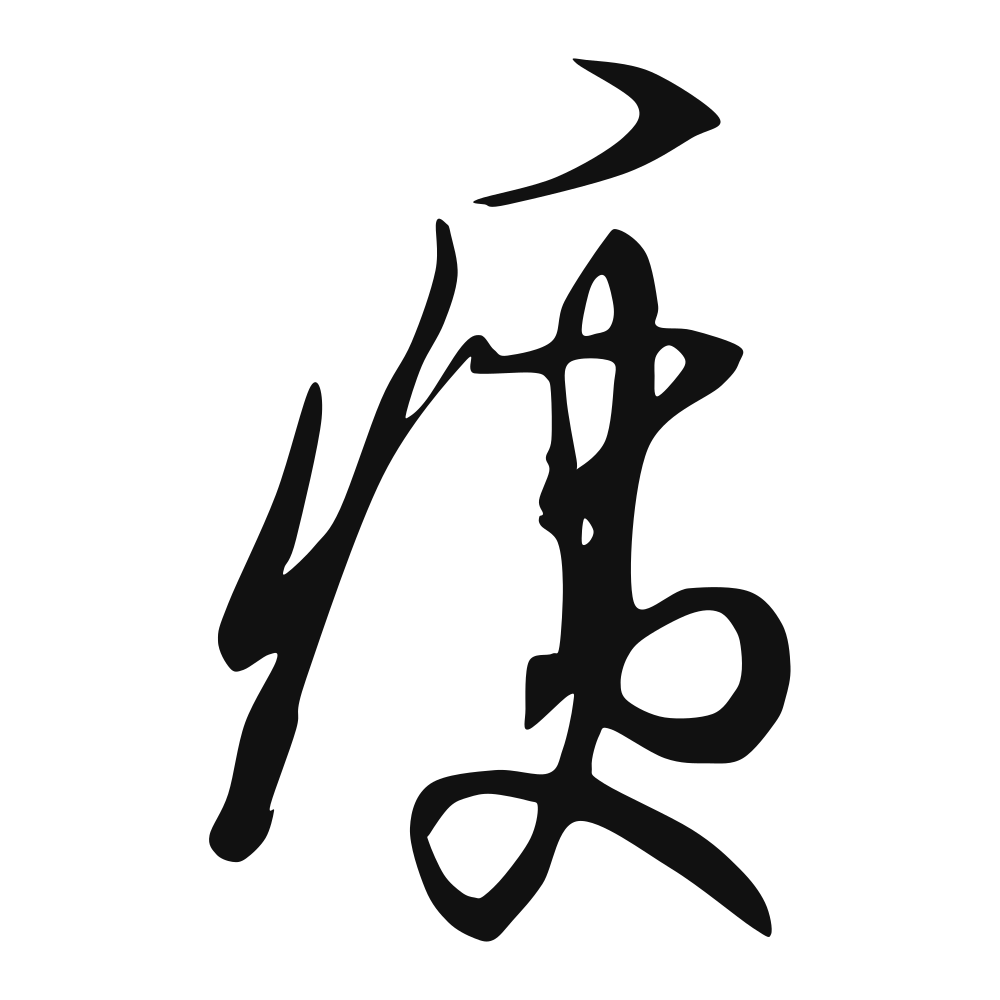
The Calligrapher — Wáng Duó 王铎
Late-Ming cursive master of monumental, turbulent brushwork.
明末清初 calligrapher (1592–1652), master of cursive script/running script — late-Ming master of wet-ink, falling-and-rising running cursive. late Ming–early Qing
Cultural Story
痍 is the wound that history leaves on landscapes. Shuowen says simply "痍, 伤也" — injury. Chroniclers describing sacked capitals reached for 满目疮痍: devastation filling the eye, broken walls and burned granaries where a market had run noisily only the day before.
Common words & phrases
- 疮痍 wounds · devastation
- 满目疮痍 devastated scene
Read the story behind the character
Nowadays 痍 survives almost entirely inside 满目疮痍 (a devastated scene). Reporters deploy it for quake zones and flooded districts, documentary captions for bombed old towns, and gamers stroll through 满目疮痍 wastelands rendered in loving post-apocalyptic detail on their screens.
Why this character belongs on skin
The war-chariots of the old texts used this word for what they brought home: 疮痍, the wounds of battle, and later — by the natural drift of all honest language — the devastation of a country after soldiers passed through. It is a hard character to love until you notice what medicine did with it: a wound is also the beginning of a scar, and a scar is the body writing its own history in stronger ink. The Buddhists go further — first Noble Truth, life is wounded; second, there is a cause; third, an ending. This character stands at the first truth with its eyes open. Not everyone should wear it. It belongs to those who have been through something and refuse to perform either victimhood or miracle — just the plain fact: wounded, healing, still here. Place it where the real scar lives, if there is one. The character and the body will agree perfectly.
Own this character
Purchase delivers the original SVG of this glyph, brushed by Wáng Duó 王铎, ready to place on skin, paper, or screen.