
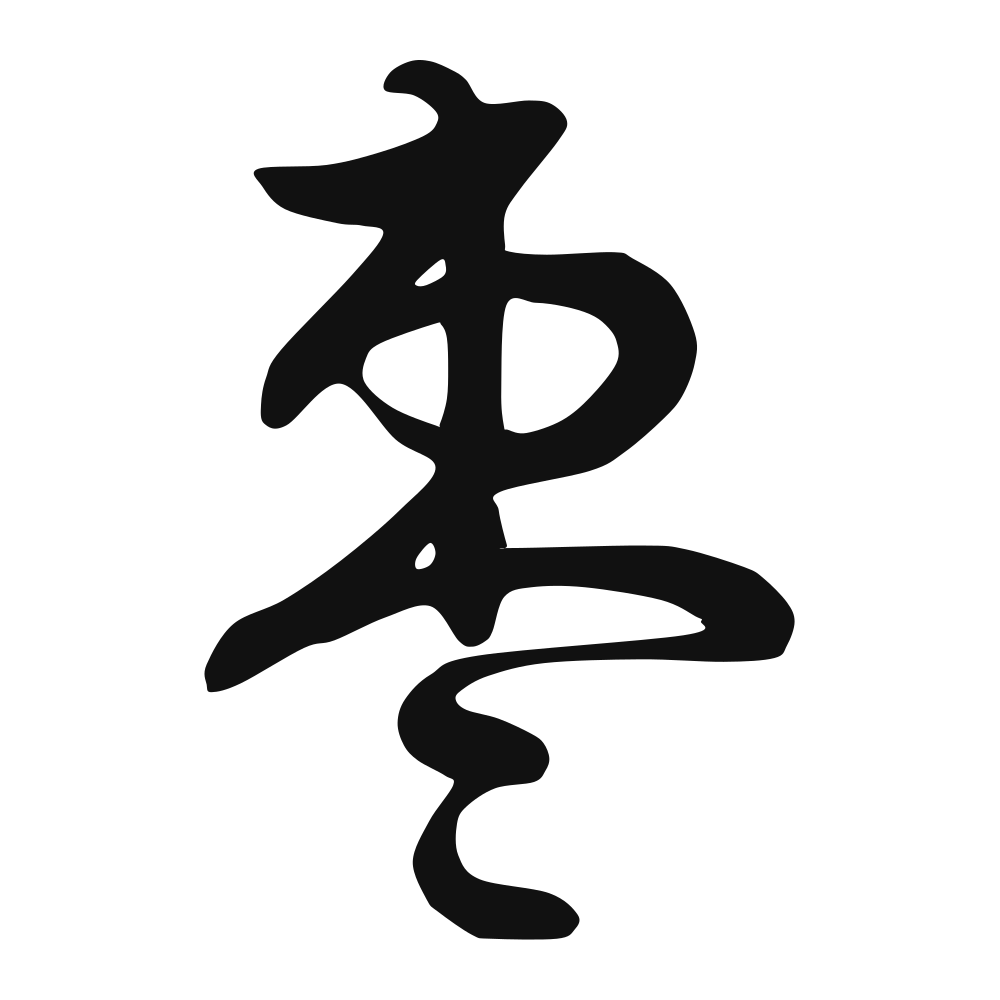
枣
(bound form) jujube; Chinese date (Zizyphus jujuba)
Closest English meanings
jujube·date
The Calligrapher — Wáng Huīzhī 王徽之
Jin calligrapher of cursive script, Wang Xizhi's son famed for the New-Moon Letter (Xinyue tie).
Jin calligrapher (), master of cursive script — known for 王羲之之子. Jin dynasty
Cultural Story
枣 is the jujube, the small red date the north has dried for three thousand years — the 詩經 already mentions it. 红枣 stewed with goji is the tonic grandmother prescribes; 枣泥 fills the mooncake. The tree is thorny and tough, the fruit sweet after frost. It is the peasant's candy and the traveler's provision.
Common words & phrases
- 红枣 red date · jujube
- 枣树 jujube tree
- 枣子 jujube
- 枣泥 date paste
Read the story behind the character
枣 is the date in the pantry: 红枣 in the eight-treasure porridge, 枣泥 in the festival pastry, 枣树 the gnarled tree in a northern yard. You buy it by the jin at a dry-goods shop. The character is culinary and old-fashioned, the sweet wrinkled fruit that signals both medicine and treat.
Why this character belongs on skin
There is a fruit the Chinese call the tree of life. 枣 is the jujube — small, red, wrinkling sweet as it dries, the hardiest tree in the northern yard, bearing fruit where softer things perish. The ancients planted it at the gate and called its wood good for a bride's bed. At weddings they still scatter 枣, a pun on 'early,' a quiet wish that love come soon and stay sweet. To carry this mark is to claim the survivor's sweetness — the joy that ripens only after the cold. The jujube does not demand rich ground. It asks only to be left standing. Some of us love like that: weathered, small, stubbornly giving. Ink it near the heart and you keep a tree that fruits in winter, a red promise worn for life, the sweetness that was earned rather than handed down.
Own this character
Purchase delivers the original SVG of this glyph, brushed by Wáng Huīzhī 王徽之, ready to place on skin, paper, or screen.