
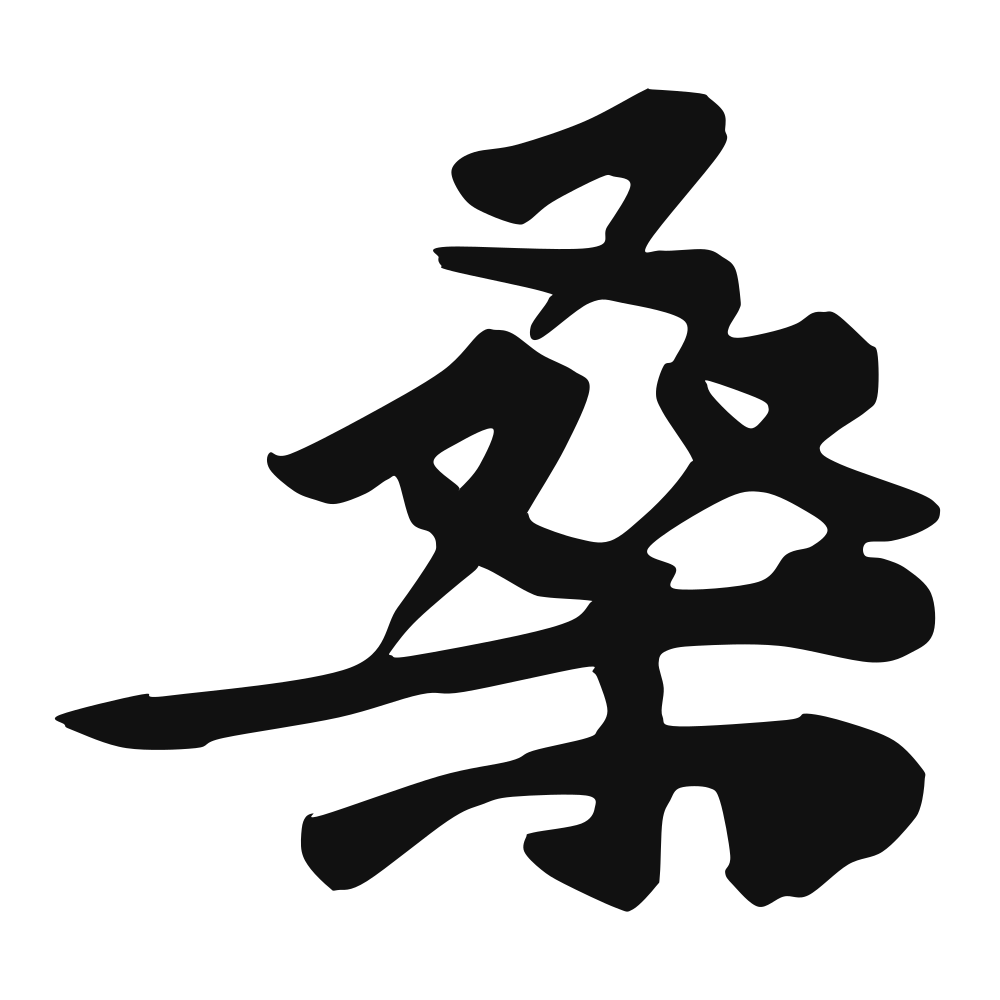
桑
surname Sang; (bound form) mulberry tree
Closest English meanings
mulberry
The Calligrapher — Wáng Huīzhī 王徽之
Jin calligrapher of cursive script, Wang Xizhi's son famed for the New-Moon Letter (Xinyue tie).
Jin calligrapher (), master of cursive script — known for 王羲之之子. Jin dynasty
Cultural Story
桑 is the mulberry, the tree whose leaves feed silkworms and so fed a civilization — 桑田, the mulberry field, is the land that makes silk. The phrase 沧海桑田, the sea become mulberry fields, marks enormous change. The character is the root of Chinese textiles and of time's slow, total turning of the earth.
Common words & phrases
- 桑树 mulberry tree
- 桑叶 mulberry leaf
- 桑葚 mulberry fruit
- 沧桑 vicissitudes
- 桑田 mulberry field
Read the story behind the character
桑 is the silk source and the metaphor: 桑叶 the leaf a worm chews into a scarf, 桑葚 the black berry that stains a child's fingers, 桑树 the old tree in a village. 沧桑 is the word for a life or a nation's hard-won change. The character is the worm's lunch and the measure of upheaval in a single syllable.
Why this character belongs on skin
In the old villages the mulberry stood at the edge of everything, food for the silkworm, shade for the grandmother, the tree beneath which partings happened and the road turned. It is the silk road's first leaf, the humble origin of something imperial. To sit under it was to be rooted, to know the seasons by what the branches offered. The Dao finds the profound in the ordinary plant; the tea-picker finds her living there. To wear this character is to honor the small rooted thing, the source before the splendor. Let it mark your skin like bark, a reminder that greatness begins as a leaf in common soil. The silk was once only a worm's hunger and a tree's gift.
Own this character
Purchase delivers the original SVG of this glyph, brushed by Wáng Huīzhī 王徽之, ready to place on skin, paper, or screen.