
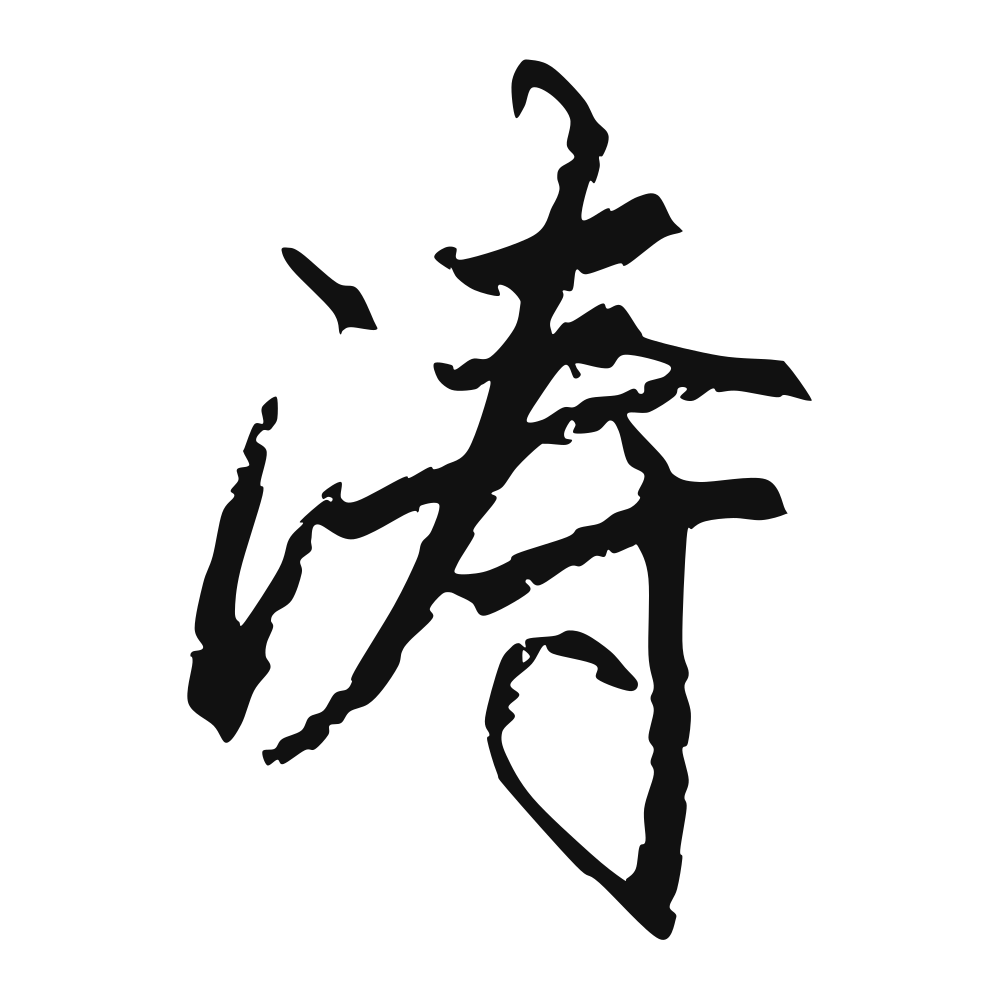
涛
big wave; Taiwan pr. [tao2]
Closest English meanings
wave·billow·surge
The Calligrapher — Wáng Qià 王洽
Eastern Jin calligrapher of running script, a leading figure among the Wang family masters.
Eastern Jin calligrapher (), master of running script — known for 王导族子. Eastern Jin dynasty
Cultural Story
涛 means great waves, the roar of the sea. The Tang poetry hears 涛 along the coast, and 松涛 transfers the sea's voice to the mountain forest. The word is sound as much as motion, water or wind rising in a sustained, thunderous swell that never quite settles down.
Common words & phrases
- 波涛 waves · billows
- 浪涛 billows · surging waves
- 涛声 sound of waves
- 松涛 soughing of pines · wind in pines
Read the story behind the character
Sailors fear 波涛 (waves, billows) in a storm, and 浪涛 (billows, surging waves) crash on the cliff road. We fall asleep to recorded 涛声 (sound of waves) by the shore, and hikers know the 松涛 (soughing of pines) on a ridge, nature's tide sounding far from any sea.
Why this character belongs on skin
Stand at the cliff when the sea throws its whole shoulder against the rock and you will feel 涛—not the small lap of water but the massive rolling voice that has argued with the shore since before language. The billow is power without malice, the body of the ocean declaring itself, again and again, indifferent and sublime. The Daoist hears in it the breath of the world, the great tide that carries the sage who does not resist. To be marked by the wave is to have made peace with forces larger than your small plan. You have been thrown and you did not break. Let this sit where your own strength lives, a reminder that you are part of something that does not ask permission. The ink is the foam caught on the skin, the one wave that stayed to prove the sea was real.
Own this character
Purchase delivers the original SVG of this glyph, brushed by Wáng Qià 王洽, ready to place on skin, paper, or screen.