
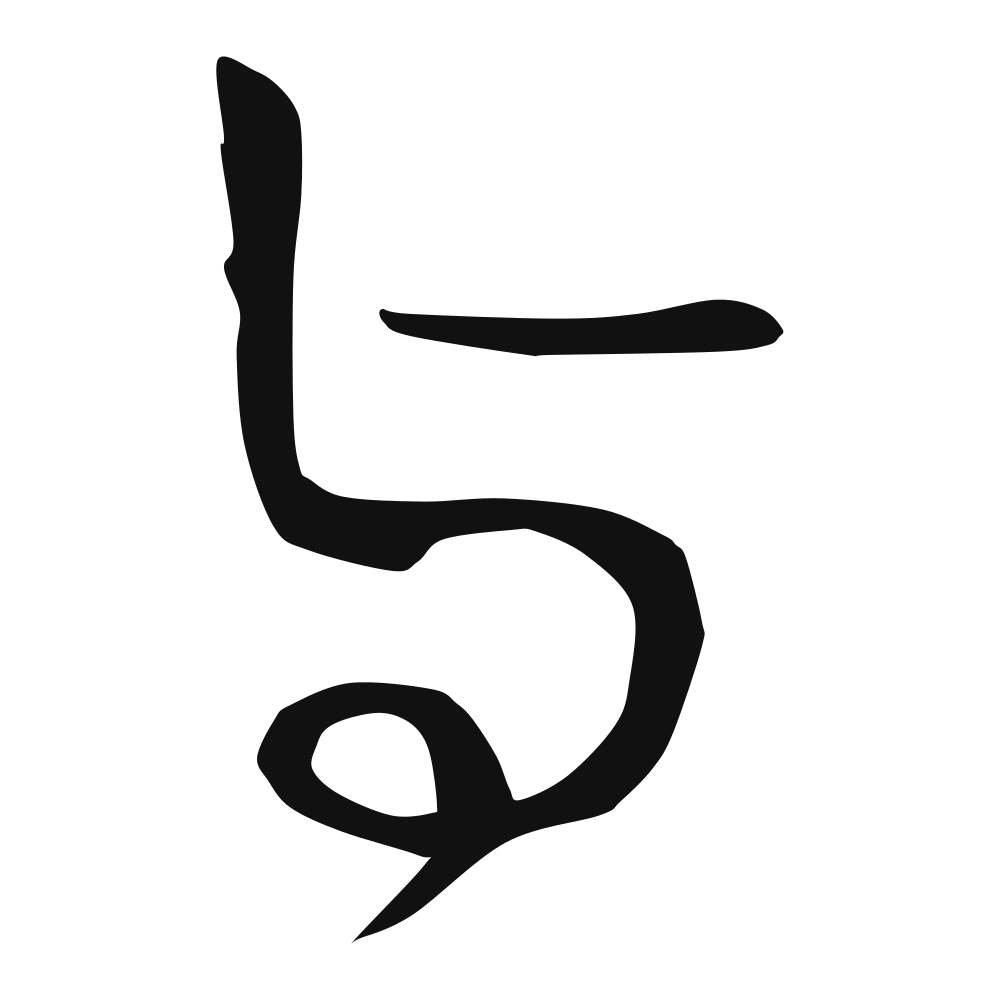
与
(formal) and; together with (linking parallel nouns, verbs, or phrases); (formal) with; from (marking the other participant in an interaction, comparison, or contrast, e.g. 與他握手|与他握手[yu3 ta1 wo4 shou3] "shake hands with him", 與去年不同|与去年不同[yu3 qu4 nian2 bu4 tong2] "different from last year"); (literary) to give; to grant; to bestow; to take part in
Closest English meanings
and·with·give
The Calligrapher — Wáng Xiànzhī 王献之
Son of Wang Xizhi and pioneer of wild cursive who pushed brush freedom further.
Eastern Jin calligrapher (344–386), master of running script/cursive script — seventh son of Wang Xizhi who broke his father's rules for a more fluent, emotional running script; together they are 'the Two Wangs'. Eastern Jin dynasty
Cultural Story
與 began as a hand offering a tray of provisions, to give, to share. The 論語 has 與朋友共, share with friends. Later it thinned into the conjunction and. 孙武 in the 孫子兵法 weighs 與敌 the relation of forces. A host 與客 drinks; a ruler 與民 rests his case on the people. The hand that gave became the word that joins.
Common words & phrases
- 与其 rather than · better than
- 参与 participate · take part in
- 给予 give · grant
- 与日俱增 grow with each passing day
- 与众不同 unusual · out of the ordinary
- 相与 together · with one another
Read the story behind the character
与 now is mostly a tidy printed and on signs and forms, 参与者 please register. 与其 walk, take the bus. 给予 shows up in charity appeals and HR letters. 与众不同 is the jacket nobody else wore. The spoken tongue prefers 跟 and 和, so 与 sounds official, the register of contracts and public service announcements, the character you sign beside rather than say.
Own this character
Purchase delivers the original SVG of this glyph, brushed by Wáng Xiànzhī 王献之, ready to place on skin, paper, or screen.