
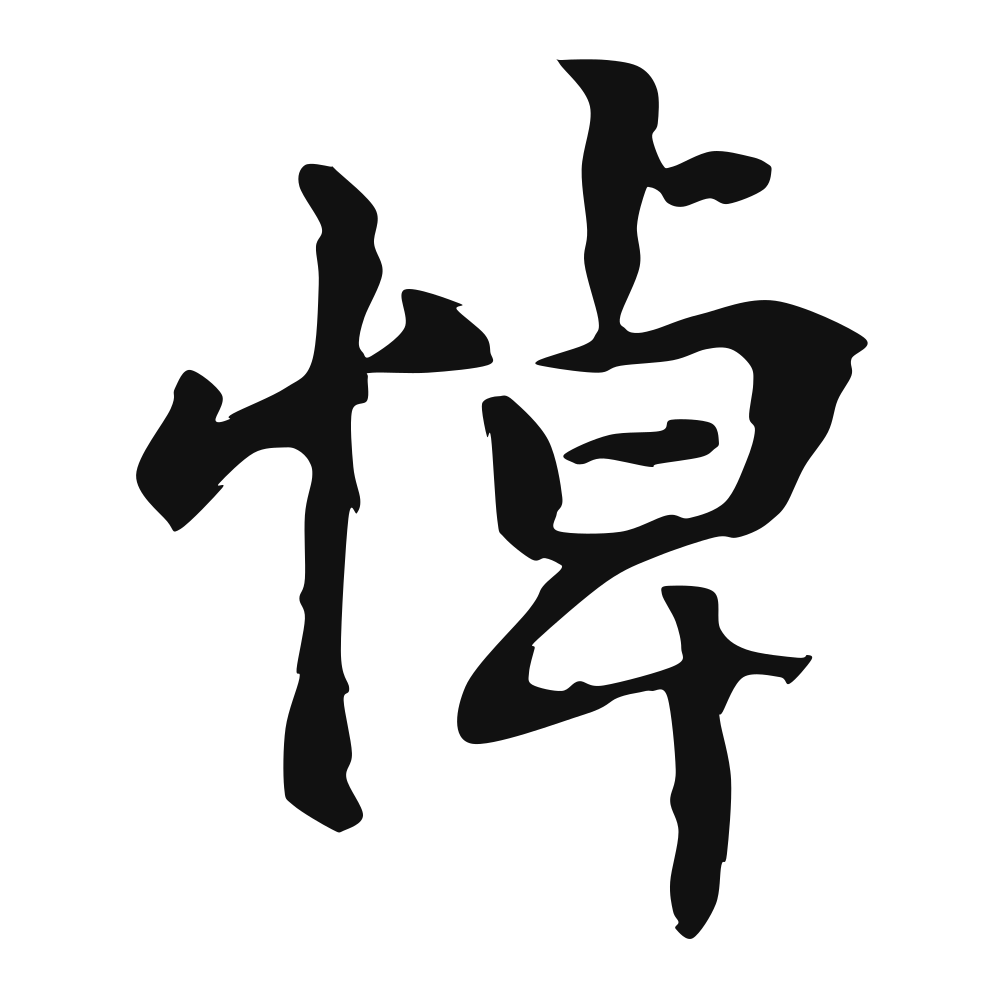
The Calligrapher — Wáng Xiànzhī 王献之
Son of Wang Xizhi and pioneer of wild cursive who pushed brush freedom further.
Eastern Jin calligrapher (344–386), master of running script/cursive script — seventh son of Wang Xizhi who broke his father's rules for a more fluent, emotional running script; together they are 'the Two Wangs'. Eastern Jin dynasty
Cultural Story
悼 is mourning spoken aloud. The poet 潘岳 invented the 悼亡 poem for his dead wife, and the form became a genre — the controlled grief of a man of letters. The heart with 卓, lofty, is sorrow raised to ceremony. It is the word for the loss you are allowed, even expected, to perform.
Common words & phrases
- 悼念 mourn · grieve for
- 哀悼 mourn · lament
- 追悼 mourn · memorialize
- 悼词 eulogy · funeral oration
- 悼亡 mourn the dead · widowed
Read the story behind the character
悼 runs the machinery of public grief: 悼念 the vigil, 追悼 the memorial service, 悼词 the speech nobody enjoys giving. 哀悼 is what a nation posts when a leader dies. It is the formal, almost administrative face of loss, the register where private ache is translated into something a committee can sign.
Why this character belongs on skin
Grief is the love that has nowhere left to go. The ancients built this word from the heart and the meaning 'to reach, to be eminent' — as if mourning were the soul stretching toward someone who has stepped beyond reach. To 悼 is not to weep noisily but to honor, to walk slowly, to keep a small lamp lit in the mind for the dead. Every tradition knows this ceremony: the Jewish yahrzeit, the Mexican ofrenda, the Confucian rites of remembrance that bind the living to their ancestors. We mourn because the person was real, and because forgetting would be the second death. Let this character rest upon your skin as a quiet altar. It does not ask you to heal, only to remember. Some loves are not lessened by absence; they are transmuted, carried now as warmth instead of weight. To wear 悼 is to refuse the cruelty of time and say, plainly, I have not let you go.
Own this character
Purchase delivers the original SVG of this glyph, brushed by Wáng Xiànzhī 王献之, ready to place on skin, paper, or screen.