
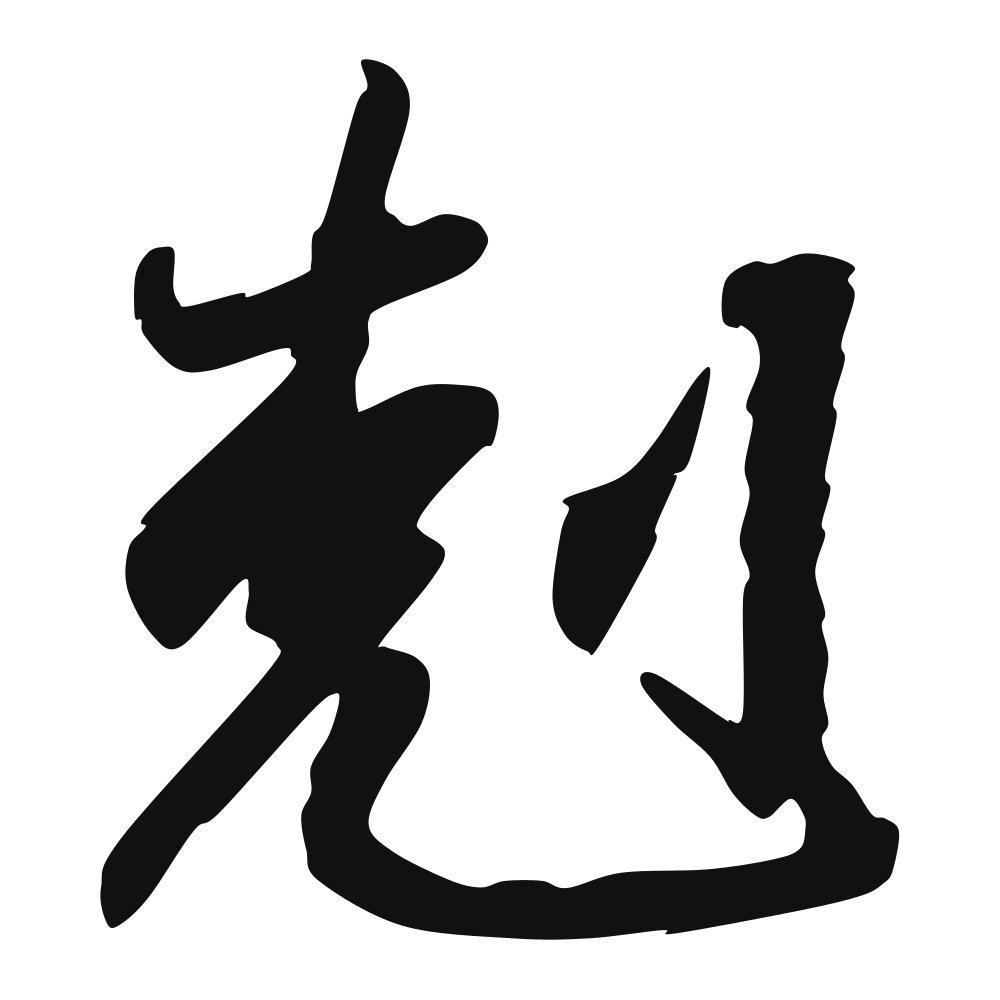
克
(Tw) abbr. for 克羅埃西亞|克罗埃西亚[Ke4 luo2 ai1 xi1 ya4], Croatia; to be able to; to subdue; to restrain; to overcome; gram; Tibetan unit of land area, about 6 ares; Ke (c. 2000 BC), seventh of the legendary Flame Emperors, 炎帝[Yan2 di4] descended from Shennong 神農|神农[Shen2 nong2] Farmer God; to overthrow
Closest English meanings
overcome·gram·restrain·subdue
The Calligrapher — Wáng Xīzhī 王羲之
The 'Sage of Calligraphy'; his running script has set the standard for 1,700 years.
Eastern Jin calligrapher (303–361), master of running script/cursive script/regular script — the Sage of Calligraphy; his Orchid Pavilion Preface is the most celebrated work in the tradition, and nearly every later master traces lineage to his hand. Eastern Jin dynasty
Cultural Story
Confucius praised Yan Hui for '克己复礼' — mastering the self to restore the rites. The character once showed a man kneeling under a roof, subdued. In the Zuozhuan, generals 攻克 walled towns; later the word meant solving a hard problem. A kitchen scale in old texts weighed in 克, a unit borrowed from the West only in the last century.
Common words & phrases
- 克服 overcome · conquer · surmount
- 克制 restrain · control · repress
- 攻克 capture · solve · take by storm
- 千克 kilogram · kilo
- 坦克 tank · armored vehicle
- 巧克力 chocolate · cocoa
Read the story behind the character
A runner 克服 a pulled muscle to finish the race. The cook 克制 the urge to oversalt. Chemists 攻克 a stubborn compound; shoppers buy 巧克力 by the bar and read 千克 on the label. A child's toy 坦克 sits on the shelf, its treads painted green, far from any real battlefield.
Own this character
Purchase delivers the original SVG of this glyph, brushed by Wáng Xīzhī 王羲之, ready to place on skin, paper, or screen.