
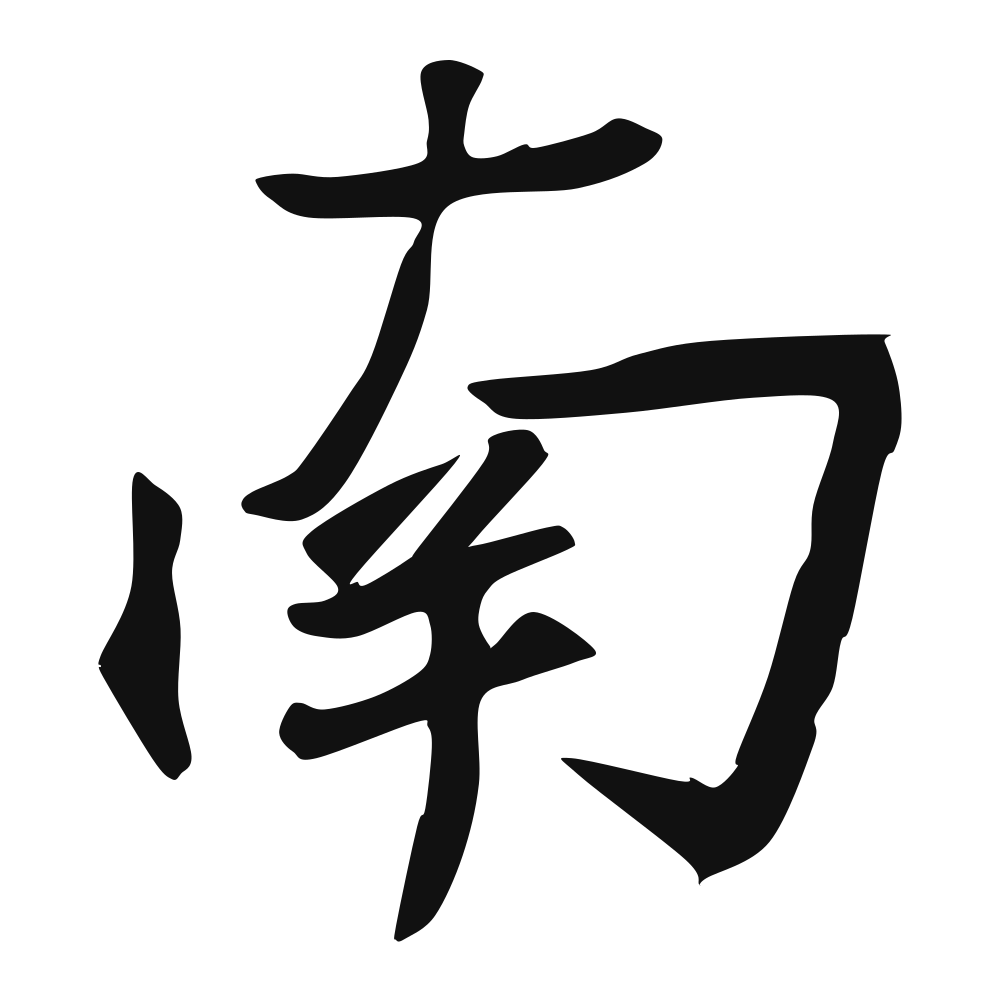
南
surname Nan; Taiwan pr. [na2]; south
Closest English meanings
south
The Calligrapher — Wáng Xīzhī 王羲之
The 'Sage of Calligraphy'; his running script has set the standard for 1,700 years.
Eastern Jin calligrapher (303–361), master of running script/cursive script/regular script — the Sage of Calligraphy; his Orchid Pavilion Preface is the most celebrated work in the tradition, and nearly every later master traces lineage to his hand. Eastern Jin dynasty
Cultural Story
The Odes pair “以雅以南” — the elegant airs and the southern ones, 南 the music of Chu and the warm lands below the rivers. 江南 later became the dream of every northern official: rice, silk, soft rain. 南瓜 crossed from the Americas only centuries on; 南方 was always the old, green other.
Common words & phrases
- 南方 south · the south
- 南极 South Pole
- 江南 Jiangnan · south of Yangtze
- 南瓜 pumpkin · squash
- 河南 Henan
- 东南亚 Southeast Asia
Read the story behind the character
A train heads 南方; 江南 is the tourism brand a whole province sells. 南瓜 is the soup a kitchen blends, 河南 the birthplace a migrant names, and 东南亚 the factory belt a trade report maps. The word points from a grandma's garden to the supply chain a phone traces.
Why this character belongs on skin
Turn toward the warmth and the maps rearrange. The south, the direction of fire and the open belly of the world, where the emperor faced to receive the year. In the old compass the south was the principal, not the north; to go south was to go toward life. Exiles were sent north to cold; the south kept its green. To carry this mark is to choose the warm road, the one that leads away from the capital's orders and toward the self that blooms without permission. It is a pilgrim's mark, inked along the spine or the calf, a quiet compass no one else can read. You are headed somewhere the maps don't honor. Let the ink be your true north, pointing always to the heat that made you, the south you left and the south you're becoming.
Own this character
Purchase delivers the original SVG of this glyph, brushed by Wáng Xīzhī 王羲之, ready to place on skin, paper, or screen.