
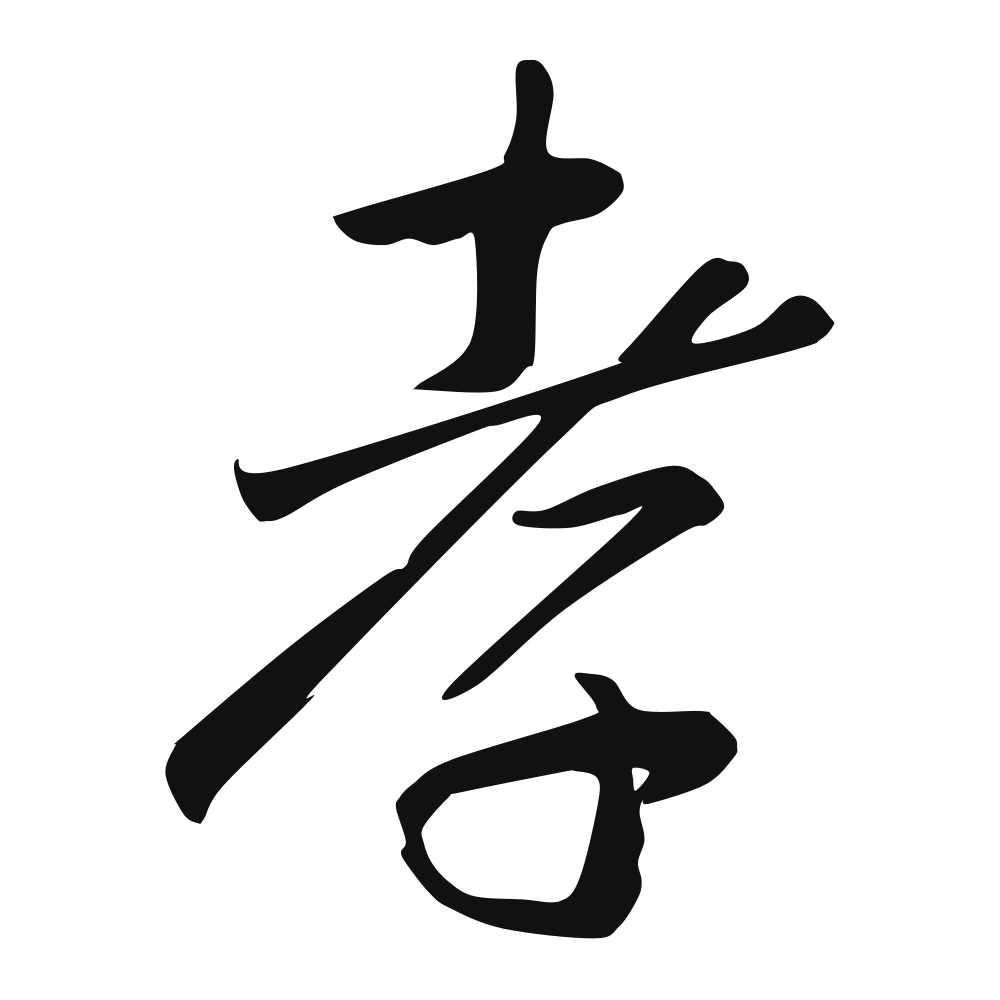
孝
孝 (xiào) — filial piety. Elder 老 + 子 (child): the child upholding the elder. Classical life: 百善孝为先 — of all virtues, filial piety is first. Grammar: free morpheme — also: filial piety or obedience; mourning apparel
Closest English meanings
filial piety·filial·devotion to parents·obedience
The Calligrapher — Wáng Xīzhī 王羲之
The 'Sage of Calligraphy'; his running script has set the standard for 1,700 years.
Eastern Jin calligrapher (303–361), master of running script/cursive script/regular script — the Sage of Calligraphy; his Orchid Pavilion Preface is the most celebrated work in the tradition, and nearly every later master traces lineage to his hand. Eastern Jin dynasty
Cultural Story
The 'Classic of Filial Piety' made 孝 the root of all virtue, and the 'Twenty-four Filial Exemplars' told of Wang Xiang lying on ice to melt a carp for his stepmother. Mourners 守孝 three years for a parent. The graph shows a child bearing an elder — duty drawn as posture.
Energy Reading
Wood (木)
Comparative symbology, not fortune-telling.
Common words & phrases
- 孝顺 filial · filial piety · dutiful to parents
- 孝心 filial piety · filial devotion · dutifulness
- 孝敬 show filial respect to · honor (parents) · filial respect
- 孝道 filial duty · filial piety · duty to parents
- 守孝 mourn a parent · observe mourning · observe filial mourning
- 孝子 filial son · devoted son · filial son (devoted)
Read the story behind the character
Filial apps remind 子女 to call home, and 孝心 gift boxes flood pharmacies before festivals. Funeral notices list 守孝 periods, while 孝顺 headlines ads for elderly-care products. The classical piety now arrives as a calendar alert and a purchase, measured in visits logged and tonics bought.
Why this character belongs on skin
Before philosophy, there was a child's hand on an aging one. 孝 is that bond written into the bones of a civilization—not mere obedience, but a devotion that flows upward through generations, the living honoring those who made them. Its old form sets the elder above the child, a posture of reverence older than any scripture. In the West we speak of honoring thy father and mother, of legacy, of the debts we cannot repay. To wear 孝 is to carry your lineage on your skin—not the bloodline alone, but the gratitude that survives death. It is a quiet mark, unfashionable in an age of the self, and that is precisely its power. It says you are not an island. Someone fed you first. The ink becomes a small altar, worn close, a daily bow to the ones who made the road you walk.
Own this character
Purchase delivers the original SVG of this glyph, brushed by Wáng Xīzhī 王羲之, ready to place on skin, paper, or screen.