
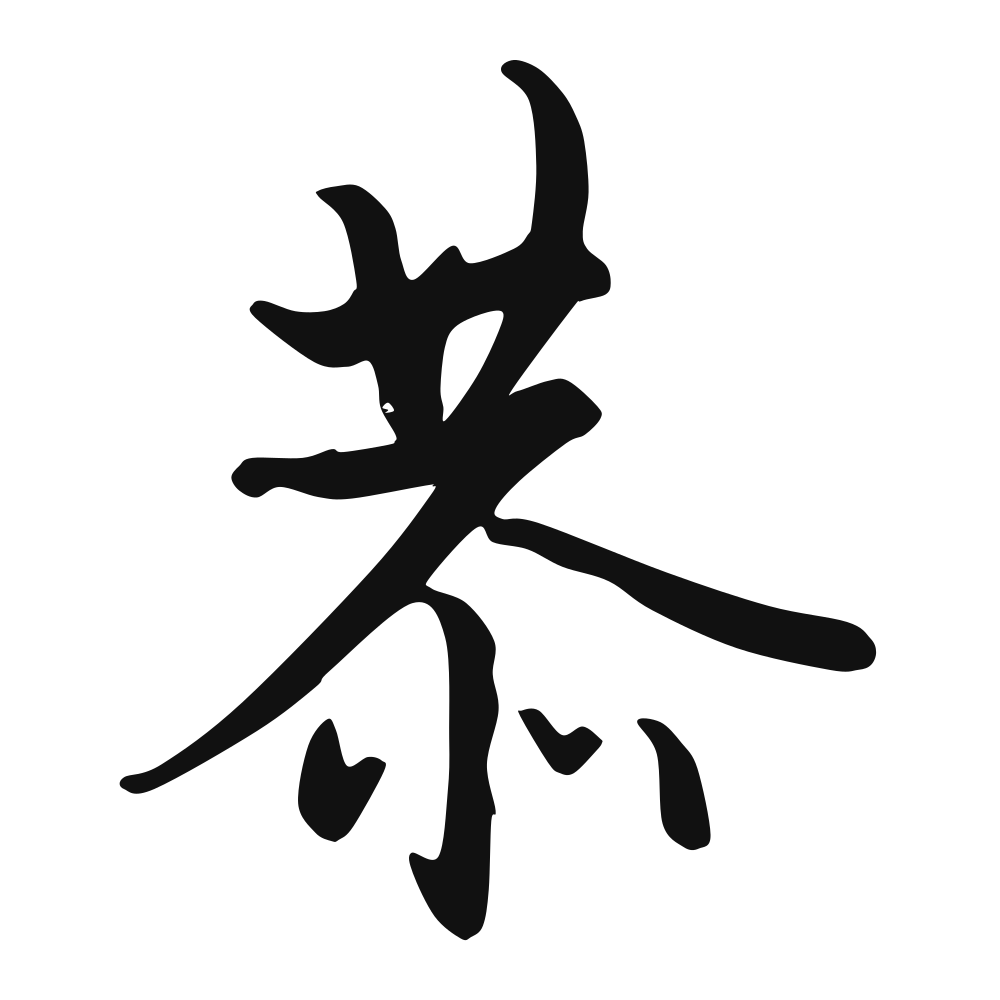
The Calligrapher — Wáng Xīzhī 王羲之
The 'Sage of Calligraphy'; his running script has set the standard for 1,700 years.
Eastern Jin calligrapher (303–361), master of running script/cursive script/regular script — the Sage of Calligraphy; his Orchid Pavilion Preface is the most celebrated work in the tradition, and nearly every later master traces lineage to his hand. Eastern Jin dynasty
Cultural Story
恭 is the reverence that shows in the body. 論語 ties it to 礼, the respect that becomes a gesture — the hands, the step, the lowered eyes. 恭喜 is the joy offered with the proper bend, and the word kept that outward care: honor performed, so the other can feel the weight you give them.
Common words & phrases
- 恭敬 respectful
- 恭喜 congratulations
- 恭维 flatter
- 谦恭 modest · respectful
- 恭候 await respectfully
- 恭贺 congratulate
Read the story behind the character
恭喜 is the text at the new year, 恭维 the flatter a smile hides, 恭候 the phrase a invite prints, 谦恭 the manner a servant learns. The bend is a message now; the care is often thin. We still perform the honor, and call the performing politeness, which the old text already warned was only 恭 when it touched the rite.
Why this character belongs on skin
Bow from the waist and mean it in the bone — that is gōng. Not the servant's flinch but the chosen humility, the respect that lowers the head because the thing before you is genuinely greater. The Confucian gentleman wore gōng like clean linen, an inward posture made visible; to greet the elder, the stranger, the dead, with the whole body's attention. The Christian kneels not from fear but recognition. A man who is gōng has nothing to prove and therefore proves everything. Wear it where you would bow — the chest, the folded hands. Let it be the mark of a reverence that is not weakness but the rarest strength: the power to honor what stands above you, and mean it, entirely, with the open hand and the bent neck and the quiet, unashamed heart.
Own this character
Purchase delivers the original SVG of this glyph, brushed by Wáng Xīzhī 王羲之, ready to place on skin, paper, or screen.