
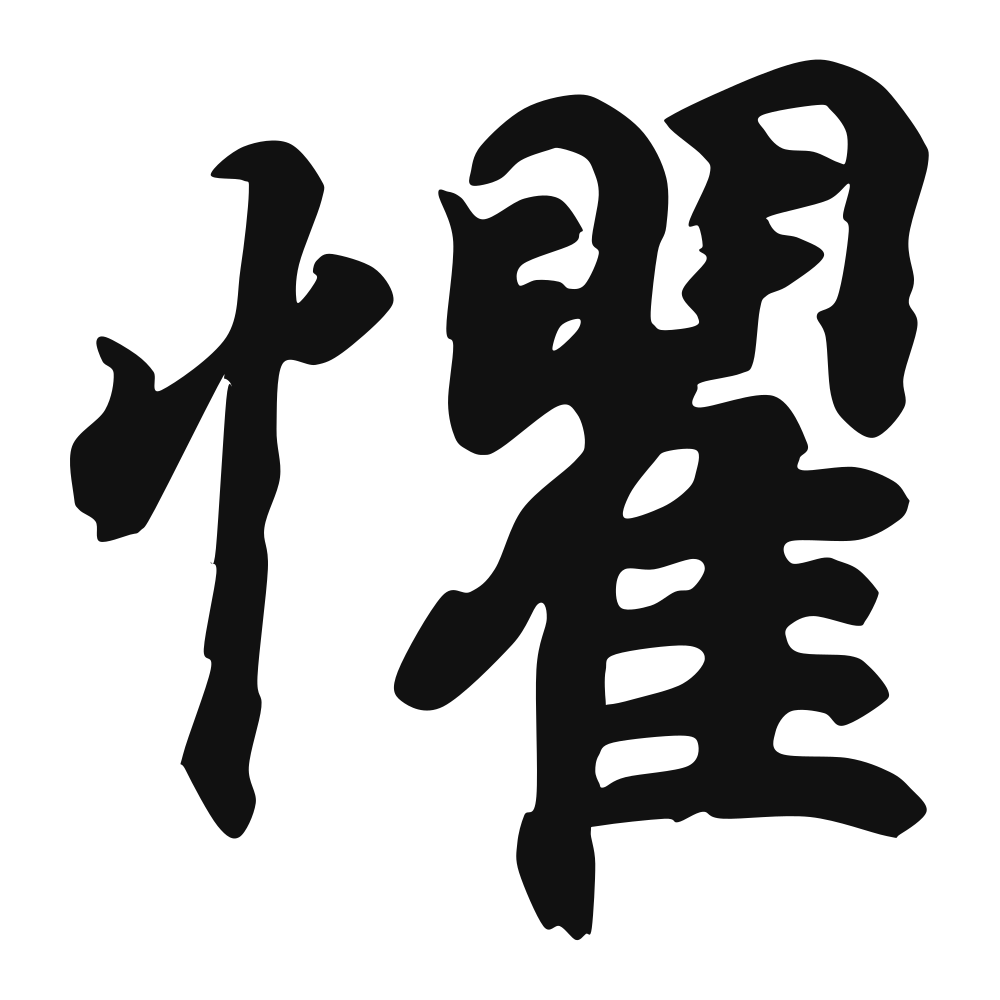
The Calligrapher — Wáng Xīzhī 王羲之
The 'Sage of Calligraphy'; his running script has set the standard for 1,700 years.
Eastern Jin calligrapher (303–361), master of running script/cursive script/regular script — the Sage of Calligraphy; his Orchid Pavilion Preface is the most celebrated work in the tradition, and nearly every later master traces lineage to his hand. Eastern Jin dynasty
Cultural Story
惧 is fear given a name and a face. The 論語 praises the man who is 临事而惧 — apprehensive when the matter is at hand, not paralyzed but sober. The heart with 具, implements, is dread equipped, ready for the thing it fears. It is the useful fear, not the cringing one.
Common words & phrases
- 恐惧 fear · terror
- 惧怕 fear · be afraid
- 畏惧 dread · fear
- 惧内 henpecked
- 无惧 fearless
- 惧怯 timid · fearful
Read the story behind the character
惧 is the plain word: 恐惧 the headline, 惧怕 the thing you avoid, 畏惧 the boss. Then the jokes — 惧内 the husband who fears his wife, said with a grin, and 无惧 the action-hero's slogan. It covers the terror and the tease, often in the same family dinner.
Why this character belongs on skin
Fear is the oldest counselor we have, older than language, older than the first fire. The word sets the heart beside the meaning 'to possess,' as if dread were something that takes hold of us entirely. But the Dao never asks us to be without fear — only to move with it, like a river moving with its own current. The samurai studied terror the way a sailor studies weather: not to banish it but to read it, to let the pulse in the throat become intelligence. To 惧 rightly is to be awake to what is real, to the cliff edge, to the cost of living dangerously and loving at all. Courage is not its absence. Courage is fear met with open eyes and a steady hand. Carry this mark as a talisman of honesty — a confession that you are mortal, that the world is vast, and that you chose to walk into it anyway, heart beating, unashamed of the trembling.
Own this character
Purchase delivers the original SVG of this glyph, brushed by Wáng Xīzhī 王羲之, ready to place on skin, paper, or screen.