
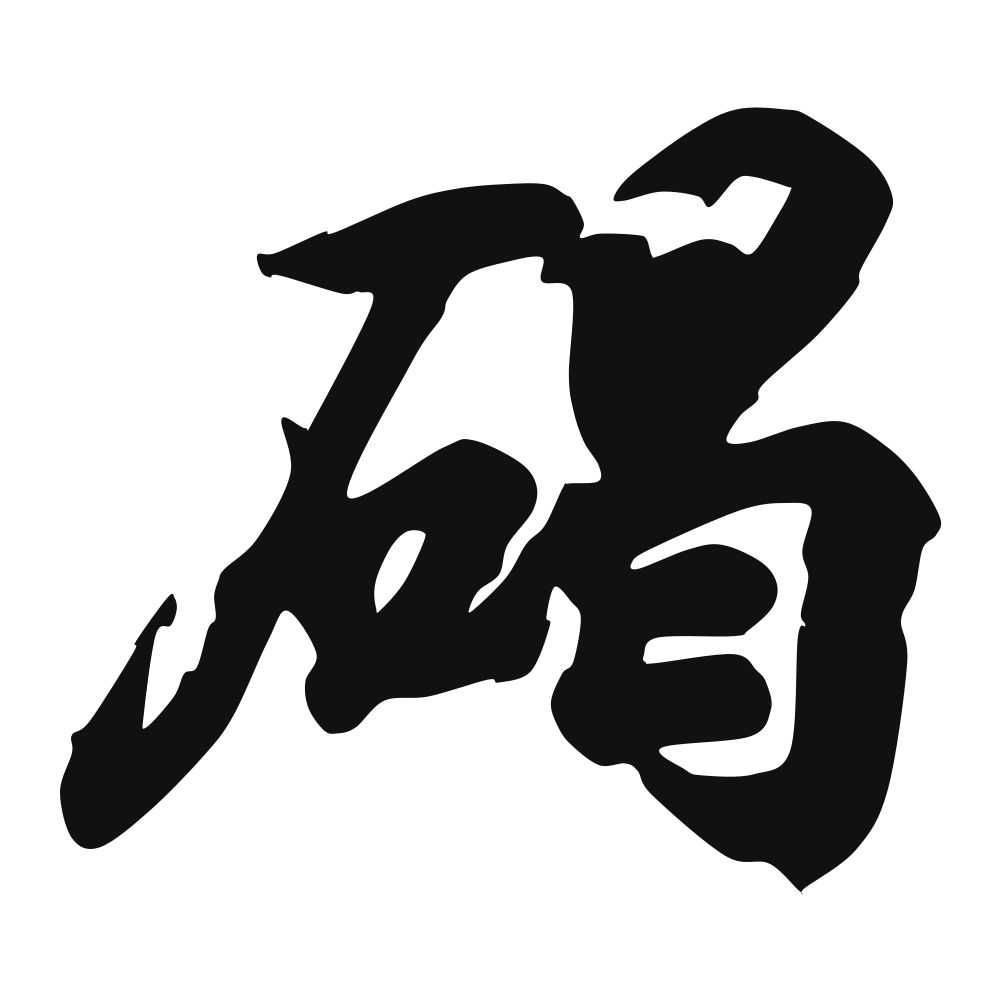
碣
stone tablet
Closest English meanings
stone tablet·monument·stele·inscribed stone
The Calligrapher — Wáng Xīzhī 王羲之
The 'Sage of Calligraphy'; his running script has set the standard for 1,700 years.
Eastern Jin calligrapher (303–361), master of running script/cursive script/regular script — the Sage of Calligraphy; his Orchid Pavilion Preface is the most celebrated work in the tradition, and nearly every later master traces lineage to his hand. Eastern Jin dynasty
Cultural Story
碣 is a tablet with a rounded top — the ancients distinguished the shapes: square-topped stones were 碑, round-topped ones 碣, humbler markers for humbler graves. Its literary passport is Cao Cao's poem on the eastern shore: 东临碣石,以观沧海 — 'east I climb Jieshi rock to watch the vast sea' — the warlord-poet gazing at the ocean from the famous stone.
Common words & phrases
- 碑碣 stone tablets · monuments · steles
- 碣石 Jieshi rock · stone marker
- 残碣 broken stele · ruined tablet
- 墓碣 tombstone · grave tablet
- 碣文 inscription · tablet text
- 神道碣 spirit-way stele · tomb tablet
Read the story behind the character
Tablet culture persists in cemeteries and museums. Stone yards cut 墓碣 (tombstone, grave tablet) to order; tourists seek the 碣石 (Jieshi rock) shore where Cao Cao stood, now a seaside park; antiquarians catalog 残碣 (broken stele, ruined tablet) from ruined temples. Museum labels still open with the pair 碑碣 (steles and tablets) — two shapes, one instinct: make the memory outlast the person.
Why this character belongs on skin
Round-topped and upright, the jie is a stone raised to outlast the flesh: a boundary marker, a tomb inscription, the stele standing in wind and rain long after the hand that carved it turned to dust. For three thousand years the Chinese gave their dead and their deeds to stone precisely because stone forgets slowly—the carving meant to speak to grandchildren not yet born. Qin Shihuang set up such stones on mountain summits to declare his empire to heaven; humble villages raised them for a benefactor or a well. There is something defiantly hopeful in the act: we will be gone, so we will write on the most patient thing we can find. Ink is the same gesture, miniaturized—memory committed to the body instead of the cliff face. This character is for those who want their dead close and their convictions permanent. Raise your stone. Say who you loved. Let it stand against the weather, facing the years.
Own this character
Purchase delivers the original SVG of this glyph, brushed by Wáng Xīzhī 王羲之, ready to place on skin, paper, or screen.