
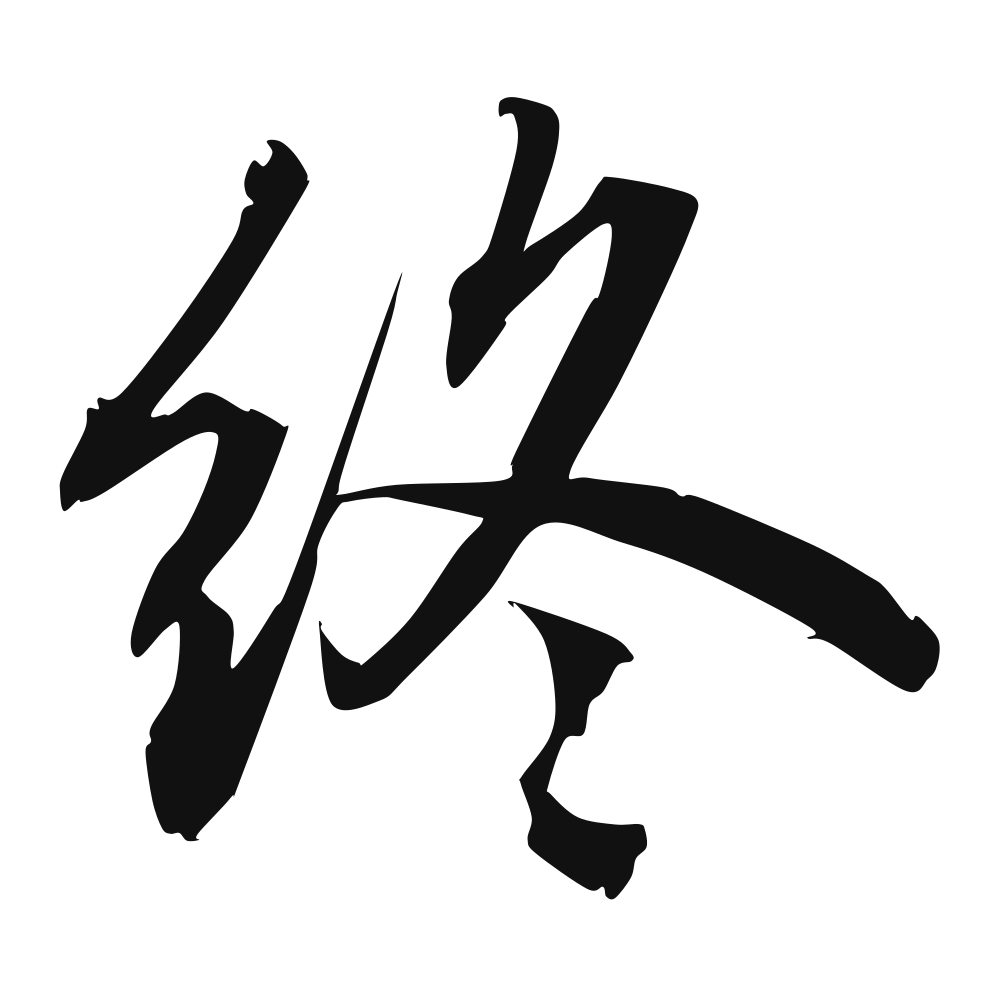
The Calligrapher — Wáng Xīzhī 王羲之
The 'Sage of Calligraphy'; his running script has set the standard for 1,700 years.
Eastern Jin calligrapher (303–361), master of running script/cursive script/regular script — the Sage of Calligraphy; his Orchid Pavilion Preface is the most celebrated work in the tradition, and nearly every later master traces lineage to his hand. Eastern Jin dynasty
Etymology & Meaning · 字义溯源
2 · The Character: 终 Zhōng (1st tone). 終 (simplified 终) is the end, the close — the counterweight to 始 (beginning). 《說文解字》 analyses it from silk: 『終,絿絲也。从糸,冬聲』 — 『to wind up a skein of silk; from 糸, 冬 sound』. 《易·繫辭》 couples the pair: 『原始要終』 (『trace the beginning, grasp the end』). 《詩經·大雅》 wishes 『高朗令終』 — 『a bright and good ending』. The honest shadow: 終 is the polite classical word for death — 《禮記·檀弓》 『君子曰終,小人曰死』, and 送終 means to tend a parent's funeral. So a lone 終 can read as 『the end / mortality』. As a tattoo it can mean 『closure, permanence, seeing things through』, but disclose the funeral sense; pair with 始 (as 始終) or 身 (終身) to steer the reading away from 送終.
Cultural Story
终 is the end of the thread, and classical ethics hung grave duties on it. The Analects teaches 慎终追远, to be careful at death's end and remember the distant ancestors, for then the people's virtue grows thick. Sages were urged to 善始善终, begin well and end well, since any life or reign is judged by how its thread is cut.
Common words & phrases
- 终于 finally · at last · in the end
- 终点 end point · destination · finish
- 终身 lifelong · for life
- 始终 from beginning to end · all along · consistently
- 终结 to end · to conclude · end
- 终止 to terminate · to stop · to end
Read the story behind the character
Zhōng times the modern clock. After forty minutes in a tunnel, the train 终于, finally, reaches daylight; the commuter nods off until the announcement names the 终点站, terminal station. Contracts specify 终止, termination, clauses; a couple celebrates 终身, lifelong, membership in each other's families; and a worker sighs that the meeting 始终, from start to finish, changed nothing.
Why this character belongs on skin
Every fire learns the shape of its own last light. 终 is the end, the finish — silk drawn to a close, the knot that stops the unraveling, the word that means at last. The Dao says death is only the thread returning to the loom; the Christian hears the faithful it is finished. To wear 终 is not morbidity but acceptance — the courage to name the ending and thus taste the middle more fiercely. There is a warrior's peace in a battle concluded, a Buddhist release in the letting go. Let this character rest at the nape, where the spine ends and the skull begins, the body's own period. Some marks celebrate beginnings; this one honors the close, the grace of finishing what you started. Carry the end. It is the quiet that makes every moment before it worth the burning.
Own this character
Purchase delivers the original SVG of this glyph, brushed by Wáng Xīzhī 王羲之, ready to place on skin, paper, or screen.